Josephine Christopher is a senior business journalist for The Citizen and Mwananchi newspapers
Mwananchi Communications Limitted
Dar es Salaam. Mkalama district council in Singida region disbursed more than Sh500 million in interest-free loans to women, youth and people with disabilities during the 2025/26 financial year, as the district also recorded a sharp rise in agricultural production and expanded investment in key public services.
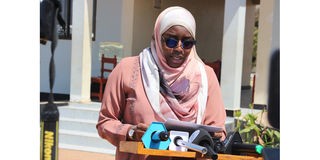
Presenting the council's one-year performance report, Mkalama district executive director Hajjat Asia Messos said the statutory 10 percent loans had strengthened entrepreneurship and household incomes while complementing wider government efforts to improve livelihoods.
"We have continued to empower wananchi economically by providing the statutory 10 percent loans while bringing these services closer to communities through the Mkalama Asilimia Kumi (MAK) mobile clinic. We are also equipping beneficiaries with entrepreneurship skills so they can establish sustainable businesses," she said.
The council disbursed Sh500.6 million to 52 groups, with 24 women's groups receiving Sh208 million, 19 youth groups Sh259.8 million, and nine groups of people with disabilities Sh32.8 million.
To improve access to the loans, the council launched the MAK mobile clinic, which conducted outreach across all 17 wards and 70 villages. The initiative also reached millions through the district's social media platforms, while 289 loan beneficiaries received entrepreneurship and business management training.
Alongside the empowerment programme, the district recorded remarkable growth in agriculture, with food crop production increasing from 116,948 tonnes in the 2024/25 season to 354,438 tonnes in 2025/26. Cash crop production also rose from 44,796 tonnes to 50,471 tonnes.
Ms Messos attributed the increase to the recruitment of more agricultural extension officers, whose number rose from 16 to 47, wider use of improved seeds and subsidised fertiliser, and improved market access through the warehouse receipt system.
The council distributed subsidised agricultural inputs worth Sh9.49 billion during the year. Farmers selling lentils through the warehouse receipt system earned more than Sh8.14 billion, while the council collected Sh246.7 million in produce levy revenue.
"Agriculture remains the backbone of our district's economy. Increased extension services, government input subsidies and improved market systems have enabled farmers to increase production and incomes," she said.
The district also recorded growth in private investment, with the number of investors increasing from six to nine in sectors including mining, energy, agriculture and livestock, creating both permanent and temporary employment opportunities.
In education, the council constructed four new schools worth Sh1.3 billion and invested another Sh305 million in classrooms, laboratories and a dormitory. The number of Advanced Level secondary schools doubled from three to six, while the Form Four pass rate improved from 97.89 percent to 97.91 percent.
Health services also expanded through the construction of four dispensaries and a health centre, alongside improvements to existing facilities costing Sh719.1 million. Medicine availability increased from 92 percent to 93.8 percent, while more than 5,500 elderly people and 15,600 children under five received free healthcare services during the year.
Looking ahead to the 2026/27 financial year, Ms Messos said the council would prioritise completion of the district hospital, expansion of education infrastructure and continued investment in economic empowerment, agriculture and public service delivery.
"As we begin implementing the National Development Vision 2050, we call upon all public servants to increase efficiency, innovation and accountability so that we can accelerate development and improve the welfare of our people," she said.