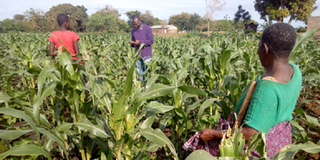
Morogoro. Cooperative stakeholders in Morogoro Region have called on the government to intervene in long-standing farmer–pastoralist conflicts and secure reliable markets for agricultural produce, saying these challenges undermine productivity despite strong cooperative performance in the region overall.
They noted that Morogoro prides itself on having 212 cooperative societies that have overseen crop sales worth more than Sh134 billion, yet persistent land-use conflicts and weak market systems continue to discourage farmers and reduce incomes.
Speaking yesterday, during the regional International Day of Cooperatives celebrations held in Ifakara, Kilombero District, the Assistant Registrar of Cooperatives in Morogoro Region, Ms Cesilia Sostenes, said the cooperative movement remains a key pillar of the region’s economic development through crop marketing, financial services, and investment activities.
She said the celebrations were held alongside the Sixth Cooperative Development Forum under the themes “Cooperatives for a Peaceful World” and “Protect Cooperatives, Choose Integrity.”
“Morogoro Region has a total of 212 cooperative societies, including 168 agricultural marketing cooperative societies, 36 Savings and Credit Cooperative Society (Saccos), three cooperative unions, and five joint ventures,” she said, adding that membership stood at 69,639, comprising 38,767 men and 30,872 women.
She added that during the 2025/2026 season, cooperatives facilitated the sale of 21,408,497 kilogrammes of sesame worth Sh53.9 billion, 28,194,517 kilogrammes of pigeon peas worth Sh28.2 billion, 1,216,740 kilogrammes of cocoa worth Sh17.4 billion, and 435,337 kilogrammes of cashew nuts worth more than Sh1 billion, with farmers paid on time.
In addition, Ms Sostenes said 495,000 tonnes of sugarcane worth Sh34 billion were sold to Kilombero, Mtibwa, and Mkulazi factories, while more than Sh2 billion was collected through various levies and taxes across the region’s nine councils.
She further said other achievements include linking 23 crop cooperatives with Saccos and financial institutions to improve access to loans, as well as helping the government obtain accurate data on agricultural production and trade.
However, the Morogoro Cooperative Development Forum Chairperson, Mr Idadi Bilali, said that despite these gains, farmer–pastoralist conflicts and lack of reliable markets remain major obstacles affecting cooperative development overall.
He said the conflicts have severely impacted areas such as the Mbigiri and Mtibwa basins, where rice, sugarcane, and other farmers have suffered significant losses, with some abandoning commercial farming altogether.
Mr Bilali added that crops such as rice, maize, beans, and vegetables are still being sold to middlemen due to the absence of structured markets, depriving farmers of fair returns.
Representing Morogoro Regional Commissioner Adam Malima, Kilombero District Commissioner, Mr Dunstan Kyobya said the region should learn from other regions that have successfully strengthened cooperative systems to improve efficiency, transparency, and member benefits.
He said cooperative success would increase further if existing challenges are addressed, stressing that integrity, cooperation, and peace are the foundation of the sector’s growth.
“Morogoro Region has every reason to become a leader in cooperatives in the country, but this is only possible if we strengthen management, resolve conflicts, and ensure farmers access profitable markets for their produce,” said Mr Kyobya.