Dar es Salaam. Children with severe tooth pain, fear of dental treatment or conditions that make it difficult to sit through procedures, now have a sigh of relief, thanks to the launch of the first unit dedicated to treating such children.
The group have long had limited access to specialised dental care, but the Muhimbili University of Health and Allied Sciences (MUHAS) has launched a Paediatric Dental Sedation Unit, giving children access to specialised dental treatment in an environment designed around their needs.
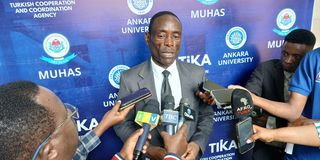
The unit, launched yesterday, is the result of cooperation between MUHAS, Ankara University in Türkiye and the Turkish Cooperation and Coordination Agency (TİKA). MUHAS Vice Chancellor, Prof Appolinary Kamuhabwa, said the service had already been tested since May, with 27 children treated before its official launch.
The difference is significant. Instead of relying only on conventional dental treatment, children who are extremely anxious, have special needs or cannot tolerate procedures can receive treatment under sedation, with appropriate anaesthesia support.
“We have an area for surgical services where a child is assessed before treatment. This clinic is very important because there are children with cerebral palsy who are difficult to treat, as well as children who are afraid of injections,” Prof Kamuhabwa said.
“Through what we are doing, we can give them sedation and treat them.”
A silent burden
The new unit comes at a time when Tanzania is trying to confront a long-standing oral health problem.
Findings from the 2020 National Oral Health Survey show that dental caries affected 43.2 percent of five-year-olds, 20.5 percent of 12-year-olds and 25.5 percent of 15-year-olds surveyed.
More worrying is that most of the affected teeth were untreated. For five-year-olds, for example, 98.4 percent of the caries burden was made up of decayed teeth, rather than filled or missing teeth.
That means many children are not simply having minor dental problems. They are living with untreated disease, pain and, in some cases, difficulty eating, sleeping and concentrating at school.
The World Health Organisation (WHO) says untreated childhood dental caries can cause toothache, abscesses and problems with eating and sleeping, while affecting a child's quality of life. This is why the MUHAS unit matters beyond the hospital.
It creates a pathway for children whose needs cannot easily be managed in an ordinary dental clinic, particularly children with disabilities, medical conditions or severe dental anxiety.
For Tanzania, the partnership with Türkiye is not simply about equipment. It is about transferring skills and a model of specialised care. Ankara University already operates a paediatric dentistry department with 25 dental units, including a dedicated sedation unit.
Its specialists use deep sedation, with an anaesthesiologist present, to treat anxious children, children with disabilities and those with medical conditions.
Tanzanian specialists have therefore been trained in Türkiye in sedation protocols, clinical management and safe treatment of children.
TİKA said in March 2026 that Tanzanian specialists underwent two weeks of intensive clinical training in Ankara as part of the project to establish the MUHAS sedation unit.
It described the MUHAS facility as the first comprehensive centre in Tanzania and East Africa focused on paediatric oral and dental care using sedation.
For Tanzania, this means the partnership can develop into more than treating patients. It can strengthen specialist training, research and local clinical standards.
TİKA Resident Director Halim Omer said future cooperation would include capacity building, research, artificial intelligence-assisted image analysis and support for medical equipment.
A wider health-sector shift
The developments at MUHAS come as Tanzania strengthens oral health nationally.
The new National Oral Health Strategic Plan 2026–2031 identifies shortages of specialists, equipment and service coverage as key challenges and calls for stronger infrastructure, human resources, prevention and research.
WHO also reports that oral health services are now available in about 42 percent of health facilities in Tanzania, with the country targeting 45 percent coverage by 2030.
The partnership is also expanding into emergency medicine as Tanzania prepares to co-host the 2027 Africa Cup of Nations (AFCON) with Kenya and Uganda.
MUHAS has already received a modern training ambulance from TİKA to strengthen emergency and disaster-response training.
The university says the collaboration is also supporting the development of Tanzania's first paramedic diploma programme.
Prof Kamuhabwa said MUHAS was also preparing people who are not doctors to provide basic emergency care.
“When an emergency happens, a person can die because of being handled incorrectly,” he said.
He added: “The plan is to train more specialists and emergency responders who can act quickly when major incidents occur.”
Register to begin your journey to our premium contentSubscribe for full access to premium content