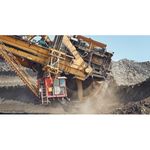
Shinyanga. The government is planning to construct a gold processing plant for small-scale miners in Mwakitolyo, Shinyanga region to address the challenge of limited processing capacity which is cited as a major constraint to value addition in mining areas.
Minister for Minerals Anthony Mavunde said during a public meeting with small-scale miners that President Samia Suluhu Hassan has directed the construction of the plant.
During the meeting, he also received complaints on licensing delays, levies, boundary disputes and lack of equipment. He issued directives aimed at formalising the sector and improving productivity, particularly for youth and women.
He said the absence of modern processing facilities limits returns for small-scale miners, adding that government efforts must focus on value addition, safety and efficiency.
The planned Carbon-in-Pulp processing plant will have a capacity of 100 to 120 tonnes per day and is expected to serve more than 7,900 miners the area.
Mr Mavunde also announced measures to support productivity through subsidised geological services and drilling.
He said the government has procured 15 drilling rigs, two reserved for youth and women, with one rig from the second batch set to be deployed in Mwakitolyo. The rig can drill up to 400 metres to help assess ore potential before mining begins.
Mr Mavunde said commercial drilling costs about Sh26 million per 100 metres, while the government-supported programme reduces the cost to about Sh10.8 million. He said the subsidy allows miners to make informed decisions and reduce losses.
On licensing, he said the system has been misused by individuals who acquire licences without mining and later profit through informal arrangements. While the law recognises licence holders, he said many do not mine, leaving actual miners exposed to disputes.
He said the Mining Commission will clean its database to remove non-performing licence holders and create space for active miners. He added that 74 idle exploration licences covering about 700,000 acres have been revoked.
In Shinyanga Region, he directed that all exploration licences be compiled and submitted for action before December 31, 2025, in line with the government’s plan to support small-scale miners to grow into medium- and large-scale operators.
Mr Mavunde also addressed the misuse of technical service agreements, which he said have been used to bypass restrictions on foreign involvement in small-scale mining.
He said regulations have been clarified to define technical contracts and ensure they apply only when a miner lacks specific technical capacity.
He referred to a 70:30 arrangement aimed at protecting licence holders.
He warned against informal tenancy arrangements within licensed areas and urged miners to formalise agreements and register them with the Mining Commission.
During the meeting, youth representatives requested that Mlima Namba 6 area, currently village reserve land where gold has been discovered, be included in the licensing process. Women miners raised concerns over licensing and access to equipment.
Shinyanga District Commissioner Julius Mtatiro directed local authorities to review levies affecting miners, while Regional Commissioner Mboni Mhita called for boundary disputes to be resolved before the end of the year and for women to be prioritised.
Mr Mavunde directed the Mining Commission to organise licence issuance, ordered additional jaw crushers for women and youth miners, and urged miners to operate within the law as the government implements reforms in the sector.
Register to begin your journey to our premium contentSubscribe for full access to premium content