New platform seeks to strengthen food security, nutrition in Dar es Salaam
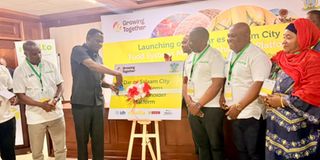
Dar es Salaam Deputy Mayor John Mrema launches the Food Systems Multi-Stakeholder Platform (FS-MSP), aimed at strengthening collaboration in planning and developing solutions to improve the city’s food systems.
Dar es Salaam. The Dar es Salaam City Council has launched a multi-stakeholder platform aimed at bringing together key players in the food system to develop solutions for improving food security, nutrition and the resilience of urban food supplies.
The Food Systems Multi-Stakeholder Platform (FS-MSP) will provide a forum for government institutions, farmers, food producers, traders, private-sector companies, civil society organisations, academia and development partners to work together on challenges affecting the city’s food system.
The initiative, coordinated by non-governmental organisations IDH and Rikolto Tanzania through the Growing Together project, will also involve stakeholders from health and nutrition, environment, business, transport, markets, waste management and urban planning.
The platform is expected to promote collaboration, evidence-based decision-making, innovation and investment across the food chain, from production and transportation to storage, processing, marketing and consumption.
Speaking during the launch on Tuesday September 15, 2026, Dar es Salaam Deputy Mayor John Mrema said the initiative was necessary as rapid population growth continued to increase pressure on the city’s food systems.
“This situation gives us a responsibility to ensure that our food systems are sustainable, inclusive and resilient to various challenges that could affect food availability for our people,” he said.
Mr Mrema said addressing food security required a broader approach because Dar es Salaam relied heavily on food produced in other regions.
He said the platform would enable stakeholders to pool knowledge, resources and expertise while identifying practical interventions to strengthen the city’s food and nutrition security.
The initiative will also seek to encourage investment and innovation in the food sector while supporting the development of food systems capable of responding to climate change and rapid urbanisation.
Dar es Salaam currently produces about 10,901 tonnes of food annually against estimated demand of 1.3 million tonnes, meaning more than 99 percent of its requirements are met through supplies from outside the region.
The pressure is expected to increase as the city’s population is projected to rise from more than 5.3 million people currently to about 13 million by 2030.
Meanwhile, Growing Together Tanzania Senior Programme Manager Joseph Kafipa said the platform would also help urban centres prepare for disruptions to food supplies, including those associated with climate-related events.
He urged stakeholders to strengthen coordination between rural production areas and urban markets, noting that disruptions to agricultural production or transportation could affect food availability and prices in cities.
Mr Kafipa said Tanzania should also use opportunities in domestic and international markets to increase agricultural production and value addition.
“The food system should also look at opportunities in export markets so that Tanzania does not only produce for domestic consumption, but can increase its income through value-added agricultural products,” he said.