Patients count cost as Singida referral hospital project stalls
View of a building at the Singida Regional Referral Hospital that remains under construction, as captured on July 15, 2026. The building will house specialist services, including cardiac, kidney, liver, orthopaedic, cancer and surgical care. Construction began in the 2016/17 financial year and was scheduled for completion in 2019. PHOTO | HERIETH MAKWETTA.
Dar es Salaam. Patients in Singida are paying a steep price for delays in completing the regional referral hospital, with some families selling livestock, farms and other property to finance long journeys, accommodation and specialised treatment in hospitals outside the region.
The three-storey hospital building, which was scheduled for completion in June 2019, remains unfinished nearly a decade after construction began, forcing patients seeking specialised care to travel to Dodoma, Mwanza, Kilimanjaro and Dar es Salaam.
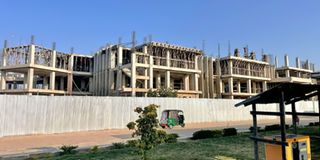
The project was included in the government’s development plans in the 2016/17 financial year, with the tendering process beginning the following year.
Under the original plan, construction was to be completed by June 2019, according to the contracts reviewed during the investigation.
The delay has raised concerns about the management of public projects. Regulation 242(2) of the Public Procurement Regulations, 2013, requires public institutions to closely supervise contracts to ensure projects are completed on time, within agreed costs and to the required quality standards.
The regulation also requires institutions to identify challenges early and take corrective measures before they cause significant delays.
However, an investigation found that the project has been dogged by changes of contractors, terminated contracts, design revisions and delays in implementation, leaving residents to shoulder costs the facility was intended to eliminate.
CAG raises concerns
The Controller and Auditor General (CAG)’s 2021/22 report listed the Singida Regional Referral Hospital project among those that had not been completed despite extensions to their implementation periods.
The report states that the project remained incomplete when the extended contract period expired on August 12, 2022.
The contract was valued at Sh425.03 million. CAG warned that failure to complete the project on time could undermine the efficiency of public spending and delay the delivery of services that the investment was intended to praaovide.
For patients, the consequences have been more immediate.
Hundreds are still referred to Benjamin Mkapa Hospital in Dodoma, Bugando Medical Centre in Mwanza, Kilimanjaro Christian Medical Centre (KCMC) and Muhimbili National Hospital in Dar es Salaam for specialised services.
For some families, the referrals mean additional costs for transport, accommodation and treatment.
Families forced to sell property
A resident of Muhintiri village in Ikungi District, Singida Region, Ms Christina Hamis, 69, said she moved to Dodoma in 2024 and rented a room for more than two years so that her child could receive dialysis treatment.
She said she sold her cattle, farm and kiosk to meet the costs of treatment, transport and accommodation.
“I sold everything I had. Eventually, I could no longer continue with treatment because I had no money left,” she said.
Ms Hamis said access to the service in Singida could have helped her child receive an earlier diagnosis and treatment.
Her son died on May 16, 2026, after she could no longer afford dialysis. Her experience comes as the Singida referral hospital began offering dialysis services in July this year, reducing the need for patients to travel to Dodoma for the treatment.
Resident of Singida Municipality, Mr Hamisi Mussa, said patients requiring specialist care continued to face significant costs.
“When a patient needs a specialist in cardiac or kidney diseases, or advanced diagnostic tests, we are often told to go to Benjamin Mkapa, KCMC, Bugando or Muhimbili,” he said.
“The journeys are long and expensive, to the extent that some patients cannot even make it to those hospitals.”
Resident of Ikungi District in the region, Ms Anna Mghamba, said the regional referral hospital was expected to reduce the need for patients to travel to other regions.
Resident of Iramba in the region, Mr Paulo Mwalimu, said some patients risked their lives while waiting for referrals or struggling to raise money to travel to other hospitals.
“We are asking the government to complete the infrastructure and recruit enough specialists so that people in Singida can access services closer to their homes instead of spending an entire day travelling in search of treatment,” he said.
Singida Urban MP Yagi Kiaratu said inadequate access to specialised healthcare has been a longstanding challenge for residents of Singida and neighbouring regions.
He said the challenge prompted efforts to establish the regional referral hospital, with the idea originating in 2015 under the then Singida Regional Commissioner, Dr Parseko Kone.
“Although construction of some key buildings began, the project went through periods of stagnation before the government revived its implementation using funds under the Covid-19 response programme,” Mr Kiaratu said.
Mr Kiaratu previously served as Mayor of Singida Municipality and councillor for Majengo Ward from 2020 to 2025 before being elected to Parliament.
According to Mr Kiaratu, delays in completing the infrastructure forced patients to travel to hospitals in Dodoma, Mwanza and Dar es Salaam, increasing their medical, transport and accommodation costs.
He said the burden was particularly heavy for patients requiring regular treatment, including dialysis.
The introduction of dialysis services in Singida, he said, had already reduced the burden on patients and their families.
Despite the incomplete building, the hospital has expanded its specialist services, according to its director, Dr Munaji Kamtande.
The services include orthopaedic surgery, neurosurgery, urology, advanced laboratory services and CT scans.
Dr Kamtande said dialysis services began in July 2026, meaning many patients no longer need to travel to Dodoma for treatment.
However, he said some services, including MRI scans and specialised cancer treatment, still require patients to be referred to higher-level hospitals.
Completion of the new building would increase the hospital’s capacity and reduce referrals outside the region, he said.
The completed facility is expected to include paediatric, maternity and medical wards, an intensive care unit, emergency medical department, operating theatres, advanced laboratories and other specialist services. The services are expected to reduce residents’ reliance on hospitals in Dodoma, Mwanza and Dar es Salaam.
Singida Regional Medical Officer, Dr Jessica Lebba, said construction was being carried out in phases depending on the availability of government funding. She said the project was currently in its third phase, with regional and hospital authorities monitoring progress to ensure it was completed to the required standards.
“Completion of this project will significantly strengthen specialised healthcare services at Singida Regional Referral Hospital and reduce the number of referrals currently made to other hospitals,” she said.
Dr Lebba said the hospital currently provides more than 10 specialist services, with the number expected to rise to all 17 targeted services once the new building is completed.
Consultant surgeon at the Dodoma-based Benjamin Mkapa Hospital, Dr Mugisha Nkoronko said delays in expanding healthcare infrastructure could impose significant financial and health costs on patients.
“When health services are far from communities, patients face hardship and high costs, with some forced to travel long distances for treatment that should be available closer to where they live,” he said.
He said the situation also increased risks for patients requiring urgent and specialised care.
Dr Nkoronko who is also former president of the Medical Association of Tanzania (MAT), said investment in health facilities should go beyond constructing buildings to include adequate medical equipment and sufficient healthcare workers.
Singida Regional Referral Hospital, he said, needed to be strengthened so it could provide the specialist services required by residents and reduce the number of patients travelling to other regions for treatment.
Register to begin your journey to our premium contentSubscribe for full access to premium content