Post-2025 Tanzania election forum: Leaders call for honest dialogue to protect union
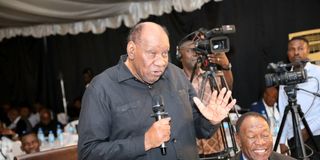
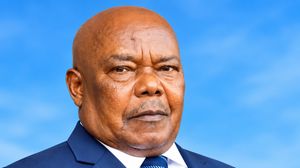
CCM Mainland vice chairman Stephen Wasira speaks during a national conference to discuss Tanzania’s political situation, the 2025 General Election and the country’s future in Dar es Salaam on September 8, 2026. PHOTO | MICHAEL MATEMANGA
Dar es Salaam. Tanzania’s Union will need honest dialogue, constitutional clarity, and a willingness to protect its benefits if it is to remain strong for the next generation, speakers said on Tuesday, September 8, 2026, during a national meeting to discuss the country’s political situation following the 2025 General Election and the nation’s future.
Speaking at the event, the ruling CCM Vice Chairman for Tanzania Mainland, Mr Stephen Wasira, argued that the Union itself has delivered important benefits and that its stability cannot be separated from peace in either part of the country.
He said the movement of people between Zanzibar and the Mainland was among the practical benefits of the Union, while stressing that instability on one side would inevitably affect the other.
“The peace and stability of Zanzibar and the stability of the United Republic depend on each other,” he said.
Mr Wasira also questioned ACT-Wazalendo’s call for a ‘Zanzibar with full authority’, saying the phrase needed to be understood within the existing Union framework.
“Zanzibar has its own Revolutionary Government which deals with almost all matters concerning Zanzibar, except for a few matters that fall under the Union. So, when we talk about Zanzibar having full authority, we have to ask: does it remain part of the Union, or does it become sovereign? There is one sovereignty of the United Republic of Tanzania, while responsibilities are divided between the Union and Zanzibar,” he said.
“Any challenges should be addressed in a way that does not undermine the future of our Union,” added Mr Wasira.
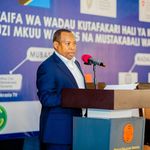
For former Zanzibar First Vice President and ACT-Wazalendo National Chairman Othman Masoud Othman, the central issue is how the constitutional framework is interpreted and implemented.
He warned that if the current Constitution were followed strictly in some areas, it could create serious disputes over matters such as revenue, ports, immigration, oil, and gas, potentially placing the Union itself under severe pressure.
“If there is a major threat to the Union, it is the Constitution itself as it stands now and the way we have implemented it. We really need to sit down and resolve these issues to protect the Union,” he said.
Mr Othman said the answer was not simply to debate whether Zanzibar should have more or less authority, but to revisit the constitutional fundamentals and agree clearly on what belongs to the Union and what falls under each side’s exclusive authority.
For the next generation, Mr Othman said, the task was to use the peace and benefits already secured rather than take them for granted.
“We have benefited from this country. I strongly ask Tanzanians not to lose that benefit,” he said.
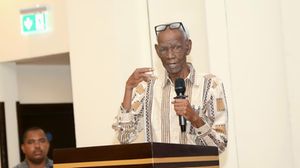
For his part, veteran Zanzibar politician, Mr Ali Mzee Ali said the Union should be understood through the country’s history, particularly Zanzibar’s experience of political conflict and reconciliation.
Recalling efforts that brought political rivals together, he said Zanzibar had shown that differences could be overcome when national interests were placed above political divisions.
He reminded the younger generation that political parties were not the foundation of their identity: “Political parties are things that came later. All of us here today are Tanzanians.”
Mr Ali acknowledged that the Union was not perfect, arguing that its human origins meant it would inevitably have shortcomings.
“This Union is not from God; it is a Union made by human beings, and therefore it has some weaknesses, but we need it more than anything in our country,” he said.
For him, strengthening the Union requires compromise, patriotism, and learning from the experiences of previous generations.