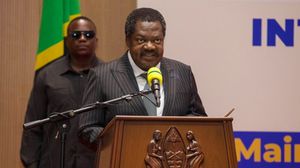
Public entities must become enablers, not barriers, to investment
Treasury Registrar Nehemiah Mchechu speaks during the closing ceremony of the third phase of the four-day Executive Induction Training Programme for chief executive officers (CEOs) of public entities at the Mwalimu Julius Nyerere Leadership School in Kibaha, Coast Region, on Friday, July 24, 2026. PHOTO | COURTESY
Pwani. The government has challenged public entities to become catalysts for economic growth by creating a conducive business and investment environment through efficient systems, streamlined processes, improved service delivery and stronger collaboration with the private sector as Tanzania advances the implementation of Vision 2050.
The challenge was issued on Friday, July 24, 2026, by the Minister of State in the President’s Office (Public Service Management and Good Governance), Mr Ridhiwani Kikwete, during the closing ceremony of the third phase of the four-day Executive Induction Training Programme for Chief Executive Officers (CEOs) of public entities, held at the Mwalimu Julius Nyerere Leadership School in Kibaha, Coast Region.
Addressing the CEOs, Mr Kikwete said the success of Vision 2050 would not depend solely on the quality of policies and development plans, but on how effectively public entities translate those ambitions into measurable results for citizens and the national economy.
Against this backdrop, he urged heads of public entities to ensure that the organisations they lead contribute to creating a business-friendly environment by eliminating unnecessary red tape, improving service delivery, embracing innovation and strengthening collaboration with the private sector.
The minister said public entities must become facilitators of development rather than obstacles to investment, recognising that the quality of services they provide has a direct impact on attracting investment, strengthening economic competitiveness, and creating growth opportunities.
“The leadership of public institutions will not be measured by the quality of plans they develop alone, but by their ability to implement those plans, remove unnecessary bureaucracy, improve service delivery, increase productivity, and build institutions that are accountable to citizens,” he stressed.
The Minister of State in the President's Office (Public Service Management and Good Governance), Mr Ridhiwani Kikwete, speaks during the closing ceremony of the third phase of the four-day Executive Induction Training Programme for chief executive officers (CEOs) of public entities at the Mwalimu Julius Nyerere Leadership School in Kibaha, Coast Region, on Friday, July 24, 2026. PHOTO | COURTESY
Mr Kikwete noted that every decision made by a public entity has a direct impact on the country’s business and investment climate, stressing that institutional processes, services and day-to-day actions should contribute to building investor confidence and supporting national development objectives.
He reminded CEOs that their primary responsibility is to ensure that Vision 2050, which officially commenced implementation on July 1, 2026, is translated into tangible results through the institutions they lead.
“I expect the implementation of Vision 2050 to become a permanent agenda in your daily decisions and responsibilities. Your institutional plans, strategies and implementation programmes must be aligned with the objectives of Vision 2050, if we are to accelerate national development,” he emphasised.
He added that professionalism, accountability and efficiency would be critical in ensuring that public entities deliver the results required to achieve Tanzania’s long-term development aspirations.
“By carrying out your responsibilities with professionalism, accountability and efficiency, you will deliver positive results that will contribute to achieving the national vision,” he said.
He further directed CEOs to strengthen collaboration with the private sector, development partners and citizens to increase the value and impact of services delivered by public entities.
Such partnerships, he added, would help create systems that enable businesses to operate efficiently, ensure investors access timely services and expand economic opportunities across the country.
Mr Kikwete also called on public entities to embrace digital systems, strengthen domestic revenue mobilisation, improve governance and ensure institutional performance indicators are aligned with the objectives of Vision 2050.
He said the success of the Executive Induction Training Programme would not be measured by certificates awarded or knowledge acquired during the training, but by the improvements and results reflected in the institutions led by the participants.
The Permanent Secretary responsible for Investment in the Ministry of Planning and Investment, Dr Fred Msemwa, said the CEOs Induction programme had come at an opportune time as Tanzania embarks on a critical phase of economic transformation aimed at growing the size of its economy tenfold through the implementation of Vision 2050.
He said achieving such an ambitious vision requires leaders who are innovative, forward-looking and accountable, with the ability to translate national aspirations into measurable economic and social outcomes.
“I am confident that the knowledge you have acquired through this training, together with the experiences you have shared, will strengthen your capacity and readiness to discharge your responsibilities more effectively,” he said.
Dr Msemwa added that visionary leadership would be essential in positioning public entities to facilitate investment, industrialisation and sustainable economic transformation.
He said public sector leaders must create an enabling environment that allows the private sector to participate effectively in driving economic growth and development.
Mr Ibrahim Mahumi, who represented the Permanent Secretary in the President’s Office (Public Service Management and Good Governance), said strengthening leadership capacity among heads of public entities was essential in improving the quality of public services and ensuring institutions effectively contribute to national development priorities.
Mr Mahumi said CEOs have a responsibility to build a culture of professionalism, accountability and results-oriented performance within their organisations.
He noted that effective leadership is the foundation of institutions capable of delivering quality services to citizens.
He emphasised that the knowledge and experience gained through the induction programme should be translated into practical action through improved decision-making, stronger governance systems and enhanced efficiency in the management of public resources.
Presenting the perspective of institutions under the Office of the Treasury Registrar, Treasury Registrar Nehemiah Mchechu said ongoing reforms in public entities were already delivering significant improvements in service delivery, operational efficiency and institutional performance.
Participants attend the closing ceremony of the third phase of the four-day Executive Induction Training Programme for chief executive officers (CEOs) of public entities at the Mwalimu Julius Nyerere Leadership School in Kibaha, Coast Region, on Friday, July 24, 2026. PHOTO | COURTESY
Through the Office of the Treasury Registrar, the government oversees 308 public entities and companies in which it holds minority shares, with a combined investment portfolio valued at Sh92.3 trillion, making them strategic players in implementing Vision 2050 and supporting Tanzania’s economic growth agenda.
Mr Mchechu said their scale and strategic importance underscored the need for continued reforms to strengthen efficiency, accountability and contribution to national development.
“In recent years, public institutions have made significant progress in improving service delivery, enhancing economic efficiency and strengthening overall institutional performance,” he said.
He noted that the reforms had enabled more institutions to reduce dependence on the Government Consolidated Fund, reflecting growing financial sustainability.
“We continue to advance a deliberate reform agenda so that, over time, more public institutions become financially self-sustaining through their own revenues, except those whose mandates legitimately require continued government support,” he said.
“The success is not only about numbers; it is about mindset, thinking and the new culture we are seeing within our boards and CEOs,” he insisted.
“The competence we are witnessing is impressive, the dedication is at another level, and every leader is demonstrating a genuine commitment to change and excellence,” he added.
Since its introduction in 2024, the Executive Induction Training Programme has trained 244 chief executives, including 57 who participated this year.
Register to begin your journey to our premium contentSubscribe for full access to premium content