Josephine Christopher is a senior business journalist for The Citizen and Mwananchi newspapers
Mwananchi Communications Limitted
Dar es Salaam. Tanzania is weighing the potential of weather-modification technology to support agriculture, but scientists and agribusiness stakeholders say the technology will need further trials, financing and economic assessment before it can become a practical tool for farmers.
The debate follows an offer by Indonesia to share its experience in weather modification and cloud seeding with Tanzania, with Jakarta preparing to establish a working group to explore how the technology could support agricultural production.
Indonesian Ambassador to Tanzania Tri Yogo Jatmiko said on August 17 that the initiative followed a Joint Agriculture Cooperation Commission meeting held in Dodoma in May, where Tanzania expressed interest in Indonesia's experience.
“We offer Tanzania the opportunity to learn from us the best practice on how Indonesia managed to modify weather, in simple terms, how to create rain for agriculture,” he said.
However, Tanzania is not starting from zero.
Researchers at the University of Dodoma (UDOM) are developing a local atmospheric rocket system for weather modification, with the technology currently undergoing small-scale trials as part of student training.
Dr Benatus Norbert Mvile, a lecturer in UDOM's Department of Physics, said researchers had the technical knowledge to scale up the system but lacked the financial resources required for larger trials.
“At the moment, we are doing it on a small scale for student training, as part of their practical application of what they have learnt in class. But we have the knowledge to scale it up,” he said.
“What we lack is financial support to enable us to operate at the scale required and move to the next stages, including larger trials.”
The university has not yet formally approached the Ministry of Agriculture over the technology, although researchers have interacted with government officials during exhibitions.
Dr Mvile said the researchers regarded the project as being at an early stage, but growing interest from potential partners could accelerate its development.
“We are ready to collaborate with anyone. If there is any institution that is interested, we at the University of Dodoma would welcome that cooperation,” he said.
The potential economic case, however, remains unresolved.
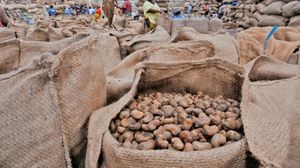
Agricultural Council of Tanzania chair Mr Jitu Soni said weather modification could be useful in areas affected by low rainfall and prolonged dry spells, but warned that large-scale deployment could be costly.
“For now, it is still too early because it will be costly,” he said.
Mr Soni said Tanzania should meanwhile prioritise irrigation infrastructure, arguing that significant water resources remain underutilised because of inadequate irrigation systems.
The scale of that infrastructure challenge is significant. Tanzania has an estimated 29 million hectares suitable for irrigation, but only about 700,000 to 800,000 hectares have been developed.
The National Irrigation Commission's 2023–2028 plan targets an expansion from 727,281 hectares in 2022 to 1.672 million hectares by 2028.
For the 2026/27 financial year, the National Irrigation Commission is seeking Sh384.29 billion, according to the Agriculture Ministry's budget speech.
Mr Soni said new technologies should nevertheless be considered as the agricultural sector modernises, particularly where farmers face prolonged dry periods.
“It is important for the Government to consider inviting the private sector into this area so that they can develop the technology and look at how they can support it to grow the sector,” he said.
The science also calls for caution.
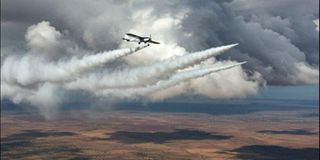
The World Meteorological Organisation (WMO) says weather modification typically involves cloud seeding to influence precipitation, but it does not create rain systems from clear skies.
More than 50 countries have operational weather-modification programmes, although establishing the effectiveness of such interventions can be difficult.
In Africa several countries have explored the technology including Zimbabwe where it deployed aircraft for national cloud-seeding programmes aimed at mitigating dry spells and supporting agriculture, while Morocco has operated its Al-Ghait rainfall-enhancement programme for decades.
South Africa has also conducted controlled cloud-seeding experiments and Kenya has included rainfall enhancement in its national weather-modification programme.
The WMO says economic analyses indicate that successful rainfall-enhancement operations could generate significant benefits, but uncertainty over their effects means investment carries considerable risk.
It also says results from one cloud-seeding experiment cannot simply be transferred to another environment because outcomes depend on natural cloud characteristics.
Indonesia, a bilateral ally to Tanzania also provides a practical example of both the potential and limitations.
Its meteorological agency, BMKG, conducts weather-modification operations for purposes including reservoir filling, drought mitigation and disaster management. Its 2026 operational records show repeated cloud-seeding activities, including operations targeting drought and reservoir water supplies.
BMKG has also stressed that weather modification does not create rain from nothing and requires suitable atmospheric conditions.
For Tanzania, the immediate question therefore may not be whether to adopt the technology nationwide, but whether to finance controlled trials capable of establishing where and when it can deliver an economic return.
Such trials could help determine whether weather modification can complement, rather than compete with, Tanzania's longer-term investment in irrigation, water harvesting and climate-resilient agriculture.
For UDOM, the first requirement is funding to move its technology beyond student training. For farmers and policymakers, the next is evidence that additional rainfall can translate into additional agricultural output at a cost that makes commercial sense.
That could determine whether Indonesia's offer becomes a technology-transfer partnership or remains another proposal on Tanzania's growing list of agricultural innovations.
Register to begin your journey to our premium contentSubscribe for full access to premium content