Dar es Salaam. Tanzania needs to rethink the role of university education if it is to equip young people with skills required in a rapidly changing global economy, the United Nations Development Programme (UNDP) Resident Representative in Tanzania, Shigeki Komatsubara, has said.
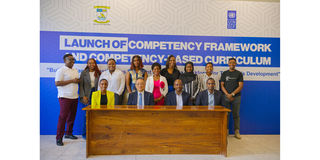
Speaking during a workshop on competency frameworks and competency-based curriculum development at the Dar es Salaam Institute of Technology on May 12, Mr Komatsubara said traditional models of university education are no longer sufficient as the world undergoes major technological and economic transformation.
He said the emergence of artificial intelligence, digital economies and green technologies is changing the nature of jobs globally, forcing education institutions to move beyond theoretical teaching and focus more on practical skills.
“Look at the world young people are stepping into. Artificial intelligence, digital economies and green technologies are rewriting the rules overnight,” he said.
According to him, many jobs that today’s students will perform in the coming years may not yet exist, making adaptability, innovation and problem-solving skills increasingly important.
“This is why we must rethink how university education works to honour the vision of self-reliance in the 21st century,” he said.
Mr Komatsubara noted that universities should not only produce graduates with academic qualifications, but also individuals capable of creating opportunities, leading communities and addressing complex social and economic challenges.
“We need an education system that builds innovators, problem-solvers and critical thinkers,” he said.
He linked the discussion to the philosophy of Tanzania’s founding president, Julius Nyerere, saying the concept of Education for Self-Reliance remains relevant in modern times.
Quoting Nyerere, he said education should help young people think independently, make decisions and execute them effectively.
However, he stressed that in today’s world, executing those decisions requires modern competencies and practical knowledge aligned with labour market demands.
Mr Komatsubara also commended DIT for taking part in the initiative to develop competency-based curricula, describing the institution as a trailblazer whose reforms could influence universities across Tanzania.
“This is not just another policy document. It is a blueprint for how institutions can better prepare students for the future,” he said.
Speaking at the same event, DIT Deputy Rector for Academic, Research and Consultancy, Prof Ezekiel Amri, said universities must continuously review curricula to ensure graduates possess skills required in the labour market.
He said producing graduates with relevant competencies is not only important for institutions, but also for the country’s broader economic development.
“We cannot produce a skilled workforce without continuously improving training and competencies,” he said.
According to Prof Amri, DIT regularly consults stakeholders and employers during curriculum reviews to ensure programmes reflect labour market realities and industry expectations.
He said competency-based training helps institutions prepare graduates who are capable of meeting workplace demands immediately after graduation.
“The issue of having the right skills is not only a challenge for DIT, but for Tanzania as a whole,” he said.