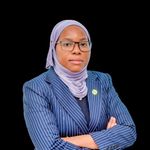
A registered professional engineer, she has emerged as a key voice bridging economic development, environmental protection and responsible investment
Dar es Salaam. As Africa’s economies grow and demand for natural resources rises, the question of how development can occur responsibly has never been more urgent.
For Rose Mayembe, an experienced Environmental, Social and Governance (ESG) and Climate Change Consultant, the solution lies in integrating sustainability from the outset of every project.
With over 13 years of experience across Africa’s investment landscape, Rose has earned a strong reputation in Environmental and Social Impact Assessments (ESIAs) and sustainability advisory for large-scale projects in mining, energy, infrastructure and financial services.
A registered professional engineer and GRI-certified sustainability professional, she has emerged as a key voice bridging economic development, environmental protection and responsible investment.
Central to her work is ensuring that investment projects protect communities, ecosystems and long-term economic stability. “My work in ESIA helps ensure that major development projects in Africa are designed and implemented responsibly,” she explains. “It allows us to identify environmental, social and climate-related risks early and integrate solutions before construction begins.”
Rose’s efforts in responsible mining and sustainability have gained continental recognition. She was recently named runner-up for the “Leading Woman in Large-Scale Mining in Africa” award at the Investing in African Mining Indaba conference.
She sees this recognition as a reflection not only of personal achievement but of Tanzania’s growing pool of world-class professionals capable of leading complex projects to the highest international sustainability standards. “It shows that our country is ready to be part of the global conversation on responsible mining and the energy transition,” she says.
Beyond professional accolades, Rose hopes her journey inspires Tanzanian women and youth to pursue careers in science, engineering and sustainability. “I want young people—especially girls in STEM—to see that it is possible to be an engineer, a sustainability expert and a leader on a global stage,” she notes. “Leadership is not about titles; it’s about the value and perspective you bring to solving real-world challenges.”
ESIAs, she explains, are a critical tool for responsible development. Before major projects such as mines, power plants, or infrastructure developments commence, these assessments evaluate potential environmental and social impacts. They help identify risks and guide mitigation strategies to minimize harm.
Rose often highlights the complexities in resource-rich regions. While mining and development promise economic growth and job creation, they can also displace communities or disproportionately affect vulnerable groups, particularly women.
“Development projects bring enormous opportunities,” she says, “but without proper risk management, they can cause environmental damage or social disruption. ESIA ensures the right balance between growth, environmental protection and social justice.”
Her work frequently involves advising projects seeking funding from international lenders and multilateral banks. Securing such financing requires compliance with global sustainability frameworks, including the IFC Performance Standards, the Equator Principles IV and the World Bank Environmental and Social Standards.
These frameworks establish rigorous requirements for managing environmental and social impacts, covering human rights, labor conditions, biodiversity, climate risk and community safety.
“In the world of large-scale investment, these standards are essentially the global language of risk management,” Rose says. “They determine whether a project is considered ‘bankable’ by international lenders.” By aligning projects with these frameworks, developers reduce risks and increase investor confidence. Projects demonstrating strong ESG governance are more likely to attract long-term investment and operate successfully over decades.
Her work has contributed to assessments for some of Tanzania’s most significant mining projects, including a 58-million-tonne nickel sulphide deposit—one of the world’s largest undeveloped nickel resources—and a 213-million-tonne graphite mine among the largest globally.
Beyond technical analysis, Rose emphasizes meaningful stakeholder engagement. She works closely with communities to ensure their concerns are heard and that fair compensation and livelihood restoration plans are in place.
“When an ESIA is done properly, it creates what we call a ‘social license to operate,’” she explains. “Communities become partners in development rather than simply being affected by it.”
Climate change is increasingly central to her work. As the world shifts toward cleaner energy, demand for critical minerals such as nickel, graphite and lithium—essential for renewable energy technologies and battery storage—has surged, many of which are found in Africa. Rose sees both a challenge and an opportunity.
“There is a persistent myth that we must choose between economic growth and protecting the environment,” she says. “In reality, for a resource-rich continent like Africa, the environment is the economy.” She advocates for “just extraction,” ensuring that resource development contributes to broad, inclusive economic transformation.
“Africa has the opportunity to position itself at the center of the global green economy,” she adds, “but we must do it on our own terms, building climate-resilient communities and long-term prosperity.”
Alongside consulting, Rose contributes to research and academic publications on sustainability and climate policy. She has co-authored peer-reviewed studies with scholars from the University of Cape Town, examining regulatory gaps where climate change is not yet integrated into impact assessment frameworks.
She is also contributing to a book with the Canadian Association of African Studies on decarbonizing mining, emphasizing the importance of integrating greenhouse gas assessments early in project design rather than retrofitting solutions later.
Working in technical fields such as mining and sustainability has not always been easy for women. Rose acknowledges that, like many women in engineering and science, she sometimes had to work harder to have her expertise recognized.
“In many technical sectors, the challenge for women is not capability but perception and access to opportunity,” she says. “Early in my career, I felt I had to prepare twice as much to ensure my voice carried equal weight.” Yet she believes credibility comes through consistent results. “Respect follows when the quality of your work leads to better outcomes for projects and communities,” she notes.
Her perspective as a woman has also shaped her leadership style, strengthening her ability to connect technical planning with the realities faced by communities on the ground.
Through her work, Rose exemplifies how responsible, sustainable development in Africa is achievable.
By integrating ESG principles, engaging communities and adhering to global standards, she demonstrates that economic growth and environmental stewardship can go hand in hand.