Samia calls for action on Africa’s infrastructure plans

Dar es Salaam. President Samia Suluhu Hassan has called on African leaders, financiers and development partners to shift focus from planning infrastructure projects to implementing them, saying faster execution is critical to unlocking the continent’s economic potential and deepening regional integration.

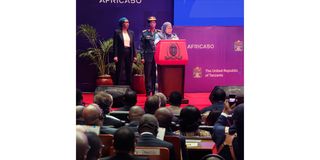
Speaking at the Africa50 General Shareholders’ Meeting (GSM) and the Infra for Africa Forum in Dar es Salaam on Wednesday August 05, 2026, the President said Africa has spent years formulating ambitious infrastructure strategies, but tangible benefits will only be realised when projects move from boardrooms to the ground.

She said addressing the continent’s infrastructure deficit requires stronger collaboration between governments, development finance institutions and the private sector, supported by increased investment in bankable projects.

“Africa has developed many plans and strategies over the years. What is needed now is implementation that delivers results for our people,” President Hassan said.

She reaffirmed Tanzania’s ambition to position itself as a regional gateway for land-linked countries, noting that the country is leveraging its membership in the East African Community (EAC) and the Southern African Development Community (Sadc) to strengthen regional connectivity, facilitate trade and support economic integration.

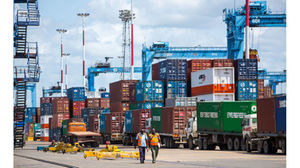
The President said Tanzania is continuing to invest in strategic infrastructure projects, including ports, railways, roads, energy systems and digital connectivity, to improve the movement of goods, services and people across the region.

According to her, modern infrastructure is essential for boosting intra-African trade, lowering transport and logistics costs and attracting investment.

She noted that improved transport corridors, reliable energy supplies and expanded broadband networks would accelerate industrialisation, enhance competitiveness and create jobs.

“The government must accelerate policies that connect people and develop infrastructure that links markets,” she said.

President Hassan added that connectivity remains a key driver of competitiveness, industrialisation and sustainable economic growth.

She also stressed the importance of expanding access to reliable energy and digital infrastructure, saying such investments are creating opportunities for innovation, particularly among women and young people.

According to the President, improved internet access is enabling more young Africans to move beyond being consumers of technology and become innovators, entrepreneurs and problem-solvers.

She called for stronger partnerships among governments, investors, development partners and financial institutions, saying mobilising both public and private capital is essential to bridge Africa’s infrastructure financing gap.

“Tanzania is ready to work with partners in harnessing investment opportunities across different sectors,” she said.


Speaking at the same event, the Minister for Finance, Ambassador Khamis Mussa Omar, said Tanzania remains committed to maintaining macroeconomic stability and implementing reforms that encourage greater private sector participation in infrastructure development.

He said the country’s strategic location, improving transport systems and investor-friendly policies continue to strengthen its position as a regional trade and logistics hub.

Africa50 Chief Executive Officer, Mr Alain Ebobissé, said the institution remains committed to partnering with African governments to accelerate the preparation of bankable infrastructure projects and mobilise private investment.

He noted that infrastructure remains central to Africa’s development agenda, particularly in supporting industrialisation, trade integration and economic resilience.

The Africa50 General Shareholders’ Meeting and Infra for Africa Forum brought together heads of state, policymakers, development finance institutions, investors and infrastructure experts to discuss practical strategies for accelerating infrastructure delivery across the continent.

The discussions focused on strengthening public-private partnerships, mobilising long-term financing and improving project preparation to ensure that infrastructure investments contribute to Africa’s broader economic transformation.