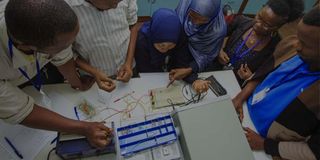
Arusha. The Nelson Mandela African Institution of Science and Technology (NM-AIST), in collaboration with the Ministry of Education, Science and Technology, is working on ways to put innovations developed by Samia Scholarship beneficiaries into practical use.
The programme supports students pursuing specialised studies in data science, artificial intelligence (AI) and computational sciences, in line with the skills priorities outlined in Tanzania’s Development Vision 2050.
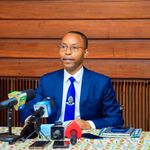
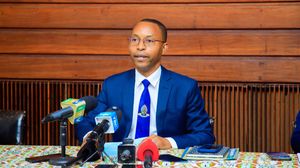
Speaking in Arusha yesterday, NM-AIST programme coordinator Professor Lilian Pasape said some students from the first cohort had developed and registered innovations, and the institution was now working with the ministry on how they could be implemented.
“Some students in the first cohort were able to develop innovations, which we registered, and our institution is now working with the ministry to see how we can put those innovations into practice,” Professor Pasape said. “We do not want them to return with certificates alone. We want certificates and innovations that will help address our challenges in Tanzania and Africa as a whole,” she added.
Professor Pasape was speaking during the reception of the second cohort of beneficiaries, comprising 60 students. Fifty have joined NM-AIST, while 10 are expected to travel to Russia on September 24 to begin their studies.
Of the 50 students at NM-AIST, 41 are boys and nine are girls. Twenty-five come from government schools and 25 from private schools, with students drawn from different regions.
Professor Pasape said the programme was also intended to address the shortage of skilled professionals in technology-related fields identified under Vision 2050.
“The Vision clearly states that we need sufficient skills, particularly in these areas of technology. Therefore, this programme responds to the issues identified in the Vision,” she said.
She also called for greater involvement of the private sector and government institutions to help beneficiaries apply the skills acquired through the programme.
One of the beneficiaries, Husna Kondo, a graduate of Canossa Girls’ Secondary School, said she would use the opportunity to contribute to technological development in Tanzania.
“My message to all girls is that it is possible. Science is not difficult. If you focus, make an effort and work hard, science subjects are also achievable. So, my fellow girls, let us not be afraid,” she said.
Another beneficiary, Andrea John, a graduate of Magu Secondary School in Mwanza, said he planned to use the opportunity to acquire skills that would enable him to contribute to national development.
Meanwhile, parent Edith Mwasha said the scholarship had eased the financial pressure on her family because one of her twins had secured a place through the programme.
“I have twins and both need to go to university. It feels like a burden has been lifted,” she said.