Southern Highlands handed key role in Tanzania’s $1 trillion economy drive

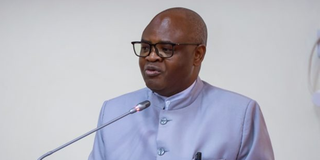
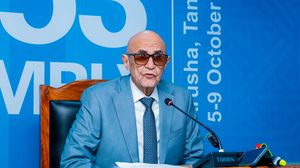
Minister of State in the President’s Office for Planning and Investment, Prof Kitila Mkumbo. PHOTO | COURTESY


Dar es Salaam. Tanzania’s Southern Highlands has been tasked with playing a bigger role in driving food production, industrialisation and trade as the government seeks to build a $1 trillion economy by 2050.

The six-region bloc of Songwe, Mbeya, Rukwa, Katavi, Iringa and Njombe is expected to build on its strength in food production while expanding agro-processing, manufacturing, trade and other economic activities that can raise incomes, create jobs and increase its contribution to the national economy.

The assignment was outlined at the Songwe Dira Forum held on Wednesday, August 19, 2026, the first in a series of regional platforms through which the government plans to translate Tanzania’s Development Vision 2050 into specific economic priorities for each region.

Minister of State in the President’s Office for Planning and Investment, Prof Kitila Mkumbo, told the forum that the six Southern Highlands regions already had a major advantage in food production.

While Tanzania’s food self-sufficiency stands at 130 percent, he said, the Southern Highlands had reached 219 percent.

That performance, however, was only the starting point.

Prof Mkumbo said the region must turn its agricultural strength into processing, packaging, storage, transportation and production for export markets.

“Songwe has a major opportunity not only in the production of crops, but also in crop processing, packaging, storage, transportation and agriculture targeting export markets,” he said.

The minister challenged Songwe to establish a clear economic identity by identifying products or activities in which it could become nationally, regionally or globally competitive.

“What do you want Songwe to be known for economically? What products can you produce competitively for Tanzania, East Africa and the global market?” he asked.

The question is central to the regional forums because the government does not want Vision 2050 implemented through a uniform formula.

Instead, each region is expected to identify its strengths and determine how they can contribute to national transformation.

Prof Mkumbo said Songwe currently had an economy worth about Sh4.3 trillion, while Tanzania’s economy was estimated at Sh234 trillion and was expected to grow to Sh26 quadrillion by 2050.

“If we are to reach a $1 trillion economy, every region must ask itself how much it will contribute to that national journey,” said Prof Mkumbo.

He challenged Songwe’s leadership to determine what more the region could produce, what it could process locally instead of selling in raw form, how many businesses, investments and jobs it could create over the next five years, and how much it could increase people’s incomes.

“We want regions that do not merely receive economic activities but generate economic activities themselves,” said Prof Mkumbo.

The minister said the target would have little meaning if growth failed to translate into higher incomes for women, young people, men and older people.

He urged the region to focus on activities that expand production while creating jobs and improving household earnings.

The shift is intended to make regional economies stronger, more productive and better connected to domestic and export markets.

The Southern Highlands’ agricultural performance provides a strong foundation, but the government wants the region to move further along the value chain.

Greater investment in agro-processing could create markets for farmers, while packaging, storage and transport could support the movement of products into domestic and foreign markets.

Songwe’s geographical position gives it another advantage.

The region is an important gateway to the Southern African Development Community (SADC) market, creating opportunities in transport, logistics and cross-border trade.

The responsibility for converting those opportunities into economic activity, however, will not rest with the government alone.

Songwe Regional Commissioner Jabir Makame said the forum was intended to change the mindset of public leaders and officials at regional and local government levels so that Vision 2050 could move away from routine approaches.

“The forum should change the mindset and approach of our public servants on how we organise ourselves to implement the Vision,” said Mr Makame.

For the private sector, the forum presented an opportunity to redefine its relationship with the government in implementing the Vision.

Tanzania National Chamber of Commerce (TNCC) President, Mr Vincent Minja, said businesses should be treated as development partners rather than simply stakeholders consulted after government decisions had been made.

“We are no longer just stakeholders; we are partners,” said Mr Minja.

He called for the private sector to be involved before policies and other decisions affecting businesses are formulated, arguing that investors and entrepreneurs understand the practical conditions required for businesses to operate, expand and create jobs.

“Before any policy is made, the private sector should be involved,” he said.