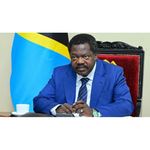
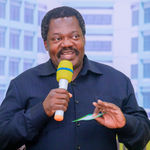
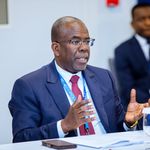
Dar es Salaam. Political analysts, opposition politicians and human rights advocates have outlined the qualities they believe should define the next Vice President.
The position will become officially vacant when Dr Emmanuel Nchimbi’s resignation takes effect on September 4, 2026, triggering a constitutional process requiring the President to appoint a replacement and Parliament to approve the nominee.
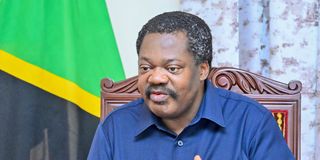
Dr Nchimbi announced his resignation on Tuesday, saying he had concluded that President Hassan wanted a change.
“I have become convinced, without doubt, that Her Excellency the President wants change, so I have decided to fulfil my promise,” he said.
President Hassan accepted the resignation, according to Chief Secretary Ambassador Moses Kusiluka.
Under Article 50(2)(c) of the Constitution, the office of Vice President becomes vacant when the holder resigns. Article 50(4) requires the President to appoint a replacement within 14 days after the vacancy occurs.
The nominee must be approved by Parliament by a majority vote of MPs and, under Article 48(3), assumes office after taking the oath.
Defender of truth, justice
For Chadema secretary-general John Mnyika, the next Vice President should be part of efforts to address what he described as unresolved issues surrounding the events of October 29. “The first thing is to seek truth, justice and accountability regarding the October events by conducting an independent investigation,” he said.
Mr Mnyika warned that failure to address the matter could prolong political tensions.
“If we do not seek truth, justice and accountability through an independent investigation into October, the nation will continue to have a chain of conflicts within the ruling party, within the Government and among citizens,” he said.
He also called for reconciliation and constitutional reforms.
“The second thing is that the country has a major crisis. The nation needs reconciliation and mediation over that crisis,” he said. “The third thing is that we must speed up the process of getting a new Constitution in order to change our systems,” Mr Mnyika added.
ACT-Wazalendo national leader Dorothy Semu said the next Vice President should understand Tanzania’s political, economic and social circumstances, particularly following the October 29 events.
“There is a need for a Vice President who understands well the political, economic and social circumstances we have experienced, especially after the events of October 29 and what followed,” she said.
She said the appointee should recognise calls for a new Constitution and an independent electoral commission.
“We need a Vice President who will recognise the demands of citizens that we have waited for a long time, including getting a new people’s Constitution and an independent commission to oversee free and fair elections,” she said. Ms Semu also called for truth, justice and accountability through an independent international investigation.
“We need a Vice President who will stand for truth, justice and accountability after October 29 and ensure that we get an independent international commission to investigate what happened and bring all those responsible to account,” she said.
She further called for political solutions to the issue of political prisoners. “Political prisoners and others need to be addressed politically, not legally, so that our country can heal, return to the table and create a new national future,” Ms Semu said.
Political scientist Paul Loisulie of the University of Dodoma said the next Vice President should be prepared to abandon any ambition of contesting for the presidency in future.
“He should be ready to forget the possibility of contesting for the presidency in future. This will give him the freedom to perform his duties without being associated with the activities of political groups towards an election,” Dr Loisulie said.
He said the person should understand citizens’ needs and aspirations and be capable of advising the President accordingly.
“He should be a person who recognises the real needs and expectations of Tanzanians at the moment so that he can assist and advise the President on the best way of achieving those expectations,” he said.
He also said the Vice President should be accepted across different social groups.
“He should be a person who is accepted by different social groups so that he can help to become a link between the people and the Government,” Dr Loisulie said.
Political analyst Makame Ali Ussi of the State University of Zanzibar (SUZA) said patriotism, commitment to the political agenda, knowledge of the Vice President’s role and leadership ability should guide the choice.
“He should have patriotism and commitment to the party’s agenda,” Prof Ussi said.
“He should understand the position of the Vice President, and have leadership and administrative ability,” he added.
Another analyst, Onesmo Kyauke, said the next Vice President should have the capacity to help President Hassan implement the election manifesto during the remaining years of the administration.
“The Vice President should have sufficient capacity to assist the President in completing the remaining four years because implementation of the manifesto is what will enable CCM to perform well in the next election,” he said.
He said the two leaders should also share a common vision.
“He should be someone who shares the President’s vision in implementing the election manifesto during the remaining years,” Dr Kyauke said.
‘Beyond Nchimbi’
The executive director of the Legal and Human Rights Centre (LHRC), Anna Henga, said the next Vice President should demonstrate courage in standing by his or her principles, particularly on constitutional reform.
“Tanzania needs someone beyond Nchimbi. Nchimbi was almost there. He had the courage to say that we need a new Constitution and that presidential powers are too great. We want someone who is bold, even more than him, who will stand by his decisions and his positions,” Dr Henga said.
National coordinator of the Tanzania Human Rights Defenders Coalition (THRDC), Onesmo Olengurumwa, said the successor should be acceptable to society and help address unresolved national issues.
“There are issues from last year’s events that have not yet been resolved. We have demands for a new Constitution, reconciliation and reforms of the systems. The person must be seen as acceptable to society in those areas,” he said.
Register to begin your journey to our premium contentSubscribe for full access to premium content