Dar es Salaam. Today, April 26, 2026, the United Republic of Tanzania is commemorating a unique journey of 62 years since two independent nations, Tanganyika and Zanzibar, decided to unite and form one state.
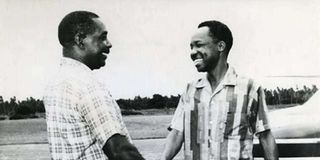
This Union, formally established through the agreements of April 22, 1964, and ratified on April 26, 1964, under the leadership of Mwalimu Julius Nyerere and Abeid Amani Karume, has continued to be among the unions that have endured for the longest time on the African continent.
Throughout this period, statistics from the National Bureau of Statistics (NBS), government reports, and international institutions clearly show the journey of this nation from political foundations to social and economic transformations, together with future expectations towards the year 2050.
The foundation of this Union was built through the Union Instruments of the year 1964, which initially outlined 11 Union matters assigned to the Union government.
Those matters involved sensitive areas such as the Constitution, foreign affairs, defence, police, citizenship, immigration, finance, and external trade.
However, as the nation grew, that list expanded and reached 22 matters according to the Constitution of the United Republic of Tanzania of 1977.
This increase resulted from new economic and political needs, including sectors such as currency and banking, higher education, oil and gas, and the registration of political parties.
These changes occur through a special procedure that requires two-thirds of Members of Parliament from Mainland Tanzania and two-thirds from Zanzibar, a situation that demonstrates the weight of protecting the balance within the Union.
Population, settlement
From the population perspective, statistics show major growth in this nation. According to the census of the year 1967, Tanzania had a population of only 12.3 million people.
But, according to the Population and Housing Census of the year 2022, released by NBS, that number has increased to 61.74 million people.
Among them, Mainland Tanzania has a population of 59.85 million, while Zanzibar has 1.89 million people.
This means that within a period of 55 years, the population has increased more than fivefold.
Furthermore, the rate of population growth has increased from 2.7 percent between 2002 and 2012 to 3.2 percent per year between 2012 and 2022, a situation that continues to place pressure on social services and resources.
Likewise, the “Population Dynamics” report of NBS shows that the population could reach 118 million people by the year 2050.
Alongside that population increase, there have been major changes in settlement patterns. In the year 1967, only 5.7 percent of Tanzanians were living in urban areas. But, by the year 2022, 34.9 percent of people live in urban areas.
Zanzibar has shown a faster rate of urban growth, where 49 percent of its residents now live in urban areas.
The Dar es Salaam Region leads in population size, having more than 5.3 million people, equivalent to nearly 9 percent of all Tanzanians.
These statistics indicate that by the year 2050, more than half of Tanzanians will live in urban areas, a situation that will require major investment in infrastructure and social services.
Governance, democracy, and economy
In the field of governance and democracy, the Union has continued to strengthen by enhancing representation.
During the period from 1967 to 1970, the Parliament of the United Republic of Tanzania operated under the Interim Constitution of 1964, having a structure of representation from Mainland Tanzania and Zanzibar.
Although there are no official statistics of representatives during the Union period, the election of 1970 showed a total of 237 Members of Parliament.
Among them, Mainland Tanzania had approximately 159 Members of Parliament, including constituency representatives, those appointed by the President, and members holding ex officio positions.
Zanzibar had approximately 67 Members of Parliament, many of them drawn from the Revolutionary Council and presidential appointments.
That system gave Zanzibar special representation to protect political balance within the Union.
At present, the Parliament of the United Republic has a total of 393 seats according to statistics from the election of the year 2025, where electoral constituencies numbered 264.
Among those, 214 are from Mainland Tanzania, and 50 are from Zanzibar. According to statistics for the year 2024/25, women Members of Parliament number 148 out of 392, equivalent to 37.8 percent.
This shows that Tanzania has surpassed the minimum threshold of 30 percent representation of women, a step interpreted as the success of gender equality policies.
Economically, the Union has enabled the existence of one market and one currency system. The Bank of Tanzania (BoT) was established in the year 1965 and began official operations in the year 1966, replacing the system of the East African Currency Board.
That system has ensured financial stability and simplified economic activities between the two sides of the Union.
According to the Ministry of Finance, Gross Domestic Product (GDP) reached approximately $60.5 billion (Sh151.3 trillion) in the year 2021, while various sectors such as tourism, agriculture, and services contributed significantly.
Statistics also show growth in non-government sectors. By the year 2022, Tanzania had more than 17,500 non-government organisations, which have been contributing to social and economic development in collaboration with the government.
However, despite these achievements, statistics show challenges emerging as the nation grows. The “Population Dynamics” report of NBS shows that the population could reach 118 million people by the year 2050.
This increase carries major implications for key sectors. In health, demand for dispensaries is expected to increase from 7,734 in the year 2022 to more than 26,500 in the year 2050, while demand for nurses will increase more than twofold.
Operating costs of the health sector are expected to rise from Sh7.2 trillion to more than Sh36 trillion per year.
In education, demand for teachers will rise sharply. The number of primary school teachers is projected to increase from 175,687 to more than 341,000 by 2050, while secondary school teachers are expected to exceed 200,000.
This means substantial investment will be required to meet the needs of the next generation.
In the land and agriculture sector, the challenge appears more clearly through the distribution of resources.
In the year 2022, the average cultivable land per person was 0.70 hectares, but it is expected to decline to 0.37 hectares by the year 2050 due to population increase.
At the same time, crop production must increase nearly twofold in order to meet food demand.