Arusha. The Court of Appeal has freed two men who had been serving life sentences for burning down a church in Bukoba after finding serious flaws in the evidence used to convict them.
Rashid Mzee and Allyu Dauda were sentenced by the High Court’s Bukoba Registry on August 13, 2020, after being convicted of conspiracy, arson and malicious damage to property.
The Court of Appeal, in a ruling delivered on August 14, 2026, found that the prosecution had failed to prove the charges beyond reasonable doubt.
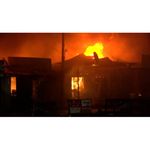
The case arose from a fire on the morning of October 30, 2015, at Bujugo village in Bukoba District, where a Tanzania Assemblies of God (TAG) church, built with reeds and roofed with corrugated iron sheets, was completely destroyed.
Justices Rehema Kerefu, Issa Maige and Dr Ubena Agatho heard Criminal Appeal No. 597 of 2020, which had been filed by the two men.
Justice Agatho said the court had found that the appellants were denied the right to cross-examine the third prosecution witness, making the witness’s evidence legally unreliable because his credibility could not be properly tested.
The court also rejected evidence from the first prosecution witness concerning an alleged oral confession by Mr Dauda at the scene of the fire.
Justice Agatho said the circumstances in which the alleged confession was made, in the presence of police officers and other people, raised doubts over whether it had been given voluntarily.
The court further ruled that evidence concerning an additional statement recorded from Mr Mzee could not be relied upon because the statement had already been expunged over procedural irregularities.
The judges also quashed the conspiracy conviction, holding that conspiracy could not stand where the intended offence had already been completed and proven.
“Therefore, the charges were not proved beyond reasonable doubt. We allow the appeal, quash the convictions and sentences against the appellants and order their immediate release,” Justice Agatho said.
How the case unfolded
The prosecution case was that the church’s pastor, Faustine Nshange, received information from an elder about the fire and reported the matter to village leaders and police.
Following investigations, Mr Mzee and Mr Dauda were arrested alongside another suspect who was not part of the appeal.
The prosecution alleged that Mr Dauda later orally confessed to setting the church on fire in the presence of the pastor at the scene.
The prosecution also relied on additional statements allegedly recorded from the two men by magistrates and tendered in court as exhibits.
The men were charged under the Penal Code with conspiracy to commit an offence, arson and malicious damage to property.
During the trial, they denied making the statements, alleging that police officers had severely tortured them and forced them to sign blank documents while in custody.
They were initially sentenced to five years in prison for conspiracy, life imprisonment for arson and one year for malicious damage to property.
First appeal
The men challenged the convictions before the High Court in Bukoba.
The first appellate court expunged their extra-judicial confessions because of procedural irregularities in how they had been recorded and admitted.
However, it upheld the convictions for conspiracy and arson, finding that the alleged oral confessions made in the presence of independent witnesses remained sufficient to support the convictions.
The court also quashed the conviction for malicious damage to property.
The two men then appealed to the Court of Appeal on 11 grounds, challenging, among other things, the legality of the proceedings, the denial of their right to cross-examine a prosecution witness and the reliance on evidence that had not been properly established.
During the latest appeal hearing, the two appellants had no legal representation, while the Republic was represented by two State Attorneys.