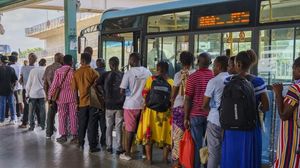
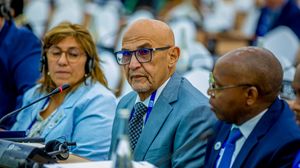
Dar es Salaam. Tanzania and the Democratic Republic of Congo (DRC) have outlined plans to strengthen infrastructure links between the two countries to expand their Sh794 billion trade relationship, with more than 60 percent of cargo handled at the Port of Dar es Salaam destined for the DRC.
The plans were outlined yesterday during DRC President Félix Tshisekedi’s two-day working visit to Tanzania from August 17 to 18, 2026, with the two countries seeking to link ports, railways, roads and water transport to reduce the cost and time of moving goods.
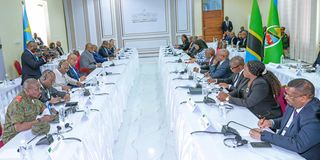
Speaking at a joint press conference in Zanzibar, President Samia Suluhu Hassan said Tanzania and the DRC had given particular attention to an integrated multimodal transport project aimed at strengthening the Central Corridor, which connects the DRC to international markets through the Port of Dar es Salaam.
“This project is of great importance in connecting ports, railways, roads and water transport, and thereby reducing the cost and time of transporting cargo through Lake Tanganyika,” President Hassan said.
She said Tanzania and the DRC had long cooperated in trade and infrastructure, with trade between the two countries worth about Sh794 billion, while the Port of Dar es Salaam had continued to serve as an important gateway for the DRC.
President Hassan said the volume of DRC-bound cargo passing through Dar es Salaam required Tanzania to increase its capacity to transport goods beyond the port.
“As you know, more than 60 percent of the cargo at the Port of Dar es Salaam is cargo for the DRC. Therefore, we must have more vessels capable of transporting that cargo and reducing the burden at Dar es Salaam,” she said.
Tanzania is expanding its capacity to transport cargo across Lake Tanganyika, with four vessels already providing services and another four under construction, while improvements are continuing at ports including Kigoma and Karema in Tanzania and Moba and Kalemie in the DRC.
President Hassan said railway development towards western Tanzania would complement lake transport, with the Standard Gauge Railway expected eventually to connect Tanzania with Burundi and the DRC.
She also congratulated the DRC government for beginning construction of the Kalemie-Manono road, saying it would further connect the two countries and stimulate economic activity across East and Central Africa.
President Hassan said the two countries had also agreed to remove unnecessary barriers to trade, improve border services and increase private-sector participation in infrastructure development.
She said Tanzania had invited Congolese businesses to trade and invest in agriculture, fisheries and livestock, while the two sides had agreed to deepen cooperation in mining through the exchange of expertise in mineral extraction, value addition and marketing.
President Hassan also invited the DRC to participate in Tanzania’s regional minerals centre serving East and Central Africa.
She said the discussions had also covered peace and security, commending President Tshisekedi for efforts to promote stability in the DRC and seek lasting solutions to security challenges. She also praised measures being taken to contain Ebola, noting that health security was part of wider regional security.
For his part, President Tshisekedi said the infrastructure agenda was critical not only for moving cargo but also for enabling the DRC and other African countries to unlock their natural resources and build stronger economies.
He said Africa had abundant resources and opportunities but needed better roads, ports, railways and reliable energy to transform that wealth into development.
“We need infrastructure that is improved, such as roads and ports, and we also need access to energy,” President Tshisekedi said.
The DRC leader said the cooperation between Tanzania and the DRC represented the kind of partnership African countries needed to maximise their resources and create opportunities for their people.
He particularly stressed the importance of value addition, saying African countries should develop industries capable of processing their natural resources instead of relying mainly on exports of raw materials.
President Tshisekedi also highlighted agriculture as an important area for economic transformation, saying strengthening agricultural value chains could create more jobs for young people and build stronger economies.
“Africa has many resources and many opportunities, plus another very important resource: its people,” he said.
He said Africa’s growing population, particularly its young people, represented an opportunity that required governments to create the infrastructure and economic conditions needed to support them.
President Tshisekedi also identified energy as a critical requirement for industrial development, saying better access to reliable energy would enable countries to increase production and improve living conditions.
He said the DRC was ready to strengthen cooperation with Tanzania in areas that could produce greater benefits for both countries, including trade, infrastructure and investment.
Register to begin your journey to our premium contentSubscribe for full access to premium content