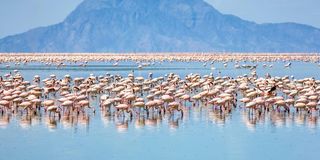
Arusha. Tanzania has stepped up efforts to protect lesser flamingos from potential disruptions caused by heavy El Niño rains, with conservation experts using GPS technology to track the birds’ movements across East Africa.
The monitoring is intended to establish how changes in water levels, food availability, and breeding conditions could influence the movement and distribution of flamingos, particularly those dependent on Lake Natron and other Rift Valley wetlands.
Nature Tanzania executive director, Dr Emmanuel Mgimwa, said two lesser flamingos had been fitted with GPS tracking devices to monitor their movements and identify the wetlands they use at different times of the year.
He said the data would help conservationists anticipate where the birds could move if excessive rainfall alters conditions at Lake Natron and other important wetlands.
“As part of efforts to understand the movements of these birds, we have started research to monitor their numbers and how they use different lakes through GPS technology,” said Dr Mgimwa.
Preliminary tracking data showed that one of the birds remained at Lake Natron for an extended period before moving to Engaruka and then Lake Magadi in the Ngorongoro area.
It later returned to Natron before crossing into Kenya, where it moved to Lake Magadi.
The second flamingo was tracked from Natron to Engaruka and Ngorongoro before returning to Natron and subsequently moving to Lake Logipi in Kenya.
According to Dr Mgimwa, the findings are providing insights into how lesser flamingos use wetlands across East Africa and how they may adjust their movements when environmental conditions change.
“We expect the tracking of these birds to provide important information on how lesser flamingos use different lakes during El Niño, including where they move and how they respond to changing environmental conditions,” he said.
Lake Natron is globally significant for lesser flamingo conservation and breeding, with Nature Tanzania estimating that about 75 percent of the global population is associated with the area.
However, Dr Mgimwa warned that excessive rainfall could raise water levels in the lake and disrupt the ecological conditions the birds require for feeding and breeding.
Lesser flamingos depend on shallow water and specific conditions that allow them to access food.
A substantial rise in water levels could therefore make some feeding areas unsuitable.
“When the water is deeper than the length of their legs, even when food is available, the birds may struggle to reach it. This could force some of them to leave, thereby changing the distribution of their population in those areas,” he said.
Heavy rainfall could also create temporary water bodies elsewhere in the Rift Valley, potentially providing alternative habitats for the birds.
However, Dr Mgimwa said not all such wetlands would offer suitable conditions for breeding.
Senior Tanzania Wildlife Management Authority (Tawa) conservation officer, Mr John Sulle, said Lake Natron was particularly important because it provides lesser flamingos with suitable conditions for nesting and breeding.
He said major changes in water levels, food availability, and breeding habitats could have wider implications for flamingo conservation across East Africa.
The monitoring comes as Tanzania strengthens preparations for the possible impacts of El Niño.
In July 2026, the National Technical Committee for Disaster Management approved a National Emergency Response Plan to address the impacts of El Niño and directed institutions to accelerate preparedness measures.
Lake Natron communities’ council chairman, Mr Joshua Mollel, representing nine villages surrounding the lake, called on the government to provide timely weather information and guidance to communities so they can prepare for possible impacts.
He said reliable weather information would enable residents to take precautionary measures early and reduce potential risks to people and the environment.
The flamingo tracking programme could therefore provide more than conservation data, offering an early picture of how extreme weather and changing water conditions are reshaping the interconnected wetland ecosystems on which wildlife and communities across the Rift Valley depend.
Register to begin your journey to our premium contentSubscribe for full access to premium content