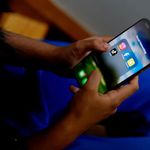
Dar es Salaam. Tanzania is moving closer to introducing special SIM cards for children as part of a growing global effort to protect minors from online abuse, harmful content and other digital risks.
The move comes as governments worldwide introduce stronger measures to safeguard children as access to smartphones, social media and digital platforms continues to expand.
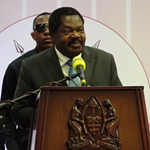
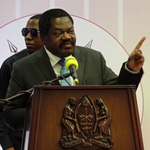
In Tanzania, official figures presented in Parliament in June 2026 by the Minister for Community Development, Gender, Women and Special Groups, Dr Dorothy Gwajima, showed that 67 percent of children aged between 12 and 17 years use smartphones, while four percent have experienced some form of online violence.
Dr Gwajima said the proposed Child SIM Card would include network-level filters to automatically block harmful online content.
The initiative is being developed in collaboration with the Ministry of Communications and Information Technology and the Tanzania Communications Regulatory Authority (TCRA).
Acting Director of Child Development, Ethics and Parenting at the ministry, Ms Asha Vuai, said preparations were progressing well, with an inter-ministerial committee already established to develop the framework.
She said consultations had been held with key stakeholders, including telecommunications companies, who supported the introduction of dedicated SIM cards for children instead of allowing minors to use ordinary SIM cards.
“Regarding the child SIM card, several consultative meetings have already been held and we have established a committee that is specifically handling the matter. The committee has agreed that there is a need to introduce dedicated SIM cards for children,” Ms Vuai said.
She said the initiative was based on three key areas: awareness, legal protection and technological safeguards.
The first area focuses on educating children, parents, guardians and teachers about online safety. Ms Vuai said the government had already developed educational materials, including simplified booklets, to help families understand how to protect children in digital spaces.
The second involves strengthening legal frameworks. She said the government had started reviewing relevant laws, including amendments to the Law of the Child Act, 2009, with provisions on online child protection incorporated into the legislation.
The third pillar focuses on technology, including the proposed Child SIM Card, which is expected to help parents guide and monitor children’s online activities while limiting exposure to harmful content.
Ms Vuai said Tanzania was seeking a model that balances children’s access to digital opportunities with protection from online threats.
Global digital safety drive
Tanzania’s initiative mirrors a wider international trend, with countries increasingly introducing restrictions and safeguards to protect children from online exploitation, cyberbullying, harmful content and excessive social media use.
Australia introduced the world’s first nationwide social media ban for children under 16 in December 2025, preventing access to major platforms including TikTok, Instagram and Facebook.
Indonesia, Malaysia and the United Arab Emirates have also introduced restrictions targeting children’s access to certain online platforms, while France approved legislation in July 2026 to prevent children under 15 from accessing social media from September.
Other countries, including the United Kingdom, Denmark, Spain, Greece, Canada and Slovenia, are considering or developing stronger digital safety regulations for children.
Studying the trend
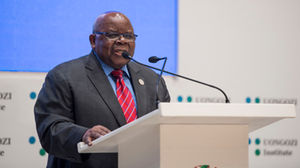
Minister for Education, Science and Technology Prof Adolf Mkenda said Tanzania was studying international experiences before introducing additional measures on children’s use of digital technologies.
Speaking after opening the Second Advancing Artificial Intelligence in Africa Conference, Prof Mkenda said digital technologies provided opportunities but also required responsible management.
He said Tanzania already restricted the use of mobile phones in classrooms to help students concentrate on learning, while parents also had a role in supervising children’s digital activities outside school.
“Mobile phones are useful communication tools and provide access to valuable information, but they can also consume a great deal of time without contributing to learning,” he said.
Prof Mkenda said the government was also monitoring global discussions on the appropriate age for children to begin using digital devices, particularly in education.
He added that Tanzania’s situation differed from many developed countries because some schools still lacked adequate digital infrastructure.
The minister also addressed concerns over the use of artificial intelligence tools such as ChatGPT by students, following reports of examination answers appearing similar.
He said the government had strengthened examination controls by banning candidates from carrying mobile phones and other digital devices into examination rooms.
“If a student is found with a mobile phone during an examination, the consequences are very serious, even if the phone has not been used,” he said.
Prof Mkenda said Tanzania would continue embracing artificial intelligence as an important technology while ensuring measures were in place to prevent misuse, including examination fraud.
As children’s access to digital platforms grows, experts say the challenge for governments is to ensure technology remains a tool for learning and development while reducing exposure to online harm.
Register to begin your journey to our premium contentSubscribe for full access to premium content