Tanzania launches five-year plan to build 1,000 footbridges in rural areas
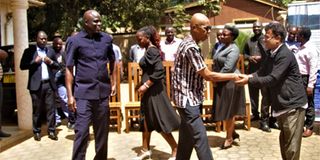
Morogoro Regional Administrative Secretary, Dr Mussa Ali Mussa, greets a rural trail bridge specialist from Helvetas Nepal, Mr Lal Jha, shortly after closing a 15-day capacity-building training programme in Morogoro for Tanzanian engineers and specialists on the design, construction, and management of rural trail bridges. Looking on (left) is Helvetas Tanzania Country Director, Mr Daniel Kalimbiya. PHOTO | JUMA MTANDA
Morogoro. The government and development partners have launched a plan to construct 1,000 footbridges within five years to reduce deaths and injuries caused by dangerous river crossings.
Data shared on Thursday, August 13, 2026, by Helvetas Tanzania’s Safe Footbridges Construction project manager, Ms Rosemary Kayanda, show that between 14 and 15 people die every year while crossing the Ruvu River, and a similar number are injured.
Ms Kayanda was speaking at the closing of a 15-day training programme, hinting that the initiative had begun with six model bridges in Morogoro Rural, Mvomero, Malinyi and Ulanga districts.
“We are looking at 1,000 bridges within five years. We are starting with six bridges in Tanzania, expecting to build as many bridges as possible,” she said.
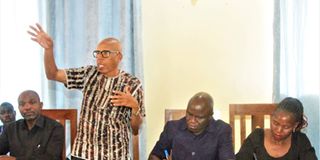
Morogoro Regional Administrative Secretary, Dr Mussa Ali Mussa, emphasises a point during the closing ceremony of a 15-day capacity-building training programme in Morogoro for Tanzanian engineers and specialists on the design, construction, and management of rural trail bridges. Far right is Helvetas Tanzania Safe Footbridges Construction Project Manager, Ms Rosemary Kayanda; second right is Helvetas Tanzania Country Director, Mr Daniel Kalimbiya; and left is Tarura Consulting Engineer, Mr Pharles Ngeeleja. PHOTO | JUMA MTANDA
Funded by the Lloyd’s Register Foundation, the three-year project will start in Morogoro before expanding to other regions.
Ms Kayanda said Helvetas had identified communities facing serious challenges crossing rivers during rainy seasons, limiting access to healthcare, education and markets.
“Citizens have been unable to reach healthcare services, pupils fail to attend school during rains, and farmers cannot transport their produce to the market,” she said.
She said some pupils had gone for up to two months without attending classes when rivers swelled, while patients failed to reach health facilities and farmers left produce to rot, noting that crocodiles in some rivers further increase the danger.
Tununguo, where the Ruvu River crossing is located, and Misengele Matuli in Mvomero District, where the Mbamba River is found, are among affected areas.
Ms Kayanda said the bridge technology was cost-effective, allowing several structures to be built simultaneously.
Each bridge costs between Sh50 million and Sh70 million and can last 50 to 100 years with proper maintenance.
“These are long-lasting, affordable, and safer bridges for the community,” she said.
Helvetas is working with Tanzania Rural and Urban Roads Agency (Tarura), local councils, and other stakeholders to expand the programme.
Tanzania could draw on Helvetas’ experience in Nepal and Ethiopia, where thousands of bridges have been built.
The Morogoro training involved 15 engineers and technical experts from Tarura, the Prime Minister’s Office–Regional Administration and Local Government, Morogoro and Mvomero councils, and Helvetas.
It comprised 12 classroom days and three days of fieldwork.
Participants covered site selection, surveying, design, foundations, cables, towers, costing, BoQ preparation and quality control.
They also prepared detailed project reports for bridges in Morogoro and Mvomero.
The reports will guide planning, approvals, procurement and implementation.
Morogoro Regional Administrative Secretary, Dr Mussa Ali Mussa, called for closer institutional cooperation, urging councils to use local resources and expertise to increase bridge construction.
“We need to collaborate genuinely and practically, not just through words,” he said.
Tarura consulting engineer, Mr Pharles Ngeeleja, said the agency manages about 144,149.18 kilometres of roads, most of which are unpaved, underscoring the scale of rural connectivity challenges.
“Our country is still poor, and poverty is sometimes perpetuated by poor road infrastructure,” he said.
For communities separated by swollen rivers, a footbridge means more than a crossing; it can be a child’s route to school, a patient’s path to hospital, and a farmer’s route to markets.