Dar es Salaam. The government has announced a far-reaching human resource audit across the public sector, marking one of the most comprehensive workforce evaluations in recent years as Tanzania accelerates its digital shift to improve efficiency, accountability, and service delivery.
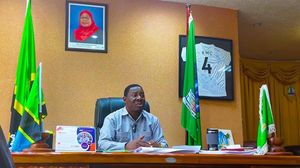
Speaking during a press briefing on December 12, 2025, the Minister of State in the President’s Office (Public Service Management and Good Governance), Mr Ridhiwani Kikwete, said the audit aims to identify skills gaps, rationalise staffing needs, and align the public workforce with national development goals.
“The government is conducting a wide assessment of public servants with the aim of identifying the current human resource needs within the public service,” he said.
He added that the initiative responds directly to the ruling party’s directives to strengthen accountability, modernise work systems, and enhance productivity in the public sector.
Mr Kikwete linked the audit to broader national aspirations under the Tanzania Development Vision 2050, which calls for a public sector capable of catalysing economic growth, spurring innovation, and generating new opportunities for young people.
“Dira 2050 has directed that priority sectors should have the capacity to generate their own employment and stimulate job creation in other sectors,” he explained.
He noted that the government has also been tasked with increasing employment opportunities for young people, raising incomes, reducing poverty, and ensuring that at least 8.5 million jobs are created by 2030.
To support this agenda, the government issued 41,500 new job permits in the 2025/26 financial year, including President Samia Suluhu Hassan’s pledge of 12,000 new positions—5,000 in the health sector and 7,000 in science and mathematics education, in her 100 days in office.
“These positions are being filled through an open and competitive process as required by policy,” he said, noting that shortlisting had been completed and that interviews begin on December 13 across all regions and Zanzibar.
A major milestone in the recruitment overhaul is the introduction of the Online Aptitude Test System (OATS), which will conduct screening examinations electronically in universities, VETA institutions, and secondary schools equipped with computer laboratories.
“This is meant to ensure that the interviews are conducted for all qualified candidates on time and efficiently,” Mr Kikwete said.
He urged applicants to monitor their ‘Ajira Portal’ accounts to confirm their interview centres, adding that successful candidates will receive their appointment letters through the same platform from January 2026.
To strengthen citizen engagement and improve feedback loops, the government has upgraded the ‘e-Mrejesho’ platform, which now includes a new “Speak to a Leader” feature that allows citizens to send comments, complaints, or compliments directly to ministers, regional commissioners, district commissioners, or heads of public institutions.
“All citizens will be able to submit feedback directly to a leader and receive responses via SMS,” he said. He further noted that the information collected “will be analysed for the purpose of improving services provided to the public,” with a more user-friendly mobile app on the way.
Another key reform is the ‘Government Service Directory (GSD)’, a digital tool that consolidates information about public services such as requirements, costs, locations, and complaint procedures.
The system, Mr Kikwete said, is designed to align with the expectations of Tanzania’s increasingly digital-savvy youth.
So far, 84 percent of public servants and 93 percent of public institutions have adopted the accompanying performance management system, ‘e-Utendaji’, formerly PEPMIS/PIPMIS.
“This step has enabled the government to identify the level of performance among public servants and institutions on a weekly, monthly, quarterly, half-year, and annual basis,” he noted.
Mr Kikwete also emphasised the government’s plan to intensify leadership and ethics training for ministers, deputy ministers, and senior officials.
“As this office has the responsibility to enhance excellence within the public service, we will continue offering training to ensure that we build a productive and high-quality public service,” he said.
Anti-corruption and governance reforms
He reiterated that institutions such as the Prevention and Combating of Corruption Bureau (PCCB) are scaling up the use of digital systems to curb corruption hotspots, seal revenue leakages, and reinforce ethical governance between 2025 and 2030.
Mr Kikwete stressed that the ongoing reforms, in auditing, digital transformation, ethics, training, and citizen engagement, reflect a government intent on building a modern public service aligned with Tanzania’s 2050 ambitions.
“All these actions demonstrate the government’s strong commitment to creating a public service that is efficient, accountable, and grounded in the principles of good governance,” he said.
He added that Vision 2050 aspires to have more than 80 percent of government services delivered digitally by 2050, ensuring greater convenience, transparency, and responsiveness for all citizens.
Register to begin your journey to our premium contentSubscribe for full access to premium content