Arusha. Change is taking shape within the Evangelical Lutheran Church in Tanzania (ELCT), which says it plans to convene a General Assembly before the end of this year to endorse its proposed new constitution.
The move follows a resolution reached on August 25, 2023, when 214 of the 248 delegates at the ELCT’s 21st General Assembly approved a proposal requiring all dioceses to operate under one unified constitution.
If adopted, the reforms would abolish the existing 28 diocesan constitutions, which currently grant full autonomy to each diocese, and introduce a stronger central governance structure headed by a more powerful church leader.
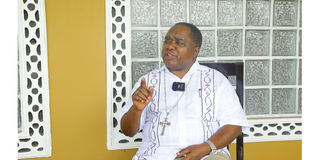
On May 10, 2026, ELCT Secretary General Rogath Mollel said the church had been conducting an internal self-assessment to determine how effectively its systems were functioning and where improvements were required.
Speaking during the installation service of the Secretary General of the Central Western Diocese at Tabora Town Parish Cathedral, Mr Mollel said the review had identified gaps requiring reform to enhance efficiency, church growth, and long-term sustainability.
He said one of the key recommendations from the process was the need to rewrite the church constitution, a reform initiative that has been ongoing for some time.
“The Executive Council meeting held in April received a report showing that the process has now reached an advanced stage, and possibly before the end of this year we will have a constitutional assembly so that we can proceed to approve the new constitution after the views submitted by all dioceses have been endorsed,” he said.
“Our centres, and now the special Executive Council, will meet specifically for this purpose in July, and we expect a constitutional assembly to be held in September. We sincerely ask that this matter be placed in prayers and that people pray for this major task,” added Mr Mollel.
“Because once we have a strong and solid constitution, it will greatly help us avoid conflicts and also move faster and more efficiently as a church, which is the second largest in the world, and our operational system should reflect that as well,” he said.
Opinions
ELCT Karagwe Diocese Bishop, Dr Benson Bagonza, said church constitutions play an important role in guiding leadership in managing disputes when they arise.
“Regarding conflicts, ever since the early church of Jesus Christ after His departure, conflicts have never ended. Conflicts are not caused by the constitution. They are part of church growth and challenge leadership to develop conflict resolution skills,” he said.
“So no one should assume that one constitution will eliminate conflicts. No conflict will end simply because of a constitution, but a constitution helps leadership manage conflicts whenever they arise,” added Dr Bagonza.
“What I know is that what is coming in July and September is an improved church constitution. Members of the constitutional committee travelled across all 28 dioceses and collected opinions on improving the constitution. That is what is coming,” he stressed.
Earlier in 2023
The approval of the proposal means the head of church will have authority to take disciplinary action against bishops and pastors who violate ethical standards.
However, such powers will not be exercised unilaterally but through a constitutional organ to be established.
The framework is intended to address long-standing challenges in handling disputes and disciplinary matters across dioceses.
Under the previous constitution, each diocese operated as a fully autonomous entity with its own decision-making structures, limiting the head of church’s ability to intervene in internal conflicts.
Under the proposed changes, each diocese will retain its bishop, assistant bishop, and governing organs, but these will operate under subsidiary regulations to be developed.
Announcing the August 25, 2023, decision at Tumaini University Makumira (Tuma), outgoing ELCT Head of Church, Bishop Dr Fredrick Shoo, said 86 percent of delegates supported the proposal.
Dr Shoo, who also heads the Northern Diocese, said 252 delegates were expected, but 248 attended.
Of these, 214 voted in favour, equivalent to 86 percent, while 36 voted against, representing 14 percent.
“No ballot was spoiled, and I am very pleased. It shows the maturity of delegates, and therefore our proposal has passed with 86 percent support, which is more than the required two-thirds majority,” he said.
Supporters of the changes
ELCT lawyer Azaeli Mweteni said the proposed single constitution would replace all diocesan constitutions and strengthen church unity.
“Legally, the 21st ELCT General Assembly has approved the process of establishing one church constitution, as a proposal was tabled to prepare a single constitution that will replace diocesan constitutions,” he said.
“This constitution is intended to strengthen the church so that it continues to remain united as originally intended,” added the lawyer.
He stressed that while the reform would introduce operational changes, it would also enhance administrative systems, improve leadership structures, and strengthen accountability.
One delegate from the North Eastern Diocese, Dr Aneth Mnzava, said a single constitution would reinforce unity and strengthen the church’s governance structure.
“The church is God’s representation on earth. Our unity as a church reflects God’s will. A single constitution practically implements the concept of unity,” she said.
“Historically, the ELCT started with seven churches, later becoming seven dioceses, each with its own authority. But now there is a need for stronger central authority,” added Dr Mnzava.
“When we have one constitution, the ELCT will be clearly united from the top, and dioceses will implement decisions from the central structure. This will strengthen authority across the church,” she insisted.