Tanzania Ports Authority seeks partners to expand port capacity

Arusha District Commissioner Joseph Mkude (left) presents an award to Tanzania Ports Authority (TPA) Director of Planning, Quality and Risk Management, Dr Boniface Nobeji, in recognition of outstanding performance during the 18th Joint Transport Sector Performance Review Meeting held in Arusha recently. PHOTO | BERTHA ISMAIL

What you need to know:

  • Speaking on behalf of TPA Director General Plasduce Mbosa at the 18th Joint Transport Sector Performance Review Meeting held in Arusha recently, the Authority’s Director of Planning, Quality and Risk Management, Dr Boniface Nobeji, reaffirmed its commitment to strategic port development.

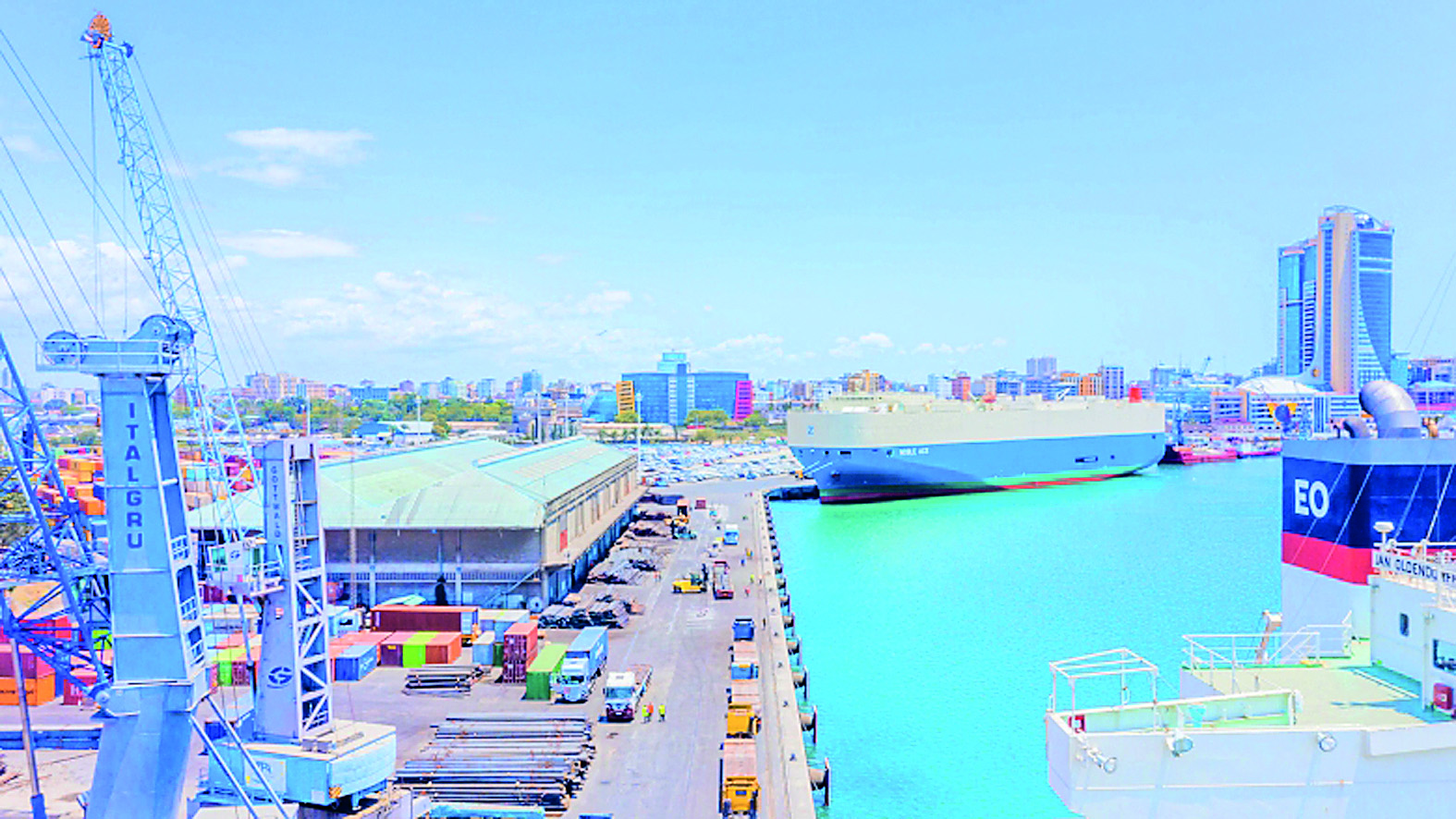
Arusha. The Tanzania Ports Authority (TPA) has welcomed private sector investment in the construction and upgrading of ports nationwide, as part of efforts to improve operational efficiency and expand capacity.

Speaking on behalf of TPA Director General Plasduce Mbosa at the 18th Joint Transport Sector Performance Review Meeting held in Arusha recently, the Authority’s Director of Planning, Quality and Risk Management, Dr Boniface Nobeji, reaffirmed its commitment to strategic port development.
He urged private sector investors to partner with TPA in the construction and operation of ports to ensure strategic projects are delivered on schedule.

“TPA continues to open doors for private investment to strengthen port infrastructure, positioning Tanzania as a key maritime and air transport hub in Africa,” he said.

Dr Nobeji highlighted key ongoing projects, including the construction of 15 fuel storage tanks in Kigamboni, Dar es Salaam, a 500-metre quay at Malindi Wharf at Dar es Salaam Port, Kisiwa Mgao Port in Mtwara, Mbamba Bay Port on Lake Nyasa, and the development of Kemondo, Mwanza East, and North ports on Lake Victoria.

“Completed projects include quay upgrades, expansion of vessel entry and exit gates, extension of ship turning areas at Dar es Salaam, Tanga, and Mtwara ports, as well as construction of a new quay for car carriers and parking yards capable of handling 6,000 vehicles at Dar es Salaam Port,” he said.

Dr Nobeji also reported the installation of modern ICT systems at Dar es Salaam, Tanga and Mtwara ports, alongside completed works at inland ports, including Karema Port on Lake Tanganyika and Kemondo Port on Lake Victoria.

Looking ahead, he said TPA is overseeing the development of the modern Mbegani Bagamoyo Port and four new oil vessel quays at Kendwa, Kigamboni, designed to accommodate four vessels simultaneously.

Held under the theme “Integrated Transport Systems as a Foundation for Economic Transformation Towards the 2050 Development Vision,” the meeting focused on assessing the implementation of policies, plans, and projects across Tanzania’s transport sector.

Organised by the Ministry of Transport, the forum brought together key stakeholders, including government officials, development partners, public and private institutions, and civil society organisations.

The Ministry’s Permanent Secretary, Prof Godius Kahyarara, said the annual meeting provides a platform for transport experts, particularly in road, rail, and port infrastructure, to jointly plan and address project implementation challenges.

He added that the transport sector currently contributes more than 10 percent of national employment, engaging about three million people, and generates revenues exceeding $2.66 billion, with potential for further growth.

The Dar es Salaam Rapid Transit Agency (DART) Chief Executive Officer, Mr Said Tunda, said global temperature data show an increase of 1.55 degrees Centigrade, with Tanzania recording a 0.6 degree rise.

“Therefore, as we pursue economic development through transport projects, environmental protection must remain a priority,” he said, representing the Prime Minister’s Office for Regional Administration and Local Government (PMO-RALG) Permanent Secretary Adolf Ndunguru.

Participants also reviewed progress in road, rail, port, and aviation infrastructure development and discussed challenges hindering timely and efficient project implementation.