Dar es Salaam. The government has said it will proceed with implementing a Sh62.3 trillion budget for the 2026/27 financial year, despite heightened global and domestic economic risks, banking on tighter fiscal discipline, stronger revenue collection and policy reforms.
The budget marks an increase from Sh56.49 trillion allocated in 2025/26.
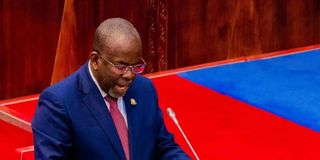
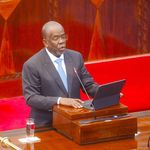
Presenting the estimates in Parliament on Thursday, Finance Minister Khamis Mussa Omar said the government would focus on improving economic stability while sustaining development spending.
He said priority areas include prudent fiscal and monetary policy management, improving the investment and business environment, strengthening foreign exchange availability, expanding agricultural financing, promoting climate-smart agriculture and investing in alternative energy sources such as gas and electricity.
“The government will continue implementing prudent monetary and fiscal policies, improving the investment and business environment, strengthening the National Strategy for Improving Availability of Foreign Exchange, expanding the Agriculture Development Fund and investing in climate-smart agriculture,” Mr Omar told Parliament.
The minister said efforts to stabilise foreign exchange supplies are aimed at cushioning the economy against external shocks, particularly in import-dependent sectors vulnerable to currency fluctuations.
He added that the government will also continue to diversify energy sources to reduce reliance on imported petroleum products and strengthen long-term energy security.
Diplomatic engagement and cooperation with development partners will also remain a priority, aimed at safeguarding external financing and sustaining investment flows into key national projects.
Beyond economic measures, Mr Omar said governance systems will be strengthened through improved rule of law, enhanced cybersecurity capacity, stronger internal audit systems and better monitoring and evaluation of public spending.
However, he cautioned that implementation of the budget could still face significant risks, including rising interest rates, inflation, currency depreciation and shifts in development partners’ policies.
Other risks include contingent liabilities, climate change, natural disasters, geopolitical tensions and cyber threats, all of which could affect service delivery and fiscal stability.
“These risks may lead to higher borrowing costs for both government and the private sector, increased demand for foreign currency for imports, and a slowdown in production and economic activity,” he said.
Mr Omar warned that such pressures could widen the budget deficit, increase inflation and reduce the government’s ability to finance both development and recurrent expenditure.
He also noted that climate change and natural disasters could result in loss of life and damage to infrastructure and ecosystems, raising recovery and reconstruction costs.
Geopolitical tensions, he added, could disrupt external financing flows, including grants, concessional loans and foreign direct investment, which are key to major infrastructure and social development projects.
In addition, changes in development partners’ policies could reduce the predictability of external support, complicating medium-term budget planning.
The minister further said contingent liabilities and debt-related obligations could increase fiscal pressure through higher debt servicing costs and settlement of unforeseen claims, limiting fiscal space for priority development spending.
Register to begin your journey to our premium contentSubscribe for full access to premium content