Tanzania's Finance Minister, new IMF representative discuss post-programme economic priorities


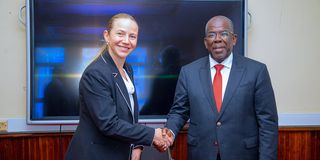
Dar es Salaam. Finance Minister Ambassador Khamis Mussa Omar has held talks with the new International Monetary Fund (IMF) representative in Tanzania, Ms Jana Bricco, focusing on economic policies, private-sector growth, inflation and the next phase of cooperation following the completion of Tanzania’s IMF-supported programmes.

The meeting also discussed how the two sides can deepen cooperation in implementing Tanzania’s development agenda, including the National Development Vision 2050 and the strategic priorities of the next Five-Year Development Plan.

Ambassador Omar said Tanzania valued its more than six decades of cooperation with the IMF, particularly in monitoring economic growth, monetary and fiscal policies and the impact of their implementation.

“We have had cooperation with the IMF for a long time, since the 1960s, and we have continued to work together in various areas aimed at strengthening the country’s economy and advancing our development agenda,” he said.

He said the government would continue working with the IMF to monitor developments in the private sector and the prices of goods and services, including inflation, which have remained important areas of discussion between the two sides.

The minister also invited Ms Bricco, who has recently taken up her duties in Tanzania, to visit various parts of the country to gain first-hand experience of the government’s development projects and economic activities.

He cited major strategic projects, including the Julius Nyerere Hydropower Project, as well as tourism and productive sectors such as agriculture.

“Visiting these areas will help you gain a broader understanding of the opportunities, development and challenges in the country, enabling more productive discussions and cooperation between Tanzania and the IMF,” he said.

For her part, Ms Bricco congratulated Tanzania on successfully completing the Extended Credit Facility (ECF) and Resilience and Sustainability Facility (RSF) programmes.

She said the achievements, which were recognised by the IMF Executive Board, reflected improvements in macroeconomic stability, fiscal sustainability and a reduction in the level of public debt.

Ms Bricco said completion of the programmes marked an opportunity to begin a new phase of Tanzania-IMF relations, with greater emphasis on policy consultations, economic monitoring and capacity building.

“Completion of the ECF-RSF does not mean the end of cooperation between Tanzania and the IMF. Rather, it provides an opportunity to reshape and strengthen the relationship in line with Tanzania’s new stage of development,” she said.

She said the IMF remained ready to provide policy advice tailored to Tanzania’s needs, as well as technical and capacity-building support in priority areas under the National Development Vision 2050.

“The IMF sees significant opportunities to continue supporting the implementation of the National Development Vision 2050. The goals and areas targeted under the completed programmes closely align with Tanzania’s ambition to build a strong, competitive economy that creates more opportunities for its people,” she said.

The meeting was also attended by Acting Permanent Secretary and Deputy Permanent Secretary in the Ministry of Finance, Mr Nsubili Joshua; Assistant Commissioner in the External Finance Department, Mr Robert Mtengule; Assistant Commissioner in the Policy Analysis Department, Mr Juma Mkabakuli; and other senior officials from the ministry and IMF.