Dar es Salaam. Health colleges across the country have been urged to increase admissions for medical students to help bridge the significant shortage of healthcare professionals in many regions.
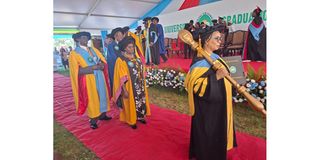
Speaking in Dar es Salaam during Kairuki University’s graduation ceremony at its Boko campus, the Chairperson of the University’s Governing Council, Dr Donald Mmari, emphasised the need for higher intake in medical programmes.
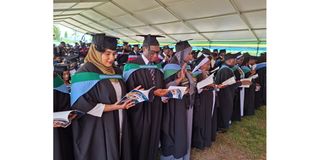
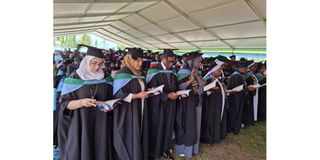
This year, 426 graduates were conferred certificates, diplomas, degrees and master’s degrees including 270 medical doctors.
Dr Mmari noted that since its establishment in 1997, Kairuki University has played a crucial role in producing healthcare workers, including specialists in gynecology, pediatrics and surgery. However, he stressed that the demand for personnel remains far higher than supply.
He explained that Tanzania continues to fall short of the World Health Organization (WHO) recommended ratio of doctors per 100,000 citizens, urging all medical training institutions to scale up enrollment.
“University colleges like Kairuki and others must increase enrollment to produce more graduates who can fill the gaps evident in many parts of the country. Even Ministry of Health statistics show we still lack sufficient personnel,” he said.
The Chairperson of the Kairuki Health Education Network (KHEN), Kokushubira Kairuki, expressed gratitude to the government for its continued guidance since the university was founded.
He revealed that since 1997, the university has produced 4,110 graduates, and with this year’s cohort, the total rises to 4,144, including 2,000 doctors, 424 nurses, and 135 specialist doctors.
“We see these graduates as a major contribution to our nation,” he said, adding that despite challenges, the university remains committed to providing high-quality medical education aligned with both national and international needs.
He congratulated the graduates and encouraged them to uphold professionalism and serve as role models.
“You saw your colleagues who once studied here now holding key positions across the country. Follow in their footsteps and make us proud,” he added.
The university’s Vice Chancellor, Prof Yohana Mashalla, highlighted that out of the 426 graduates, 275 were women and 151 were men, humorously urging men to reflect on why they were outnumbered.
Prof Mashalla underscored the central role of technology in modern education, noting that Kairuki University delivers much of its teaching through ICT, allowing lecturers to interact with students remotely and efficiently.
He emphasized that reliable internet access is essential to learning, pointing out that the university currently operates with a bandwidth capacity of 400 megabytes, alongside a global academic network that allows students and staff to access information from anywhere.
He added that technological advancements have transformed medical practice as well highlighting that Kairuki Hospital has digitized patient records and adopted robotic assistance for surgeries, eliminating the need for doctors to rely solely on manual procedures.