Tanzania’s mining sector leads in attracting foreign direct investments
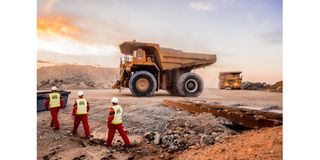
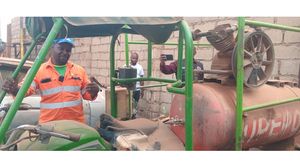
Foreign direct investment in mining and quarrying rose to $9.79 billion in 2024, up from $9.15 billion in 2023 and $8.64 billion in 2022, according to the Tanzania Investment Report 2025. PHOTO | FILE
Josephine Christopher is a senior business journalist for The Citizen and Mwananchi newspapers
Mwananchi Communications Limitted
Dar es Salaam. Mining and quarrying continue to dominate Tanzania’s foreign direct investment (FDI) stock, accounting for nearly three-quarters of investment in key sectors, even as the United Kingdom remains the leading source of foreign capital, according to the Tanzania Investment Report 2025.
The report shows that FDI stock in mining and quarrying rose to $9.79 billion in 2024, up from $9.15 billion in 2023 and $8.64 billion in 2022. The increase reflects continued expansion of existing projects, reinvestment of earnings and consolidation within the sector.
Manufacturing remained the second-largest recipient of foreign investment, with FDI stock rising to $3.34 billion in 2024 from $2.97 billion in 2023.
The United Kingdom remained the leading source country, with FDI stock of $5.82 billion in 2024, accounting for 26.9 percent of total investment stock. This underlines its continued role as a key investor in Tanzania.
Other major investors included Mauritius ($2.3 billion), Norway ($1.97 billion), South Africa ($1.65 billion) and the Netherlands ($1.24 billion). The report notes that Tanzania continues to attract investment from a mix of traditional and emerging source countries.
“Distribution of FDI reveals Tanzania’s sustained investment ties with a diverse mix of traditional and emerging source countries,” the report states.
Despite this, analysts say FDI remains heavily concentrated in extractive industries, with limited spillovers into other sectors.
Speaking to The Citizen, senior economist Prof Abel Kinyondo said the government needs to strengthen linkages between mining and other parts of the economy, particularly agriculture.
He said this can be achieved through backward linkages, where mining companies source goods and services locally.
“For instance, mining projects require a steady supply of food and other goods. If these supply chains are structured to source from local farmers, it can directly stimulate agricultural production and create income opportunities in rural areas,” he said.
Prof Kinyondo said that forward linkages are also important in ensuring benefits from mining extend into other productive sectors.
“It is not only about the minerals themselves, but also the technology, skills and infrastructure associated with mining. These can be transferred to sectors like agriculture to improve productivity and efficiency,” he said.
He also pointed to corporate social responsibility (CSR) as a way of broadening benefits.
“In some cases, mining activities uncover underground water sources. With appropriate policy guidance, companies can be required to invest in irrigation systems that support surrounding farming communities,” he said.
The Rector of the Mwalimu Nyerere Memorial Academy, Prof Haruni Mapesa, said the dominance of mining reflects Tanzania’s resource base and weaknesses in other sectors.
He said manufacturing is gradually attracting more investment as domestic and regional demand grows.
“Foreign investors, particularly from countries like China, are increasingly establishing industries locally to produce goods for domestic and regional markets,” he said.
However, he noted that mining remains dominant due to the region’s mineral wealth.
“Sub-Saharan Africa, including Tanzania, is richly endowed with minerals. Any investor in extractives will naturally consider this region a priority,” he said.
Prof Mapesa said agriculture remains under-invested despite its potential.
Agricultural FDI rose from $57.8 million in 2023 to $130.4 million in 2024, but still lags far behind mining and manufacturing.
He cited infrastructure gaps, weak transport networks and policy inconsistencies as key constraints.
“You may have fertile land, but if it is not accessible, it becomes less attractive for investment,” he said.
He also pointed to challenges in agricultural export procedures and limited irrigation systems.
“Investors need a predictable environment and better infrastructure to commit long-term capital,” he said.
Meanwhile, portfolio investment inflows rose to $6.5 million in 2024 from $1.4 million in 2023.
Market capitalisation at the Dar es Salaam Stock Exchange reached $6.9 billion, while the DSE All Share Index grew by 22.2 percent.
The report says this reflects gradual strengthening of capital markets, even as FDI remains the dominant source of external investment.
Register to begin your journey to our premium contentSubscribe for full access to premium content