Dar es Salaam. Tanzania will host the first Women’s Parliamentary Conference in November, giving the country an opportunity to strengthen its role in regional peace and security efforts while promoting greater participation of women in political decision-making across the Great Lakes Region.
The conference, which will bring together women legislators and other stakeholders from the 12 member states of the International Conference on the Great Lakes Region (ICGLR), will focus on how parliaments can translate regional commitments on peace, security and development into laws, policies and budget priorities.
The November 2-5 meeting at the Julius Nyerere International Convention Centre is expected to attract about 250 participants. It is being organised by the Forum of Parliaments of the ICGLR (FP-ICGLR) in collaboration with the Parliament of Tanzania.
The conference comes as parts of the Great Lakes Region continue to face conflict, displacement, armed group activity, poverty and competition over natural resources.
Women are often disproportionately affected by conflict and displacement, yet their representation in institutions responsible for shaping responses remains limited.
According to the Inter-Parliamentary Union, women accounted for an average of 28 percent of parliamentarians in the Great Lakes Region as of July 1, 2025.
The organisers say the conference will therefore focus not only on increasing the number of women in parliaments, but also on ensuring they have meaningful influence over decisions on peace, security and development.
Regional role
Tanzania’s hosting of the meeting comes with an opportunity to use parliamentary diplomacy to strengthen dialogue among countries facing interconnected challenges.
Conflict and insecurity in one country can trigger refugee movements in neighbouring states, while illegal exploitation of natural resources and economic pressures can have cross-border effects.
Parliaments can contribute to regional responses through legislation, budget approval, ratification of agreements and oversight of government programmes.
The conference will provide women legislators with a platform to exchange experiences and develop common approaches, including on integrating gender considerations into peace and security policies.
The FP-ICGLR emerged from the region’s experience of conflict in the 1990s and early 2000s. The ICGLR was established to promote cooperation on peace and security, democracy and good governance, economic development, regional integration and humanitarian issues.
Regional commitments were formalised through the Pact on Security, Stability and Development, signed in Nairobi in 2006.
The FP-ICGLR was established in 2008 as the parliamentary arm of the ICGLR and became operational in 2012. Its General Secretariat is based in Kinshasa, Democratic Republic of Congo.
The Forum brings together parliaments from the 12 member states and seeks to help translate regional agreements into national laws and policies.
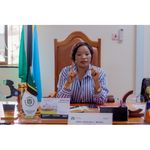
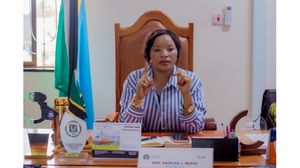
Its Secretary General is Ambassador Dr Deo Osmund Mwapinga, the first Tanzanian to hold the position.
Tanzania’s experience
Tanzania’s selection as host also reflects its experience in regional peace efforts and women’s leadership in public institutions.
Anne Makinda became the first woman to serve as Speaker of the National Assembly in 2010, while Dr Tulia Ackson became Speaker in 2022 and later President of the IPU, the first Tanzanian to lead the global organisation of national parliaments.
President Samia Suluhu Hassan, Tanzania’s first female Head of State, is another example of women’s participation at the highest level of political decision-making. The conference will draw on such experiences as participants consider ways to increase women’s participation and influence in parliaments across the region.
Beyond legislators, the meeting will involve civil society organisations, researchers, development partners, young leaders and private-sector representatives.
Their participation is intended to link parliamentary decision-making with evidence and experiences from communities and institutions working on peace, development, health and women’s economic empowerment.
The programme will include panel discussions, exhibitions, side events, networking and knowledge-sharing sessions.
Ambassador Mwapinga said the conference would provide stakeholders with an opportunity to contribute to the region’s agenda for action.
The conference’s impact, however, will ultimately depend on whether its resolutions translate into parliamentary action through laws, budgets and stronger oversight of measures aimed at improving peace, security and development.
The meeting will be held from November 2 to 5 at the Julius Nyerere International Convention Centre in Dar es Salaam.