Dar es Salaam. For decades, Tanzania’s uranium potential has remained largely untapped despite the country possessing significant deposits. But 2026 is beginning to mark a turning point, with exploration advancing, processing trials under way, major projects progressing and nuclear power emerging more prominently in the country’s long term energy plans.
Data from the OECD Nuclear Energy Agency and the International Atomic Energy Agency (IAEA) estimates Tanzania’s identified uranium resources at about 58,000 tonnes, placing the country 14th globally among resources recoverable at up to $130 (about Sh344,000) per kilogram.
Major uranium deposits and prospects include Mkuju River, Bahi, Manyoni, Songea, Madaba, Mbulu and areas around Lake Natron, covering both primary and near-surface deposits.
Despite this potential, Tanzania has never produced uranium on an industrial scale, largely because of unfavourable economics and weak global demand.
The uranium price boom of 2007 was followed by the global financial crisis, while the 2011 Fukushima nuclear disaster further slowed investment in the nuclear sector. As demand expectations weakened, financing capital-intensive uranium projects became increasingly difficult.
That picture is now changing.
Nuclear power is returning to national energy strategies as governments focus more heavily on energy security, reliable electricity supplies and resilient fuel supply chains. The World Bank’s decision to resume financing nuclear projects in 2024, alongside new nuclear developments in countries including the United Arab Emirates, Turkey, Egypt, Bangladesh and Uzbekistan, reflects a broader revival in the sector.
For uranium-producing countries, the renewed interest in nuclear power could create a more favourable long-term market.
Mkuju River project leads Tanzania’s uranium drive
Tanzania’s uranium industry is advancing on several fronts, with the Mkuju River project in Namtumbo District currently the most advanced.
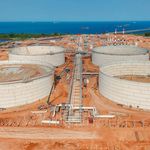
The project, being developed by Mantra Tanzania, a subsidiary of Uranium One, which is part of Russia’s Rosatom, aims to establish an industrial complex at the Nyota deposit with planned production capacity of up to 3,000 tonnes of uranium a year.
A pilot uranium processing plant was commissioned in July 2025, while the main industrial complex is scheduled for commissioning in 2029.
Elsewhere, projects such as Manyoni continue to sustain exploration activity as companies assess licences, mineral resources and potential partnerships.
But the significance of uranium to Tanzania may extend beyond mining and exports.
Uranium enters Tanzania’s energy debate
Uranium is increasingly being discussed as a potential component of Tanzania’s future energy mix, as the country seeks to expand electricity generation to meet rapidly growing demand.
Speaking in Dar es Salaam on May 24, 2025, President Samia Suluhu Hassan challenged perceptions surrounding nuclear power, noting that developed countries were already using uranium to generate electricity.
The issue gained further momentum at the NEISA 2026 summit in Kigali, where Tanzania outlined plans to develop nuclear power as part of its long-term energy strategy.
The country currently has installed electricity generation capacity of more than 4,500 megawatts, while demand is projected to reach 8,000MW by 2030 and 70,000MW by 2050.
Tanzania has subsequently outlined an ambitious roadmap for between 1,000MW and 1,200MW of nuclear generation capacity over the next decade, following the IAEA’s phased approach.
It has also established the National Nuclear Energy Implementation Organisation, known as NAPO, to support the development of the nuclear programme.
Skills and regulation remain critical
Turning Tanzania’s uranium resources into a functioning industry, however, will require more than mineral deposits and investment.
The sector needs specialised expertise in radiometric exploration, geology, hydrology, mineral processing, radiation protection and environmental monitoring. It also requires strong institutions capable of regulating the entire uranium value chain and a skilled workforce able to support its development.
Head of the Department of Ionizing Radiation at the Tanzania Atomic Energy Commission, Dennis Mwalongo, has stressed the importance of long-term planning, including surveys of exploration sites, soil assessments, public awareness and capacity building.
This emphasis on local expertise is particularly significant as Tanzania implements its Country Mining Vision within the broader Africa Mining Vision framework, which seeks to increase local participation, value addition and economic benefits from the mining sector.
Tanzania’s uranium industry therefore enters 2026 with several developments progressing simultaneously: substantial identified resources, active exploration, an advanced industrial project, growing institutional support for nuclear power and a more favourable global outlook for nuclear energy.
The next five to 10 years will determine whether these elements can be brought together to establish a sustainable uranium industry.
For Tanzania, the challenge is no longer simply demonstrating that uranium exists. It is building the infrastructure, expertise, institutions and value chain required to turn that resource into a functioning industry and potentially make uranium an important part of the country’s long-term energy future.