Tanzania seeks Philippines’ support for global telecom union council re-election

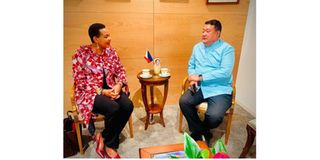
Tanzanian diplomat, Ambassador Dr Hoyce Temu (left), and her Philippine counterpart, Mr Eric Tamoya.

Geneva. Tanzania has sought the Philippines’ support for its re-election to the International Telecommunication Union (ITU) Council during a meeting between the two countries’ deputy permanent representatives to the United Nations in Geneva.

The Tanzanian Deputy Permanent Representative met her Philippine counterpart, Mr Eric Tamoya, to discuss bilateral cooperation, strengthen collaboration between their Permanent Missions and explore new areas of partnership in multilateral diplomacy.

A key item on the agenda was Tanzania’s campaign for a second term on the ITU Council under the African Region.

The Council serves as the governing body of the ITU between Plenipotentiary Conferences and oversees the organisation’s policies, strategic planning and budget.

During the meeting, the Tanzanian diplomat, Ambassador, Dr Hoyce Temu, appealed for the Philippines’ vote in the upcoming election, noting that all ITU member states, including the Philippines, will participate in electing council members.

She said Tanzania’s continued presence on the Council would enable it to advance the interests of African countries, particularly in promoting digital inclusion, improving connectivity, and narrowing the digital divide.

"Tanzania has been advocating affordable internet access and stronger telecommunications infrastructure across Africa and views the Council seat as an important platform for advancing those priorities," said Dr Temu.

The discussions also covered Tanzania’s upcoming Universal Periodic Review (UPR) on human rights, scheduled to take place in Geneva later this year.

The UPR is a mechanism of the UN Human Rights Council through which the human rights records of all UN member states are reviewed periodically.

The process enables countries to share experiences, assess progress and make recommendations on the promotion and protection of human rights.

Tanzania requested the Philippines’ support and constructive engagement during the review, describing the process as an opportunity to demonstrate progress in promoting and protecting human rights while identifying areas requiring further improvement in line with international obligations.

The Tanzanian delegation said human rights remain central to the country’s foreign policy and its commitment to good governance.

The meeting reflected Tanzania’s continued use of bilateral engagement and multilateral diplomacy to build alliances, advance national interests and secure support in international elections and review processes.

For Tanzania and the Philippines, both members of the Non-Aligned Movement and the Group of 77, the engagement also highlighted shared interests in promoting development, digital inclusion and respect for human rights.

The meeting further demonstrated Tanzania’s efforts to strengthen its voice in international decision-making bodies and deepen South-South cooperation within the United Nations system.