Lindi. More than 8,000 farmers have been reached through initiatives promoting the use of indigenous seeds, as Tanzania steps up efforts to preserve traditional crops, improve food security and build resilience against climate challenges.
The programme has so far conserved more than 13 indigenous seed varieties in seed banks and distributed over 100,000 seedlings to farmers.
Speaking on Thursday, August 6, 2026, Deputy Minister for Agriculture David Silinde said indigenous seeds remain an important asset in Tanzania’s agricultural development because of their ability to adapt to different environments and withstand some climate-related challenges.
“Farmers should embrace irrigation farming in seed production despite climate change. This will help increase the value and productivity of these seeds. I also urge farmers to add value to their crops to align with Vision 2050,” said Deputy Minister Silinde.
He said the progress achieved reflects cooperation between the government and agricultural stakeholders, urging extension officers to use their expertise to support more farmers and improve production efficiency.
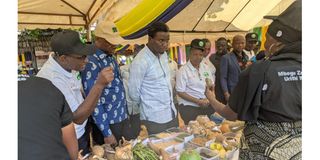
The remarks were made during an event highlighting the importance of indigenous seeds, traditional foods and sustainable agricultural practices.
SWISSAID expands agroecology programme
SWISSAID Tanzania Country Director Betty Malaki said the organisation has launched the second phase of its project, running from 2025 to 2029, following the completion of the first phase implemented between 2019 and 2025.
She said the initiative focuses on promoting agroecology, gender equality and environmental conservation, with the aim of improving household livelihoods and strengthening food sovereignty.
“This is a 10-year project. The first phase ran from 2019 to 2025, while the second phase started in 2025 and will end in 2029. It will help us reach twice as many farmers as we currently do,” Ms Malaki said.
She added that the project seeks to help communities adopt sustainable farming methods that protect the environment and safeguard human health.
The celebrations also showcased Tanzania’s agricultural heritage through traditional foods, including cassava ugali, matamba, groundnut porridge, local vegetables, wild beans and traditional pilau.
Mtwara resident Hamisi Shino said indigenous seeds provide important nutritional benefits and help improve energy levels.
“This seed is called Luvala. You eat it as food and it helps increase body energy,” he said.