Arusha. The government has been urged to table a Bill in Parliament to establish a legal framework for national dialogue, reconciliation and consensus-building, with proponents saying the move would give the process greater legitimacy and ensure wider public participation.
The call was made by the National Reconciliation Steering Committee, which has asked President Samia Suluhu Hassan to initiate the process of introducing legislation to guide dialogue and reconciliation efforts.
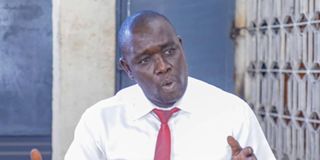
Speaking to The Citizen's sister newspaper, Mwananchi on August 14, 2026, Coordinator of the Committee Mr Odero Charles Odero said the proposed law would set clear rules for the process and ensure it was conducted transparently, accountably and inclusively.
He said the legislation would establish procedures acceptable to all stakeholders, strengthen public confidence in the reconciliation process and give agreements reached through dialogue a clear legal and political basis.
Mr Odero said the committee recognised and welcomed efforts by President Samia to promote reconciliation as part of strengthening national unity, good governance and peace.
“We believe that tabling this Bill would be an important step towards building on these efforts and establishing a lasting national consensus based on justice and the law,” he said.
He said the proposed legislation should define the objectives of the dialogue and reconciliation process, procedures for appointing commissioners and commission leaders, the responsibilities of stakeholders, implementation procedures and mechanisms for monitoring agreements reached.
“On this basis, the National Reconciliation Steering Committee calls on the government to take steps to prepare and table the Bill governing the process of dialogue, reconciliation and national consensus in the next parliamentary session,” he said.
The committee also urged citizens, political leaders, civil society organisations, religious institutions and development stakeholders to support efforts to build a united, cohesive and peaceful Tanzania through meaningful dialogue and national reconciliation.
Independent lawyer Simon Mbwambo, based in Arusha, said reconciliation efforts should be anchored in legislation passed by Parliament and involve key stakeholders, including political party leaders with significant followings.
He said a parliamentary law would provide an appropriate framework for overseeing the implementation of the dialogue process and help ensure that its outcome served the interests of Tanzanians rather than those of individual political groups.
“If there is a law passed by Parliament, it will be the right way to oversee the implementation of these talks, which seek to promote reconciliation, stability and peace in our country and deliver outcomes that Tanzanians expect, rather than serving one side of the political divide,” he said.
The proposal comes as President Samia recently established a Commission of Inquiry to investigate violence that occurred during and after the October 29, 2025 General Election.
The commission is tasked with establishing those responsible for the incidents, including people who allegedly incited or financed the violence, with a view to taking appropriate legal action.
The commission is chaired by Court of Appeal Justice Shabani Lila and includes Namibia’s Deputy Chief Justice Petrus Tileinge Damaseb and Uganda Court of Appeal Justice Barishaki Cheborion.
The inclusion of judges from outside Tanzania is intended to provide a broader perspective to the inquiry.
Other members include retired High Court judges Gad John Mjemamas, Awadh Mohamed Bawazir and Aishiel Nelson Sumari.