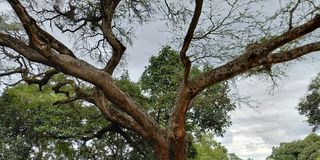
Moshi. For more than a century, it has stood in silence, bearing witness to one of the most significant episodes in Tanzania's resistance to colonial rule. The mgunga tree in Old Moshi, Kilimanjaro Region, is believed to be the site where Mangi Meli and 18 Chagga and Meru leaders were executed by the German colonial administration on March 2, 1900.
To a casual observer, it is an ordinary tree. But to the people of Old Moshi and the wider Chagga community, it symbolises courage, unity and the struggle to defend land, dignity and freedom against colonial rule.
More than 126 years later, the tree has been preserved as a historical heritage site, reminding Tanzanians of the sacrifices made by earlier generations in the fight for justice and self-rule.
Moshi District Council tourism officer Chamtigiti Wakara said the tree should not be viewed as an ordinary plant but as an important national memorial.
"This tree symbolises the resilience of our leaders, who refused to surrender to the colonial authorities and were prepared to sacrifice their lives for their people. That is why we continue to honour it today," he said.
Wakara said the execution and beheading of the leaders did not crush the people's resolve. Instead, it strengthened resistance against colonial rule, which continued under British administration before culminating in Tanganyika's independence on December 9, 1961.
According to oral traditions preserved by local elders, the executions on March 2, 1900 left deep scars on the community but also united people in their struggle for justice.
He said that every year on March 2, hundreds of residents, government officials, traditional leaders, students and researchers gather at the site to commemorate the 19 leaders.
The annual event includes prayers, historical presentations and discussions on the liberation struggle and the importance of preserving the country's heritage for future generations.
A memorial monument bearing the names of all 19 leaders executed by the German colonial authorities has also been erected at the site, attracting visitors interested in learning about Tanzania's anti-colonial history.
Wakara said the site receives visitors not only from Tanzania but also from Germany and other European countries seeking to understand the history of colonialism and its impact on African societies.
"These visits also provide an opportunity to discuss reconciliation, historical preservation and the importance of ensuring such events are never repeated," he said.
He added that although the Old Moshi mgunga tree cannot speak, its presence continues to tell the story of Mangi Meli and his fellow leaders.
"It reminds us that Tanzania's freedom did not come by chance. It was achieved through the sacrifice of men and women who believed justice and human dignity were worth more than their own lives. For the people of Old Moshi, the tree is not only a tourist attraction but also a living classroom that teaches young people about patriotism, courage and the responsibility to safeguard the freedom won at such a high cost," he said.
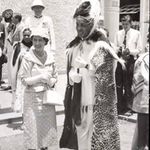
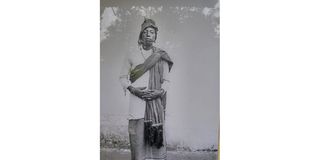
A portrait of Mangi Meli of Moshi as a young man. He was hanged and beheaded by German colonial rulers at Old Moshi in Moshi District, Kilimanjaro Region, in 1900.
The historical background
Wakara said that in the late 19th century, Tanganyika came under German colonial rule. When the Germans arrived in Kilimanjaro, they found well-established traditional kingdoms, including those of the Chagga people.
The Old Moshi kingdom was initially ruled by Mangi Rindi Mandara before leadership passed to his son, Mangi Meli.
As a young leader, Mangi Meli resisted German rule and in 1891 led his warriors in driving German forces out of the area.
However, the Germans regrouped and, with the support of some of Mangi Meli's rivals, defeated his kingdom.
They subsequently consolidated their colonial administration, introducing new laws and systems that transformed the lives of local communities.
Mangi Meli and other Chagga and Meru leaders were arrested and, on March 2, 1900, all 19 were executed at the mgunga tree in Old Moshi.
Wakara said that after the executions, some of the bodies, including that of Mangi Meli, were beheaded on the orders of the German administration, and the skulls were taken to Germany for racist anthropological research.
Efforts to trace and repatriate the remains have continued for decades, but progress has been hampered by the dispersal of the skulls among museums and research institutions without proper records.
Descendant calls for return of remains
Mangi Meli's grandson, Isaria Meli, said his grandfather and the other 18 leaders were executed by the German colonial administration on March 2, 1900.
After the executions, he said, their bodies were buried at the present-day memorial site in Old Moshi, while their heads were taken to Germany.
He said annual commemorations are held every March 2 to honour Mangi Meli and his fellow leaders, with government officials and other dignitaries taking part in the remembrance ceremonies.
Although the government has continued efforts to secure the return of Mangi Meli's remains, Isaria said the skull has yet to be repatriated.
He added that if the remains are eventually returned, they will be preserved at the KDC memorial site as part of Tanzania's historical heritage.
Register to begin your journey to our premium contentSubscribe for full access to premium content