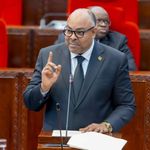
Dar es Salaam. Political and legal analysts have outlined a heavy workload awaiting the newly appointed Home Affairs Minister, Mr Patrobas Katambi, including resolving delays in the issuance of national identity cards, curbing abductions, and rebuilding trust between the Police Force and the public.
Mr Katambi, who previously served as Deputy Minister for Industry and Trade, was appointed by President Samia Suluhu Hassan on Thursday, January 8, 2026, replacing Mr George Simbachawene, whose appointment was revoked.
The appointment of the Shinyanga Urban MP comes at a time when institutions under the ministry, particularly the Police Force, have faced sustained public criticism over their performance, even as his predecessor had announced plans to reform the force.
As he awaits his swearing-in on Tuesday, January 13, 2026, analysts say Mr Katambi faces an uphill task in overseeing the police and other agencies under the ministry.
The Legal and Human Rights Centre (LHRC) Acting Executive Director, Mr Fulgence Massawe, said the ministry directly affects citizens’ safety and has long faced challenges, including unlawful arrests.
“Even the President formed a criminal justice committee which made recommendations to improve the Police Force,” he said.
“His biggest challenge will be implementing reforms, which is not easy because they require approval from the President and other leaders,” he added.
Furthermore, Mr Massawe said that rebuilding public trust in the police and strengthening integrity within the force should be among Mr Katambi’s top priorities.
He also noted that the Prisons Service continues to face multiple challenges that require urgent attention.
In addition, Mr Massawe said Mr Katambi must address persistent public complaints over delays in the issuance of national identity cards by the National Identification Authority (Nida).
A lawyer, Dr Onesmo Kyauke, said the minister’s immediate priority should be ensuring that arrests, detention, and investigations strictly comply with the law.
“Arrests must be based on lawful suspicion, follow legal procedures, respect human dignity and avoid abuse of power,” he said.
Dr Kyauke added that the Police Force must be reminded that arrest is not punishment but a legal step aimed at facilitating investigations.
He stressed the need to protect suspects’ rights, including being informed of reasons for arrest, being presented in court on time, and being granted bail where applicable.
He further urged the introduction of continuous training for police officers on criminal justice, evidence handling, and lawful arrest procedures to reduce errors that often lead to cases collapsing in court.
Dr Kyauke also said restoring good relations between police and citizens, improving officers’ welfare, including better pay and housing, would enhance performance.
Independent advocate Mr Faraji Mangula said another pressing challenge is ensuring public safety, particularly addressing reported cases of abductions, an issue his predecessor had openly acknowledged while calling for reforms in police systems.
He said Mr Katambi should build on the reforms initiated by Mr Simbachawene by strengthening citizen safety and ending arbitrary arrests.
“Arrests must be lawful, officers should identify themselves to local authorities before making arrests, and suspects should not be blindfolded. Police should also use officially registered vehicles when on duty to avoid causing public panic,” he said.
Past stance while in opposition
Shortly after Mr Katambi’s appointment, several videos resurfaced online highlighting his previous remarks while in opposition, where he criticised the Police Force for arresting opposition leaders and other citizens without following legal procedures.
In the clips, Mr Katambi emphasised professionalism and respect for the rule of law, criticising what he described as “orders from above” allegedly used to justify the arrest of opposition leaders.
He challenged officers to demand written authorisation for such instructions, warning that illegal actions tarnish the image of government and the President, and that the law does not recognise collective responsibility.
In other widely shared remarks, Mr Katambi condemned the arrest of opposition leaders, arguing that being in opposition is not a crime and that the Police Force should be a trusted investigative institution rather than an instrument of repression.
At the time, he also openly criticised the then Minister for Home Affairs, Mr Mwigulu Nchemba, now Prime Minister, accusing him of failing to effectively supervise the ministry and the Police Force.
Mixed views from analysts
Despite those strong statements, analysts are divided on whether Mr Katambi will be able to implement the reforms he once advocated, now that he is part of the government.
A lawyer, Mr Aloyce Komba, said Mr Katambi faces a tough test in meeting public expectations, noting that he had previously criticised the same problems while in the opposition.
“No Home Affairs minister has served for more than two years since 2000. Why? He must defend the justice he advocated for while in Chadema. The question is whether he will succeed and how he will distinguish himself from Mr Simbachawene,” he said.
Veteran journalist Mr Absolom Kibanda said Mr Katambi’s first test will be whether he maintains his principles and vision, warning that his views appear similar to those of his predecessor, who was removed from office.
“If Mr Simbachawene was removed because of his stance, then Mr Katambi must be cautious,” he said.
University of Dodoma lecturer Dr Conrad Masabo said Mr Katambi’s other challenge will be balancing party interests and government priorities, which could influence his independence and reform agenda.
However, political analyst Mr Hamduny Marcel described Mr Katambi as a suitable choice for the role, citing his legal background and leadership experience.
“Besides the Police Force, the ministry oversees Immigration and many other departments that require legal expertise. With his experience, he can address bottlenecks and deliver meaningful reforms,” he said.
Register to begin your journey to our premium contentSubscribe for full access to premium content