Unanswered questions in traffic police, doctor fight


Dar es Salaam. A day after a traffic police officer was reportedly assaulted in Lugalo, Dar es Salaam, several questions remain unanswered about what happened before, during and after the confrontation.

Police said officer F.8886 Sgt Andrew was allegedly attacked by a driver after stopping a Toyota RunX that was using a service road.

According to police, the driver, identified as Dr Conrad Agonza Kahyoza, a specialist in internal medicine at Muhimbili National Hospital-Mloganzila, got out of the vehicle and assaulted the officer with fists and kicks.

Police also said members of the public became angry and attacked the doctor before he was taken to hospital for treatment. That account raises several questions.

If the officer was the person allegedly attacked? Why did the suspect end up requiring emergency medical treatment? More importantly, who caused the injuries sustained by the doctor? Police said members of the public attacked him. But has anyone independently confirmed this?

Who were the people involved, how many were there and what exactly did they do? Were they trying to restrain the doctor or did the situation turn into an assault?

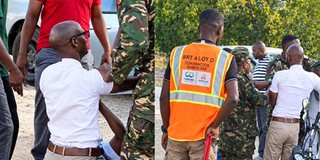
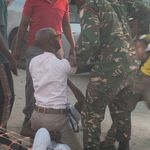
There are also questions about people visible in images from the scene.

A soldier appears to have been present. What was he doing there? Did he help restrain the doctor? Did he witness the confrontation? Were other police officers involved?

And did the traffic officer receive medical treatment after the alleged assault?

The questions matter because the public has so far been given limited information about how the doctor sustained injuries that required hospital treatment. The Medical Association of Tanzania (MAT) has confirmed that Dr Agonza sustained injuries and was taken to hospital for emergency treatment. The association said his condition had improved and that it was following his medical care and the legal proceedings.

There are also questions about what happened immediately before the confrontation.

What did the officer say when he stopped the vehicle? Why did the interaction escalate? Was there an argument? Were there witnesses who heard the exchange? Was the doctor resisting a lawful instruction, as suggested by the police account, or is there another side of the confrontation that has not yet been made public?

Human rights advocates have called for that side to be heard.

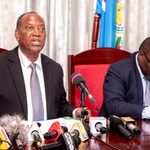
“The statement by the police cannot be complete without hearing the doctor's side,” said Legal and Human Rights Centre executive director Anna Henga. “We must hear the other side of those involved, including the doctor, who has the facts that people want to know.”

The police have given their version of events, while MAT has confirmed the doctor's injuries and said it will support him legally and medically. However, the public has yet to hear directly from the doctor, independent eyewitnesses or others who were at the scene.

The question of distress

The confrontation has also prompted discussion about stress, emotional regulation and mental health. Experts, however, caution against automatically equating aggressive behaviour with mental illness.

President and CEO of Mental Health Tanzania, Dr Onesmo Petro, said mental health conditions cannot be diagnosed in the same way as some physical illnesses through laboratory tests. Specialists instead assess a range of factors, including an individual's experiences, thoughts and behaviour.

“An individual may be dealing with unresolved personal issues or severe anger, which acts as a trigger and causes an out-of-control, abrupt reaction. Trauma is another potential trigger,” he said. Dr Petro said underlying conditions such as schizophrenia or psychosis could also affect behaviour and a person's perception of events, but stressed that specialist assessment was necessary to establish the cause.

He said mental health challenges could affect anyone regardless of profession or social status.

An independent psychologist, Charles Kalungu, said aggressive behaviour did not necessarily mean that a person had a mental health disorder.

He cited accumulated stress, burnout, sleep deprivation, anger and perceived disrespect as possible triggers for aggressive behaviour.

“Many people are dealing with burnout, accumulated stress or emotional dysregulation, making it hard to control their temper,” he said.

Dr Kalungu said a psychological assessment would be needed to establish the factors behind the behaviour of those involved.

The incident comes amid growing concern over mental health in Tanzania.

A 2023 report by the Controller and Auditor General, Charles Kichere, highlighted an increase in mental health challenges. The report, which examined the state of mental health in 2020, recorded a suicide rate of 8.15 deaths per 100,000 people.

A 2022 Ministry of Health report showed that people seeking treatment for mental health conditions increased from 386,358 in 2012 to 2,102,726 in 2021. Between July 2023 and March 2024, 293,952 people sought treatment for mental health conditions, compared with 246,544 in 2022/23.

However, the figures do not establish that stress or a mental health condition caused the confrontation.

For now, the key questions remain what triggered the confrontation, what happened after the officer was allegedly assaulted and how the doctor sustained his injuries.