Dar es Salaam. While the government has set a requirement for citizens to access clean and safe water 24 hours a day, some residents in Dar es Salaam continue to voice grievances over experiencing prolonged water shortages.
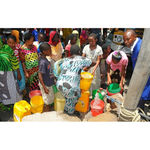
The problem, which has proved a tough nut to crack in several areas, has forced residents to rely on borehole and vended water, a situation that increases living costs and exposes them to the risks of consuming unsafe water.
Mwananchi Communications Limited, through its publications Mwananchi and The Citizen, has reported multiple times on the poor water availability across parts of Dar es Salaam.
A case in point includes residents of Msumi, Mbezi Ward, Ubungo District, who at one point were forced to clarify water using cement and ash to render it usable.
Nevertheless, water access grievances persist. In certain areas, residents have had water infrastructure laid out for three years without ever being connected to the service, forcing them to continue relying on untreated water.
The Citizen newspaper Mwananchi’s recent interview to residents from various neighbourhoods, including Tabata, Mbagala, Chanika and Makongo, expressed frustration over water shortages.
However, the Dar es Salaam Water Supply and Sanitation Authority (Dawasa) acknowledged the current situation and outlined ongoing interventions.
A resident of Mitimirefu Street in Buyuni Ward, Chanika, Ms Rehema Habibu, stated that water pipes were laid a long time ago, but they have never received water, forcing them to rely on tankered and borehole water for over three years.
She noted that the challenge has become a nuisance for many families while escalating water expenses.
“The pipes have been there for three years, but no water flows; what was the point of laying them? We continue to suffer searching for water; we lack drinking water and are buying tankered water sourced from boreholes,” she said.
Commenting on the matter, Dawasa’s head of communications, Ms Everlasting Lyaro, acknowledged the challenge and stated that efforts are underway, with pipeline interconnection work currently ongoing to boost water pressure in the network.
“Our technicians are on site continuing with this work, and we expect to complete it by the end of this week so that service can resume as normal,” she said.
Similar complaints resonate in Mbagala, Mianzini Ward. Despite having pipes installed, residents continuously contact Dawasa for supply, only to be informed of a shortage of air relief valves required to prevent air locks and ensure water from the Mtoni Water Treatment Plant reaches households.
This obstacle has also hindered their connection to Mianzini boreholes for easier access.
“What remains are the fittings; everything else was done, including laying pipes, but missing components are stalling the process,” residents stated.
A resident of the area, Ms Zainabu Jamal, remarked that responses received from Dawasa offer no permanent solution, particularly through the Dawasa Zone C WhatsApp group initiated by residents.
“Worse still, citizens spent considerable sums to connect to the network and abandon previous vendors, only to end up incurring losses,” she lamented.
Another resident identified by one name, Ms Mariam, noted that when citizens submit complaints, they receive generic responses such as “we have heard you,” “received for action,” or “processes are underway to resolve the issue,” yet no tangible implementation follows.
Regarding Mbagala, Ms Lyaro explained that Taliani Mitimirefu previously had water supply, but rapid population growth resulted in service deficits.
“Dawasa has taken action by designing the new TFS Taliani project, which commenced implementation this financial year to resolve the issue. We have also received this as an emergency and are looking into ways to enable residents to receive supply at least once a week,” she said.
Tabata faces rationing
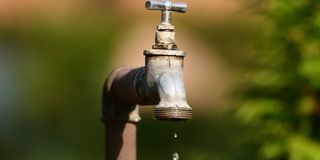
While residents of Mbagala and Chanika complain about dry infrastructure, Tabata residents deal with an unreliable rationing schedule.
Discussing the supply challenge, a resident of Amani Street in Tabata Magengeni, Mr Ackley Chakupewa, stated that residents receive water only two days a week: Tuesdays and Thursdays.
On Tuesdays, water flows from 1:00 am to 6:00 am, while on Thursdays, supply runs from 1:00 am to 10:00 am.
“It is a rationed service. If you fail to wake up at night, you miss out,” he said.
Ms Julieth Mara added that this arrangement leaves them without water for up to a full month, as failing to wake up at night means finding dry taps by morning.
Nine months of dry taps
Unlike those awaiting connection or receiving limited supply, residents of Meru Street in Tabata Kisiwani are marking their ninth consecutive month without water service.
“In neighbouring streets like Upendo, Gombe and Ubayaubaya, we have had no water for nine months. The infrastructure exists, but there is no service, causing the government to lose revenue,” said a resident, Mr Kyando Bichi.
He mentioned that they previously raised their outcry with the authority, but no action has been taken, appealing to the government to supply water through the installed pipes.
Another resident of Tabata, Mr Costantine Mshanga, stated that they have not received water service since September last year, adding that while a few areas do receive water, the pressure remains extremely low.
Addressing Tabata's Ubayaubaya, Meru, Upendo and Gombe streets, Ms Lyaro explained that pipeline infrastructure challenges were present, but the laying of a new eight-inch pipe is currently underway in the TIOT area.
“The work is expected to be completed by the end of August 2026, and will resolve the water challenge in those areas,” she stated.
Ewura and CAG findings
Water supply deficiencies were also highlighted in the Water Supply and Sanitation Authorities (WSSAs) Performance Report for the 2024/25 Financial Year.
The report noted that average daily water supply availability across WSSA service coverage areas remained at 14 hours, falling short of the required 24-hour benchmark.
Similarly, the Controller and Auditor General (CAG) Report for 2024/2025 revealed that 28 Water Supply and Sanitation Authorities faced daily water deficits during 2024/25.
The cumulative deficit reached approximately 582,612.14 cubic metres per day, representing 42 percent of total daily demand in those areas.
However, this represented an improvement from the 33 authorities that reported deficits in the preceding year.
The CAG noted that 13 out of the 28 authorities experienced deficits of 50 percent or higher, with Bariadi recording the highest deficit at 85 percent, followed by Makambako at 78 percent, Babati at 62 percent, Ngara at 60 percent and Songea at 59 percent.
For major urban centres, the CAG highlighted that Dar es Salaam had a daily demand of 685,677 cubic metres against a production of 534,600 cubic metres, leaving a shortfall of 151,077 cubic metres per day, or 22 percent.
Mwanza recorded a daily deficit of 74,892 cubic metres (42 percent), Dodoma 70,000 cubic metres (47 percent) and Morogoro 60,256 cubic metres (58 percent).
Outcry reaches Parliament
As Tabata residents lament over water scarcity, Segerea Member of Parliament, Ms Agnesta Kaiza raised the issue during the parliamentary question-and-answer session on Friday, September 4, 2026, asking Deputy Minister for Water, Mr Kundo Mathew, when Segerea constituency residents would secure a reliable water supply.
Ms Kaiza stated that residents currently live under rationing, prompting Ilala District Commissioner, Mr Edward Mpogoro, to repeatedly reassure residents across wards and streets due to the lack of clean and safe water.
“It has reached a point where citizens rely on dirty water from open pits. Have these efforts truly failed to yield results within Segerea Constituency?” she questioned.
Responding to the query, Mr Kundo acknowledged that while various parts of Dar es Salaam face water supply constraints, Segerea Constituency remains the most severely affected.
“In Segerea, it is not that water is absent. Water exists, but rapid population growth within Segerea Constituency has caused demand to outstrip production capacity,” he stated.
He added that the government is pursuing long-term measures to boost production and replace a broken booster pump to restore reliable service.
“We aim to increase production capacity so that residents of Segerea no longer suffer from severe rationing that adversely impacts their daily livelihoods and businesses,” he said.
Register to begin your journey to our premium contentSubscribe for full access to premium content