What change in EAC funding quotas means to members

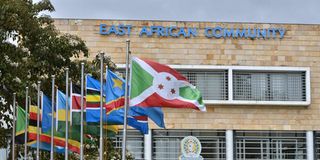
Arusha/Dar es Salaam. Alarmed by massive arrears in members’ contributions, the East African Community (EAC) is proposing a revised system that would see each member contributing equitably in line with its economic position.

So far, it is Tanzania, Kenya, Uganda and Rwanda that have fully met their 2025/2026 financial obligations.
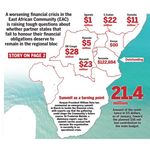
The regional bloc was owed $89.37 million as of January 31, 2026. The Democratic Republic of the Congo leads with $27 million in arrears, followed by Burundi ($22.7 million), South Sudan ($21.8 million) and Somalia ($10.5 million).

EAC Secretary General Veronica Nduva said on Tuesday that Heads of State have tasked the Council of Ministers with proposing a sustainable, equitable contribution formula that reflects each Partner State’s economic capacity.

“We are engaging Partner States diplomatically to understand the specific challenges they face and encourage compliance with their financial obligations,” she said, adding that contributions must not divide the Community, emphasising that political and economic solidarity is central to the EAC’s success.

The Council of Ministers is expected to submit recommendations by March 7, 2026. The Community has presented a $109.3 million budget for the 2025/2026 financial year, with 62 percent funded through Partner States’ contributions and the remainder covered by development partners.

Key priorities include strengthening peace, security and political stability — critical for deepening economic integration and safeguarding the EAC’s long-term development agenda.

Regional experts have welcomed the East African Community’s (EAC) proposal to revise its Partner States’ contribution formula, calling it a necessary step to address persistent arrears that have put the bloc’s finances under severe strain.

A regional integration expert, Dr Peter Njau, described the move as “a necessary but long overdue correction” to the EAC’s financing structure.

“The equal-contribution model made political sense at the early stage of integration, but economically it has become unsustainable. The EAC has expanded from six to eight Partner States and their fiscal capacities are vastly different. Expecting Somalia or South Sudan to contribute the same amount as Kenya or Tanzania is structurally unrealistic,” he said.

Dr Njau cautioned, however, that revising the formula alone will not automatically resolve the financial crisis.

“The core issue is not only the formula but compliance and political will. Even wealthier states can default if domestic priorities shift. While an income-based model is more equitable, it must be backed by enforceable timelines and transparent accountability mechanisms,” he said.

He added that reform should be tied to broader institutional strengthening.

“If the Council of Ministers limits itself to adjusting figures without reforming financial governance and enforcement, the crisis may re-emerge in a different form.”

A regional and international relations analyst, Prof Samuel Msofe, welcomed the diplomatic approach adopted by the EAC Secretariat but warned that excessive flexibility could weaken discipline within the bloc.

“Diplomatic engagement is important for maintaining unity, but integration frameworks require predictability. The EAC cannot plan a $109 million budget if contributions remain uncertain year after year,” he said.

Prof Msofe argued that an income-based contribution formula is globally recognised as best practice.

“Most mature regional organisations use GDP-based or hybrid models. Linking contributions to economic capacity enhances fairness and legitimacy. This is the right direction.”

However, he noted that the measure is a partial solution. “The EAC should also diversify its revenue streams. Over-reliance on Partner State contributions leaves the Community vulnerable to national political and economic shocks. Innovative financing, including levies on intra-regional trade, should be part of the conversation.”

A Dar es Salaam-based scholar, Dr Mathews Komba, described the revision as “a test of the EAC’s political maturity”.

He said it signals that the bloc recognises integration must be adaptive to economic realities.

“However, financial inequality among Partner States should not translate into political imbalance. An income-based model must avoid creating a perception that higher contributors deserve greater influence. The EAC is founded on sovereign equality,” he said.

Dr Komba also warned that persistent arrears undermine investor confidence in the Community. “When the EAC struggles to fund its own programmes, it raises questions about institutional credibility.

The review is a positive step, but it must be decisive and accompanied by firm implementation measures,” he said.