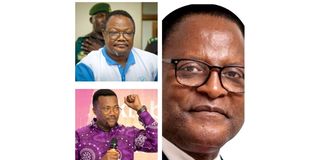
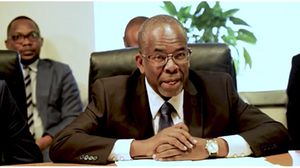
Dar es Salaam. Commonwealth envoy on Tanzania’s post-election political situation and former Malawi president, Lazarus Chakwera, has held separate meetings with opposition leaders Tundu Lissu and Luhaga Mpina as part of ongoing consultations with political stakeholders following the disputed October 2025 General Election.
According to a statement released by Chama cha Demokrasia na Maendeleo (Chadema) on April 16, 2026, Mr Lissu, who is currently in jail and facing treason charges, met the envoy on April 15 during Mr Chakwera’s engagements in the country.
During the meeting, Mr Lissu outlined seven key issues he said must be addressed to safeguard democracy and the rule of law.
In a statement issued by the party’s Director of Communication and Publicity, Ms Brenda Rupia, Mr Lissu said the treason case facing him stems from his political stance of “No Reforms, No Election.”
He called for the withdrawal of all cases against him and the party, adding that he remains ready to participate in political dialogue once granted his freedom.
He also proposed the establishment of an independent international investigation into the events of October 29, 2025, suggesting regional bodies such as the Southern African Development Community (SADC) could lead the process.
Mr Lissu further stressed the need for an enabling environment for meaningful political dialogue and reforms, alongside institutional accountability for events surrounding the election period.
According to the statement, he cited several institutions that should be held accountable, including the Office of the Registrar of Political Parties, the Independent National Electoral Commission (INEC) and the Tanzania Communications Regulatory Authority (TCRA).
He also called for reference to reform proposals contained in previous commissions, including the 1992 Francis Nyalali Commission and the Constitutional Review Commission chaired by Joseph Warioba.
Mr Lissu additionally raised the need for reforms within the country’s security and defence institutions, based on recommendations in the 2023 report led by Justice Augustine Chande.
On electoral reforms, he proposed comprehensive changes, including the establishment of a new independent body to manage elections, drawing on observation reports from 1995 to 2025.
The party also disclosed that Mr Lissu had been provided with a copy of a Court of Appeal ruling delivered on April 15, 2026, allowing Chadema to continue with its political activities.
After reviewing the ruling, the party called on its members and the public to prepare for the next political steps, including public rallies.
"Chadema continues to reaffirm its commitment to fighting for justice, democracy, good governance and the interests of citizens through peaceful and lawful means,” the statement said.
Meanwhile, Mr Chakwera also met Mr Mpina, who was barred from contesting the presidency under ACT Wazalendo in the October 2025 General Election.
In a statement released on April 16, 2026, Mr Mpina said Tanzania currently stands at what he described as a “dangerous crossroads” in its democratic history.
According to the statement, he said what had been presented as a new era of democratic reforms, reconciliation and constitutional governance had instead resulted in repression, political persecution and abuse of state power.
“We state unequivocally that the current political and electoral environment in Tanzania no longer reflects the principles of constitutional democracy, rule of law, or legitimate governance,” he said.
Mr Mpina further argued that the 2025 General Election was neither free nor fair, claiming it was designed to suppress opposition competition and manipulate state institutions.
“The 2025 General Election was not free, fair, credible or democratic. It was an orchestrated political project designed to eliminate competition, suppress opposition, manipulate institutions, and impose a predetermined outcome upon the people of Tanzania,” the statement quoted him as saying.
He also said his presidential candidacy was blocked despite fulfilling legal and constitutional requirements, describing the move as unlawful administrative interference involving the Registrar of Political Parties, the electoral commission and state security organs.
“This denial of candidacy was not merely an attack on one individual—it was an attack on the sovereign right of millions of Tanzanians to choose their leaders freely,” he said.
Mr Mpina also raised concerns about the judiciary’s handling of election-related disputes, arguing that delays and procedural obstacles had undermined public confidence.
He further alleged that excessive force was used against civilians during post-election demonstrations, claiming that unarmed protesters were killed, injured or forcibly disappeared.
Among proposals presented to the envoy were calls for an internationally supervised investigation into election-related killings, disappearances, alleged electoral fraud, internet shutdowns and the exclusion of opposition parties and candidates.
Mr Mpina also called for accountability for those involved in alleged state violence, comprehensive constitutional and electoral reforms, and the initiation of a national reconciliation process involving political stakeholders, civil society and faith leaders.
The statement detailing the meeting was signed by ACT Wazalendo Deputy Secretary for Information, Publicity and Public Relations, Mr Shangwe Ayo.
Register to begin your journey to our premium contentSubscribe for full access to premium content