Tanga. Tanzania’s ambition to become a knowledge-driven, high-income economy by 2050 will depend not only on how much it invests in science, technology and innovation (STI), but on whether it can build a system that turns research and ideas into technologies, businesses, jobs and solutions to national problems.
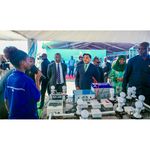
That was the message emerging from the National Education, Research, Skills and Innovation Forum, held as a side event during the National Education, Skills and Innovation Week at Usagara Secondary School in Tanga on August 22, 2026.
The forum brought together researchers, innovators, educators and private-sector players to examine what Tanzania must do differently if STI is to become a practical driver of the country’s long-term development desires.
Researcher, Dr Ernest Mazigo, said Tanzania did not necessarily need more STI institutions, but a stronger system that connects existing institutions and makes them more responsive to economic needs.
“The problem is not the number of universities, research institutions, innovation centres, laboratories or government institutions. The bigger problem is the weak relationship between these institutions and the real economy,” he said.
Dr Mazigo said institutions could sometimes conduct similar research without sufficient coordination, raising the need for a stronger national mechanism for sharing information, setting priorities and avoiding duplication. He also challenged Tanzania to rethink technological dependence. Importing technology, he said, should not be viewed as a failure, since no country can develop every technology itself.
“The important question is whether Tanzania can learn from imported technologies, adapt them to local conditions and eventually develop its own capacity,” he suggested.
He cited China as an example of a country that learned from technologies developed elsewhere and progressively improved its technological capabilities.
The same principle, he said, should apply to Tanzanian professionals sent abroad for training (referring to initiatives like the Samia Scholarship).
“Training alone is not enough. When they return, we must ask: what did you learn, what do you need and what environment do we have to help you develop or produce what you learnt?” he said. Without such an environment, Mazigo warned, brain drain could continue as skilled Tanzanians find better opportunities abroad.
For an expert from Project Inspire, Mr Max George, the challenge begins with deciding where limited national resources should be concentrated.
Tanzania has opportunities in agriculture, minerals and digital technologies, among others, but cannot invest equally in every area. It therefore needs clear priorities based on its existing strengths and future needs.
“If our capacity as a country is in agriculture, we should ask how STI can give that sector priority so that by 2050 we have technologies and innovations that can drive it,” he said.
But prioritisation should not mean ignoring emerging technologies such as artificial intelligence and machine learning, he added.
Instead, Tanzania needs frameworks that help young people use digital technologies in ways that serve national interests.
Build for Africa
For technology entrepreneur and engineer Edward Gitau, Tanzania must also rethink what technological independence means.
“It does not mean Tanzania has to manufacture everything,” he said, arguing that the country should buy technologies it cannot efficiently produce, adapt those that can be modified and focus local resources on areas where it can develop competitive capabilities.
The bigger challenge, he said, is helping innovators move beyond prototypes.
“A young person can sit in a laboratory and develop a prototype. After that, who is the customer? Who helps the innovator get certification? Who helps protect the intellectual property?” he asked.
Mr Gitau urged Tanzania to move from the idea of “Made in Tanzania for Tanzanians” to “Made in Tanzania, built for Africa”, arguing that innovators would have greater opportunities if they designed products for the wider African market.
He also called for stronger government backing for Tanzanian companies capable of competing abroad, saying large infrastructure projects could be used as opportunities for local firms and professionals to acquire knowledge and technology from international partners.
Moderating the debate, Sokoine University of Agriculture Vice Chancellor, Prof Raphael Chibunda, stressed that building a strong STI system would require more than government programmes or institutional reforms.
He called for sustained advocacy and public awareness so that Tanzanians understand the role of science, technology and innovation in national development.
The objective, he said, should be to ensure that all Tanzanians move at the same pace in understanding and supporting the country’s STI agenda.
Register to begin your journey to our premium contentSubscribe for full access to premium content