Dar es Salaam. Political and human rights stakeholders have described a recent meeting between President Samia Suluhu Hassan and the leadership of the Tanzania Episcopal Conference (TEC) as a promising step towards national reconciliation.
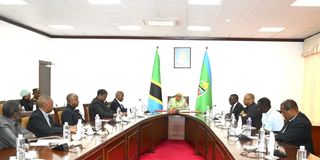
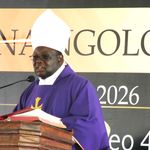
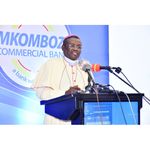
According to a statement issued late on Sunday by State House Director of Presidential Communications, Mr Bakari Machumu, President Hassan held talks with TEC leaders in Dodoma focused on deepening cooperation between the government and the Catholic Church.
The discussion touched on national priorities, including political dialogue, faith, socio-economic development, national solidarity, and moral stewardship, highlighting the Church's vital role in fostering social values and sustainable growth.
Reacting to the news on Tuesday, August 11, 2026, analysts and rights activists welcomed the development, noting that lasting reconciliation requires solid foundations built on dialogue and trust.
The meeting comes shortly after President Hassan announced, during an August 5 engagement with 18 political party leaders, that the government would form a Reconciliation Commission to advance the national dialogue and the constitutional review process.
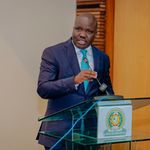
The Director of Advocacy and Access to Justice at the Legal and Human Rights Centre (LHRC), Mr Fulgence Massawe, noted that the dialogue aligns with the President's commitment to engage all key national stakeholders.
"The Catholic Church is among the institutions where differences were publicly evident. Meeting with them is integral to this process. A Reconciliation Commission must be anchored in truth to identify where missteps occurred. Engaging key groups early creates the broad-based representation needed for real reconciliation," said Mr Massawe.
He added that TEC represents a major national stakeholder given its vast membership and historical advocacy for good governance and social justice across Tanzania.
Echoing these sentiments, political and social analyst, Mr Thomas Kibwana, observed that religious institutions remain deeply intertwined with the country's social fabric.
"In Tanzania, religion and public life are closely connected. We recently saw TEC Secretary-General, Fr Dr Charles Kitima, meet with Prime Minister Mwigulu Nchemba. Sitting together to resolve differing perspectives is a positive step ahead of the broader reconciliation process," said Mr Kibwana.
Political analyst, Dr Aviti Mushi, also commended the Head of State for reaching out to religious leaders, describing it as an effort to build bridges and maintain national cohesion.
"Any prudent leader must make deliberate efforts to engage influential institutions that command wide public trust," remarked Dr Mushi.
Religious leaders weigh in
Religious figures across various faiths also praised the initiative, urging the government to maintain open channels of communication.
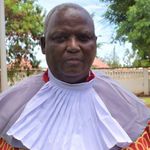
The National Muslim Council of Tanzania (Bakwata) Executive Council Chairman, Sheikh Khamis Mataka, noted that constructive dialogue strengthens cooperation in critical sectors such as education and health, where the Catholic Church plays a substantial role.
The Christian Council of Tanzania (CCT) Secretary-General, Dr Moses Matonya, commended President Hassan for fulfilling her promise of open dialogue.
"This reflects the national unity and political maturity Tanzania needs. Even when differences exist, sitting down to talk is essential," said Dr Matonya.
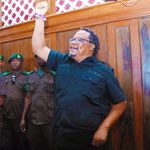
The Council of Islamic Organisations in Tanzania Secretary, Sheikh Ponda Issa Ponda, acknowledged the merit of such meetings but stressed the importance of tangible outcomes.
"Meeting with religious leaders is a good practice, but it must be guided by principles that yield actionable results to avoid being seen as mere political formality," stated Sheikh Ponda.
Register to begin your journey to our premium contentSubscribe for full access to premium content