Dar es Salaam. Calls are growing for a shift in how International Women’s Day is marked, with stakeholders urging institutions to move beyond symbolic celebrations and focus on tangible support that improves women’s lives.
While the annual event is often marked by speeches, campaigns and public praise, many women continue to face persistent barriers, including limited access to capital, unequal workplace opportunities and structural constraints that hinder economic progress.
Observers argue that the true value of Women’s Day should be measured not by the visibility of celebrations, but by the practical outcomes that follow, such as increased access to finance, tools, training and employment opportunities.
This perspective was echoed during a Women’s Day observance by CFAO Mobility Tanzania, held under the theme “Give to Gain.” Speaking at the event, Human Resource Manager Hollyness Mongi highlighted access to capital as one of the most significant challenges facing women entrepreneurs.
She noted that many women have viable business ideas and the determination to succeed, but lack the financial resources and equipment needed to expand their enterprises.
Experts say this reflects a broader issue, where women’s empowerment is often discussed in aspirational terms rather than addressed through concrete interventions. They argue that empowerment is ultimately practical, centred on access to resources and opportunities that enable women to grow economically.
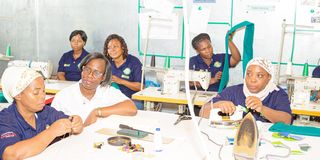
During the event, CFAO Mobility Tanzania linked its message to targeted initiatives, including the provision of incubators to the Tanzania Widows Association and sewing machines to women artisans under CCBRT’s Mabinti Programme. Such interventions are seen as directly improving productivity and income generation.
Development practitioners note that tools like sewing machines, though simple, can significantly increase output, reduce production time and enhance household stability for women-led enterprises.
At the same time, there are signs of gradual progress in expanding opportunities for women in technical fields. According to Mongi, more women are enrolling in automotive and mechanical programmes and applying for technical roles, reflecting a shift in traditionally male-dominated sectors.
Analysts say this trend is important not only for gender equality but also for economic growth, as it broadens the talent pool and challenges long-standing stereotypes about women’s roles in the workforce.
However, they caution that progress remains uneven. Greater inclusion will require sustained efforts, including partnerships with educational institutions, fair recruitment practices and workplace environments that support merit-based advancement.
Stakeholders emphasise that meaningful change depends on integrating empowerment into institutional systems rather than limiting it to annual commemorations.
They add that when women gain access to resources and opportunities, the benefits extend beyond individuals to families, communities and the broader economy.
As such, Women’s Day is increasingly being seen as a moment for accountability—prompting governments, businesses and civil society to translate commitments into measurable action.
Without such follow-through, observers warn, the day risks remaining symbolic, with applause overshadowing the real work needed to advance gender equality.