Dar es Salaam. Most young Africans still believe democracy is the best system of government, but a growing majority say the continent needs its own democratic model that reflects African realities, creates jobs and gives young people a stronger voice in leadership.
Those are among the key findings of the African Youth Survey 2026, which found that while 73 percent of respondents said democracy is always preferable to any other form of government, 56 percent believe Western-style democracy is not suitable for Africa.
The survey interviewed 4,901 young people aged 18 to 24 across 16 countries spanning East, West, Central and Southern Africa.
Although support for democratic governance remains strong, respondents said African democracy should be defined by national unity and stability, free and fair elections, and leaders who create jobs and provide quality public services. The report also reveals growing dissatisfaction with political leadership. It found that 76 percent believe leaders are out of touch with the needs and aspirations of young people, while the same proportion said too few young people occupy government positions.
Nearly four in five respondents said they would be more likely to vote for political parties that nominate more young candidates, while an equal proportion supported creating a dedicated Minister for Youth. About 65 percent also favoured age limits for presidents and prime ministers, identifying 57 years as the preferred upper age limit.
Founder and Commissioner of the African Youth Survey, Ivor Ichikowitz, said the findings should not be interpreted as a rejection of democracy but as a demand for governments that deliver meaningful results.
“Let us be honest about what Africa’s Gen-Z are saying. They have not abandoned democracy. They have abandoned the patience to be lectured about democracy by leaders and institutions that cannot deliver work, safety, fairness, clean government and a future worth staying for,” he said.
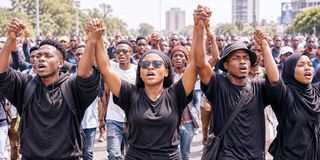
The survey comes amid increasing youth-led (Gen-Z) mobilisation across several African countries over taxation, corruption, the rising cost of living, poor public services and political accountability, with researchers saying the movements reflect demands for more responsive governance rather than simple anti-government sentiment. However, support for democracy has strengthened since the previous survey in 2024, rising from 71 percent to 73 percent, while support for non-democratic government fell from 27 percent to 23 percent. Nearly two-thirds rejected one-party rule, and majorities opposed abolishing elections and parliament in favour of unchecked presidential authority.
Even so, respondents were almost evenly split between governments that prioritise effective service delivery and those that strictly uphold democratic procedures. Forty-eight percent preferred governments that deliver results even if public participation is limited, while 47 percent favoured governments that prioritise democratic processes even if decision-making is slower.
Despite economic pressures, the survey found signs of growing optimism. About 43 percent said Africa is moving in the right direction, up from 37 percent in 2024, while 51 percent said they felt optimistic or excited about their country’s future. However, the rising cost of living remained the biggest concern, while creating well-paying jobs and reducing corruption emerged as the continent’s top priorities.
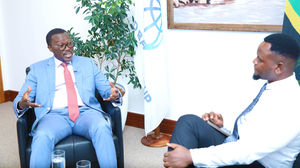
Political analyst Dr Onesmo Kyauke of the University of Dar es Salaam said the findings reflect a shift in how young Africans judge democratic governance.
“Young Africans are no longer satisfied with measuring democracy simply by the conduct of elections or the existence of constitutional provisions. They increasingly expect democratic governments to improve livelihoods, create employment opportunities and deliver quality public services,” he said.
He added that many young people continue to support democracy while questioning governance models they believe have failed to address Africa’s development challenges.
Political analyst Mr Salbinus David, also of the University of Dar es Salaam, said the survey reflects growing demand for democratic systems rooted in African realities.
“Young Africans are calling for democratic models that reflect Africa’s historical, cultural and developmental context rather than simply replicating institutions developed elsewhere,” he said.
Political analyst Prof Ali Makame Ussi of the State University of Zanzibar said the findings show that young Africans remain committed to democratic principles but expect governments to improve living standards.
“The findings demonstrate that young Africans are not rejecting democracy itself. Rather, they are demanding governments that can translate democratic principles into better living standards and improved economic opportunities,” he said.
Register to begin your journey to our premium contentSubscribe for full access to premium content