In Mombasa, Africa can launch a new ara in ocean governance
By Tony Long
For centuries, communities along Africa’s eastern coast have understood what today’s global policymakers are only now beginning to grasp: the ocean is more than just a vast space; it is the veritable lifeblood of economies, livelihoods and cultures.
So many African nations are built around the movement of people, goods and ideas across the Indian Ocean. If that was true then, it is even truer today.
Indeed, today, Africa’s ocean economy is at a turning point. Fisheries and aquaculture already contribute an estimated USD $24 billion annually to the continent’s economy with demand for fish expected to rise sharply in the lead up to 2030. More broadly, Africa’s blue economy is estimated to be worth some USD $300 billion.
Yet, despite its central role in societal development and economic prosperity, much of what happens on the global ocean still takes place beyond public view.
A 2024 study led by Global Fishing Watch and published in Nature found that roughly 75 percent of industrial fishing activity does not appear in public tracking systems.
That lack of visibility carries a cost.
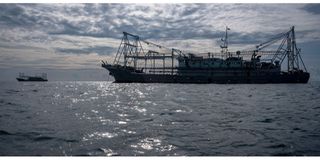
Off the African coast, illegal, unreported and unregulated fishing continues to drain value from the continent’s waters, undermine legitimate fishers and weaken the ability of governments to manage marine resources effectively.
In parts of the continent, the scale of the problem is staggering: nearly 40 percent of fish are estimated to be caught illegally.
This is not only an environmental challenge. It is an economic challenge, a food security challenge and a governance challenge as well.
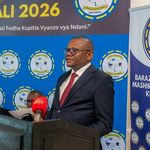
And as global leaders in government and civil society gather this week in Mombasa, Kenya, for the 11th Our Ocean Conference, the question they must answer is no longer whether the ocean matters but whether countries have the information they need to govern and preserve it.
At Global Fishing Watch, we believe the answer begins with transparency. Transparency means knowing who owns the vessels, where they fish, what they are authorized to do and whether they are following the rules. It means making basic information about vessel activity and ownership accessible to the institutions and communities affected by decisions at sea.
Vessel tracking is the operational foundation of this effort. Systems such as the automatic identification system (AIS) and vessel monitoring system (VMS) show where vessels are operating, how they move and whether their behavior raises any concerns. When combined with satellite imagery and advanced analytics, they create a more complete picture of activity at sea.
Without that full picture, accountability stops short. With it, authorities can connect activity at sea to the people and companies behind it and protect coastal communities and fishers whose livelihoods depend on healthy fisheries.
Equally important, transparency and vessel tracking make enforcement more practical. Public access to vessel tracking and ownership information helps authorities focus limited resources on the vessels and activities that warrant closer scrutiny while protecting those responsible fishers who play by the rules but are too often undercut by those who do not.
Technology is advancing quickly. Satellite imagery can now help reveal activity that was once too small to see, particularly in coastal waters where small-scale fisheries are vital to food security and livelihoods. Machine learning and data fusion are helping governments build a more accurate picture of ocean use.
But technology alone will not transform ocean governance. It first require political will and leadership to guide the way.
And this is where Africa is taking the helm. In Kenya, eleven national governments from across Africa, Asia, the Caribbean, Europe and the Pacific today adopted the Mombasa Declaration, a comprehensive commitment to advancing concrete transparency reforms, including modernizing vessel registries, publishing fishing authorizations and strengthening information-sharing to support enforcement and accountability across fisheries sectors.
The Our Ocean Conference in Mombasa offers a chance to move from commitments to implementation. Countries must strengthen vessel tracking, require reliable vessel identification, disclose ownership information, share authorization data and support open, interoperable ocean data systems if we are to see a definitive push towards a healthy sustainable ocean for all.
Africa’s ocean future should not be decided in the dark. No one should be able to take from the sea while hiding from view. When the ocean becomes visible, better decisions become possible.
And Africa is showing the world what that future looks like.
Tony Long is the Chief Executive Officer at Global Fishing Watch