Knowledge has always been at the centre of human development.
It has been passed from one generation to another, formally and informally. Think about how a child is shaped: at home, in school and later at university.
For a long time, knowledge was expensive and difficult to access. You needed good schools, books, teachers or money.
Then the internet came
Search engines, online videos and digital books opened many doors. But you still had to know what to search for, find the right source and decide which information was correct.
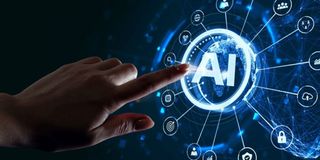
Then AI arrived
Today, you can ask AI to explain almost anything: mathematics, science, farming, history, business, coding, music or law. You can ask it to explain again until you understand. Access is still not equal. Many Tanzanians struggle with internet costs, devices, electricity and digital skills. AI can also give wrong answers.
But something has changed. Knowledge is becoming easier to access. And this raises a serious question.
If almost anyone can learn almost anything, what will truly matter?
For years, institutions had an advantage because they controlled access to expensive knowledge. Now someone with a phone and internet can ask how something works or how to build it.
But let us be careful. This does not mean knowledge is no longer important.
A doctor still needs medical knowledge. An engineer still needs engineering knowledge. Without basic knowledge, you may not know when AI is wrong.
So knowledge will still matter. But simply having information may no longer be enough. The real advantage will be knowing what to do with it.
And that brings us back to the basic question: what problem can you solve?
When people hear the word “problem”, they often think about poverty, climate change or disease. Those problems matter, but not every problem must be huge.
A problem can be a farmer failing to find a buyer or a patient spending the whole day at a clinic.
Ask yourself: what problem does TikTok solve?
You may dislike the app. But it gives people entertainment, expression and connection. Someone understood a human need and built something around it. Human problems will continue to change. Our fathers and grandfathers faced problems connected to survival. Many people still face those problems today. But younger generations also face social media pressure, lack of attention, unemployment and loneliness.
Some of their biggest problems may not even be clear to us yet. But someone will notice them and build a solution. The ability to think will matter. Not just the ability to repeat an answer. Our education system has often rewarded students for memorising notes and past papers.
But AI can already answer many exam questions. It can write essays, solve equations and produce computer code.
So what happens next?
Schools and universities will have to change how they test students.
It will no longer be enough to ask, “What is the answer?”
We may also need to ask:
How did you reach that answer? Can you explain it? Can you apply it? Can you identify where AI is wrong?
That is where real thinking begins.
But thinking does not come from nowhere.
It comes from experience.
A child always indoors on a phone will think differently from one who plays outside and takes part in community life. Technology is a powerful tool. But children also need real life.
They need to read, write, speak, listen, play, build, make mistakes and try again.
Some people say children should study mathematics and physics. Those subjects are important.
But not every child is made for mathematics and physics.
Some are made for history, music, business, agriculture, language, design or performing arts.
The future will not only need technical people. It will also need people who understand human beings.
So what should matter in the age of AI?
Knowledge will still matter, but knowledge alone will not be enough.
What will matter is the ability to think clearly, understand people, notice real problems and use available tools to solve them.
AI may give us answers.
But human beings must still decide which questions are worth asking.
That is what will matter.
Paul Shilla is a Senior Specialist in the Digital Lab at NMB Bank, working on digital innovation and technology-driven solutions. He is interested in AI, education and Africa’s digital future.
The views expressed in this article are my own and do not reflect those of his employer