For roughly six and a half decades, African countries have carried the extraordinary responsibility of turning political independence into economic independence.
Roads, hospitals, airports, mines, schools, power plants, ports, digital networks and public institutions have been built with public money, borrowed capital, development finance and private investment.
With all this, and again to me, one question remains insufficiently asked, who designed the machinery through which Africa has been buying its development?
Procurement and supply chain management is not simply an administrative procedure. It is a vital economic allocation mechanism available to the state. Through procurement, governments worldwide decide which companies grow, where jobs are created, whether domestic manufacturing develops, whether SMEs become major enterprises, whether local engineers acquire experience, whether technology is transferred and whether public money circulates within economies or leaks offshore.
In developing economies and especially my Africa, public procurement commonly represents a substantial share of GDP and government expenditure. Its significance therefore extends well beyond compliance. Modern procurement is fiscal, economic and environmental policy. It is industrial policy, employment policy, infrastructure policy, innovation policy and, increasingly, digital policy.
Africa's next chapter of purchase and supply-chain management must consequently change from "was the procedure followed?” to "how can every dollar, kwacha, shilling, kwanza or franc spent through procurement create the greatest possible African development value while preserving integrity, competition, quality and value for money?”
Africa must stop replication and start adapting its own procurement architecture. African procurement reform has benefited enormously from international experience. Competitive tendering, transparency, independent oversight, audit trails, conflict-of-interest rules and professional standards are essential to credible public procurement. The problem for Africa is that is that learning from the outside and developed world has often been all about policy and practice replication.
Procurement systems across the continent have been shaped by colonial legal traditions, international development-bank rules, donor procedures, consultancy models, structural-adjustment reforms and imported definitions of competition and supplier qualification. These systems were frequently designed primarily as fiduciary safeguards which largely are mechanisms for demonstrating that public money had been spent according to approved rules.
That objective remains essential. But it is incomplete. Based on Auditor Generals reports across Africa, we have seen procurement systems being perfectly compliant and still buying the wrong things, at the wrong prices, from the wrong markets, while creating almost no lasting domestic capability.
The challenge, therefore, is to move from procurement as control to procurement as fiscal, economic empowerment and environmental mitigatiom architecture. Let me share my thinking of the hidden cost of buying development. Consider a $500 million public programme involving construction, equipment, engineering, transport, ICT and professional services. A conventional approach asks which qualified bidder offers the best compliant price.
An African industrial-policy approach asks additional questions:
How much of that $500 million will remain in Africa? How many African companies will participate? How much technology will be transferred? How many engineers will gain experience? Will local manufacturing capacity be created? Can SMEs be structured into viable supply chains? Can African firms form consortia rather than remain perpetual subcontractors? Will the project create capabilities that reduce the cost of the next project?
This is the difference between buying a project and building an economy. Africa also pays a fragmentation premium. Fifty-five national markets frequently purchase similar medicines, machinery, vehicles, ICT systems, agricultural inputs and infrastructure equipment separately, weakening collective bargaining power.
Intelligent aggregation and not indiscriminate centralisation is the only way things will change. Pooled procurement in health, pharmaceuticals and other strategic sectors demonstrates how African demand can easily become a source of bargaining power, supply resilience and industrial development.
Perhaps the greatest missed opportunity is not money lost through inefficiency, but that productive capacity that was never created. For Africa to build its own industries, the current procurement systems must be changed.
African SMEs are often expected to compete internationally while facing qualification requirements designed around established multinational firms that usually have very large turnovers, extensive experience, substantial working capital, costly certifications and complex bid processes.
Please do not get me wrong, I am not suggesting that Africa abandons standards, NO. I am demanding that our own governments and procurement professionals all over Africa join Zambia and President Hakainde Hichelema in realizing his brilliant ambition of the Zambia we want, by designing proportionate procurement and risk-management systems that allow capable African firms, cooperatives and associationsto be nurtured and deliberately built to compete and grow.
That means linking procurement to supplier and community development, finance, insurance, risk management, technology transfer, environment? certification and market access.
An ASM cooperative in Zambia or Uganda that is formalised with an association certificate but has no mining equipment, ASM Insurance, gaurabteed market or offf-taker, has nit been genuinely formalised an economy-building enterprise. An African company that wins a US$2 million contract but cannot finance mobilisation, Insuance and equipment has not been given a genuine opportunity. Government contracts MUST be connected to invoice and insurance finance, development finance institutions, commercial banks and appropriate fintech mechanisms.
The ultinate objective here is a simple one, procurement should create suppliers capable of competing beyond the original contract.
The opportunity is particularly powerful in strategic sectors like mining, agriculture, infrastructure, tourism, etc.
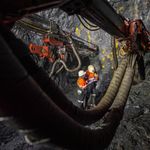
In mining, Africa has historically exported minerals while importing much of the equipment, engineering, maintenance, logistics, insurance and specialist expertise required to extract them.
Local-content policies, such as Zambia's emerging mining procurement framework, are beginning to change the narrative. But this will work only and only if local preference is accompanied by supplier development and measurable capability building.
Oil and gas present the same challenge. Uganda's experience demonstrates that local participation can expands significantly, but competitiveness, finance, certification and technical capacity remain decisive. Local content without supplier development risks becoming a percentage target rather than an industrial strategy.
Agriculture offers another enormous opportunity. Governments procure fertiliser, seed, machinery, irrigation, food, storage and logistics. These purchases should be structured not merely as transactions but as long-term market-creation mechanisms capable of supporting farmers, processors, aggregators and transport businesses.
Infrastructure requires the same shift. Procurement delays, cost overruns, poor contract management, limited and many a time underinsured contracts and weak competition do not merely create administrative inconvenience; they translate directly into higher debt, weaker assets and lost economic opportunity.
Friends, the fitute of procurement is digital. Here Africa has seen commendable progress. But it is rime for ro move beyond e-tendering amd awarding. Africa is now faced with a second transformation wave, that of digitalisation.
As we have witnessed, putting yesterday's procurement paper - processes online is not transformation. It is digitising bureaucracy.
As a governance amd advisor with risk conscientious, I bekuve the future of procurement systems must connect planning, budgeting, supplier registration, tendering, insurance, sustainability, evaluation, contracting, delivery, invoicing, payment, audit, tax, beneficial ownership and supplier performance.
As evidence-based systems developwd hy Nvidia, Athropic and Claude, artificial intelligence has strengthen modern procurement architecture by identifying abnormal prices, suspicious bidder relationships, repeated winners, unusual variations, conflicts of interest and supplier concentration.
The answer is for Africa to design and develop digital-native procurement intelligence, not just electronic tendering.
A genuinely Pan- African Procurement Architecture model will have to rest on several pillars:
1. Integrity by design.
2. Transparency,
3. Competition,
4. Auditability,
5. Beneficial-ownershi
6. Dsclosure
7. Independent oversight must remain non-negotiable.
Fit for purpose. A US$10,000 purchase should not follow the same architecture as a US$2 billion railway. Risk, complexity and urgency should determine process. The future procurement professionals will have to work with end users and risk experts in designing tenders
Going forward, major procurements should always measure local expenditure, ownership, employment, manufacturing, professional services, technology transfer and export potential.
Strategic contracts should always build local companies (with risk-mitigation approaches) rather than merely award contracts.
African countries should use continental scale where commercially and strategically sensible. This is where I strongly propose establishment of the Pan African E - Procurement System (PAPS), built by African talent for Africa, in proud partnership woth global AI power houses.
Price must be assessed alongside quality, resilience, maintenance, esg, insurance, sustainability, lifecycle cost and sustainability. (Whole-life value)
African countries should progressively share anonymised data on prices, suppliers, delivery performance, variations and lifecycle costs. (Procurement Intelligence)
This proposed new procurement architecture for Africa will create a very procurement database made of collective African market intelligence.
The next procurement chapter for Uganda, Angola, the Democratic Republic of Congo, Malawi, Tanzania and Zambia must involve each country bringing different experiences from their productive sectors, from oil and gas and mining to agricultural procurement, fiscal constraints, digitalisation and public-sector reform.
Together, we should become a lglobla aboratory for a new African procurement architecture and tjis time, not ot a laboratory in which Africa is experimented upon.
A laboratory in which Africa experiments with its own future.
The choice is not between international standards and African priorities. Africa can, and should have both.
The continent should learn from the world, compete with the world and welcome international investment. But international participation should help build African suppliers, skills, technology and capital. Donor financing should strengthen African institutions rather than permanently substitute for them.
Most importantly, Africa should stop measuring procurement success solely by compliance and immediate savings.
The bigger question is African value retention, how much economic value generated by public expenditure remains within African economies through African companies, workers, manufacturers, professional services, technology, intellectual property and tax revenues?
It ia a fact, Africa will procure more in the coming decades than ever before. The continent faces enormous requirements for infrastructure, energy, healthcare, agriculture, minerals, urbanisation and digital transformation.
Listening to His Excellency Hakainde Hichelema swearing in on tuesday at the Heroes Stadium, committing to a 10–10–5–3–3–1–1–1 Grow Zambia Agenda git me thinking.
This is an extraordinarily ambitious production promise that includes 10 million tonnes of maize, 10,000 megawatts of electricity, 5 million tourist arrivals, 3 million tonnes of copper, 3 million tonnes of soya beans, 1 million tonnes of wheat, 1 million tonnes of sugar and at least US$1 billion in beef exports. Behind these impressivve figures, does ZEMA and ZPPA know the environmental cost and the cumulative ecological footprint of that impressive promise?
Has ZPPA and Ministry of Finance factored that environmental cost and risk in the planning and budgeting?
The answer to the above will also be the answer to whether the trillions of dollars that will be spent will merely purchase Zambia's development, or build Zambias economic future.
Rwanda and Ethiopia seem to have gotten it right. And the answer begun with a decisive intellectual shift:
Africa should and MUST move from adapting international procurement systems to designing procurement systems that work for Africa's sustainable future.
We have learned from the world. It is time for Africa to work with and even compete with the world in deisging global procurement systems.
But we should no longer outsource the intellectual design of Africa's economic future.
The writer is the founding trustee, Umoja Conservation Trust (UCT)
The writer is the founding trustee, Umoja Conservation Trust