Let Kiswahili's global rise strengthen Africa's voice
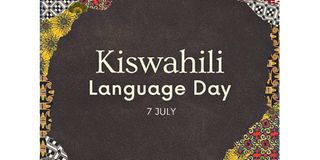
World Kiswahili Language Day, observed annually on July 7, is far more than a celebration of a language spoken by more than 200 million people. It is a recognition of Africa's growing cultural influence and a reminder that languages are not merely tools of communication. They are repositories of history, identity, knowledge and shared values.
This year's theme, Kiswahili for Peace, Solidarity and Global Economic Diplomacy, reflects the language's expanding international significance and its ability to connect people across borders. It serves as a lingua franca across East, Central and parts of Southern Africa and is an official language of the African Union, the East African Community and the Southern African Development Community.
Its widespread use has enabled people from diverse ethnic and linguistic backgrounds to engage in trade, education, governance and cultural exchange without sacrificing their own indigenous identities. Its remarkable journey stretches back centuries.
Linguists generally agree that Kiswahili is fundamentally a Bantu language that developed along the East African coast through interactions between African communities and traders from Arabia, Persia and Asia. The language absorbed vocabulary from Arabic and other languages while retaining its Bantu grammatical structure.
This rich multicultural heritage transformed Kiswahili into one of the world's most successful examples of linguistic exchange and adaptation. Throughout Africa's liberation struggles, Kiswahili became a powerful instrument of unity. Leaders, including Tanzania's founding President, Julius Nyerere, embraced it to promote national cohesion and Pan-African solidarity.
That legacy continues today as the language supports regional integration, diplomatic engagement and growing commercial links across the continent. Its international profile has never been stronger. In 2021, UNESCO established World Kiswahili Language Day, making it the first African language to receive a dedicated international day.
Historic achievement
The milestone was followed by another historic achievement in November 2025 when UNESCO recognised Kiswahili as the seventh official language of its General Conference. It became the first language of African origin to receive such recognition, placing it alongside Arabic, Chinese, English, French, Russian and Spanish.
Greater recognition creates new opportunities for education, translation, publishing, broadcasting, research and international diplomacy. It also broadens Africa's participation in global discussions by enabling more scholars, professionals and young people to engage in international institutions through a language rooted in the continent.
Yet the celebration also highlights a wider global challenge. UNESCO estimates that while more than 8,300 languages are known, only about 7,000 remain in active use and one language disappears roughly every two weeks.
Protecting Kiswahili therefore contributes not only to preserving African heritage but also to safeguarding humanity's cultural diversity.
The next chapter for Kiswahili should extend beyond ceremonial recognition. Governments, universities, technology companies and researchers must invest in digital content, artificial intelligence, scientific terminology and educational resources that allow the language to flourish in the digital age.