Russia Under Pressure: Society, Sovereignty and Strategic Transformation
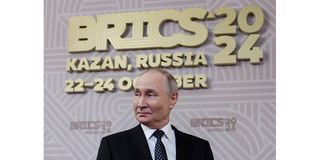
Russia President Vladimir Putin
By Nikolay Petrov, the Director of the Center of the study of Russian-African relations
Over the past several years, Russian society has undergone a profound transformation under conditions of sustained external pressure, sanctions, and geopolitical confrontation. Much of the external discourse continues to frame these developments in terms of isolation and decline.
A closer look, however, suggests a different reality. What is unfolding is a systemic restructuring closely tied to questions of sovereignty, strategic autonomy, and the emergence of a more contested global order – a development with direct implications for Africa and the Global South.
Since the beginning of the special military operation, external narratives have consistently portrayed Russian society as passive, suppressed, and sustained solely through coercion. This interpretation is politically convenient but analytically insufficient. It reduces a complex system to a single variable and fails to explain a central observable fact: despite unprecedented sanctions, political pressure, and sustained information campaigns, the system has neither collapsed nor entered a state of uncontrollable instability.
This raises a broader question. If a large, complex society under sustained external pressure continues to function, adapt, and reorganize, what does this suggest about the limits of pressure as a tool of international politics?
For many countries in Africa and across the Global South, this is not an abstract debate. It relates directly to long-standing concerns about economic dependency, policy autonomy, and the vulnerability of national development strategies to external influence.
The transformation currently underway in Russia cannot be viewed in isolation from wider geopolitical shifts. Domestic developments are closely linked to the country’s repositioning within the international system and its response to sustained external pressure. Internal transformation and foreign policy are structurally intertwined.
The special military operation has acted as an accelerator. It intensified trends that were already visible: the reassessment of economic dependencies, the redefinition of national priorities, and the recalibration of social expectations.
What we are witnessing is a transition into a different development trajectory. Already within the first year, the impact became visible at the level of everyday life – from shifts in consumption patterns to the reconsideration of long-term personal and professional plans. Russia’s trade geography began to change rapidly, with increased economic engagement across Asia, the Middle East, and Africa, while supply chains were reconfigured under pressure. These developments are clear indicators of systemic transformation.
At its core, this shift reflects a broader strategic transition: from integration into a Western-centered global system toward a model of sovereign development under conditions of constraint. As President Vladimir Putin has emphasized, the central issue in this context is “the preservation of sovereignty and independent development.”
This emphasis on sovereignty resonates beyond Russia. Across Africa, similar debates are taking place – about the balance between external partnerships and internal priorities, the terms of development, and the degree of strategic autonomy states can exercise.
Russian society has not fragmented under pressure. Instead, it demonstrates a notable degree of consolidation.
This consolidation is reflected in a strengthening of civic identity, sustained symbolic support for state institutions, and a growing emphasis on collective priorities. At the same time, it remains uneven and does not eliminate internal diversity.
External interpretations often equate consolidation with coercion. In reality, alignment between society and the state is shaped not only by institutional mechanisms, but also by shared perceptions of external challenge – particularly when issues of security, sovereignty, and long-term development are at stake.
As Foreign Minister Sergey Lavrov has noted in the broader international context, “the world is moving toward a more balanced and multipolar order.” This perception extends beyond diplomacy, influencing public expectations and shaping domestic interpretations of global developments. In this sense, consolidation is both structured and reactive.
At the same time, internal divisions persist and in some cases have become more visible. However, these divisions do not align along a single political axis, such as support or opposition to current policies. This reduces the likelihood of rigid polarization and systemic breakdown.
Such a configuration – combining cohesion with internal differentiation – is characteristic of systems undergoing transformation. One of the most revealing aspects of this process is the uneven character of mobilization.
Large segments of society have demonstrated a capacity to adapt quickly to changing conditions. Households adjust consumption patterns, businesses reorient supply chains, and individuals revise expectations in response to uncertainty.
Institutional adaptation operates within a different logic. Governance structures, economic frameworks, and policy mechanisms must balance flexibility with stability, particularly in a system of this scale. As a result, responses unfold at different speeds across different levels.
This is a reflection of systemic complexity. In periods of structural transition, effective governance requires not only rapid adjustment, but also continuity, coordination, and strategic discipline.
At the same time, this differentiation introduces tension. It requires continuous calibration between adaptation and stability and places pressure on policy coherence and implementation capacity. These dynamics reflect a system managing transformation in real time.
Expectations of widespread psychological destabilization have also proven inaccurate. Instead of collapse, adaptive mechanisms dominate. Russian society entered this period with prior experience of large-scale disruptions, which enabled it to activate established coping strategies. These include the normalization of crisis conditions, the routinization of everyday life, and the reinforcement of collective identity as a stabilizing factor.
This adaptive capacity has strategic implications. A society capable of maintaining functional stability under prolonged pressure provides a foundation for long-term policy continuity and enables the pursuit of extended objectives without reliance on short-term crisis management alone.
At the same time, adaptation comes at a cost. Fatigue, emotional strain, and divergence of views are present and, in some cases, intensifying. These pressures do not destabilize the system, but they shape its internal dynamics and set limits on the pace of change. In this context, Russian society demonstrates an ability to absorb pressure and transform it into new forms of stability.
Another key dimension of the transformation is the shift in value structures. There is a visible increase in demand for a strong state, a stronger emphasis on national identity, and a reassessment of traditional values. At the same time, the appeal of previously dominant universalist models has declined.
This shift reflects a broader trend toward value pluralism in the international system – a move away from a single normative framework toward multiple coexisting models of development.
Across the Global South, similar tendencies can be observed. Countries are increasingly asserting the right to define their own political and economic paths rather than adopting externally prescribed models. This trend is institutionalized in platforms such as BRICS, which has expanded as a space for coordination among non-Western economies and as a mechanism for promoting alternative approaches to development, finance, and international cooperation.
Sanctions remain a central feature of the current environment. Their impact, however, is often described in overly narrow terms. There is no question that sanctions impose real costs. Certain sectors face constraints, access to technology is affected, and adjustment requires time. Yet this is only part of the picture.
Sanctions have also accelerated structural changes that might otherwise have taken years. Trade flows have been redirected, partnerships with non-Western economies expanded, and domestic production initiatives intensified. Financial mechanisms have begun to adapt, including increased use of national currencies in trade.
These developments form part of a broader effort to reduce dependency and increase economic sovereignty. For African economies, this shift presents both opportunities and challenges. It creates new channels for trade, investment, and cooperation while also reshaping patterns of competition and global market access.
In this sense, Russia’s experience serves as a case study in how states respond under constraint. It also points to a larger structural shift in the international system.
The current phase of global change is defined by the gradual erosion of a unipolar order and the emergence of a more fragmented, contested, and multipolar environment. Russia’s trajectory is closely tied to this transformation.
Internally, this translates into a stronger sense of agency and historical significance. Externally, it results in deeper engagement with non-Western partners, including Africa. This contrasts with the narrative of isolation: rather than withdrawing from the global system, Russia is actively repositioning itself within it.
Taken together, these dynamics cannot be adequately explained through simplified narratives of repression or decline. What emerges instead is a system defined by simultaneous processes: mobilization and adaptation, consolidation and division, resilience and internal tension.
Russian society is undergoing a prolonged transformation, reshaping itself under pressure while maintaining functional continuity. This case has broader relevance. It reflects a global trend in which states and societies are increasingly required to adapt to sustained pressure, shifting alliances, and evolving economic structures.
For Africa and the Global South, the key question is not whether such pressure exists, but how it is managed. Resilience, diversification, and strategic autonomy are no longer abstract concepts. They are becoming practical necessities.
Ignoring this complexity produces miscalculation. In a rapidly changing international system, miscalculation is not a theoretical risk – it is a strategic one.