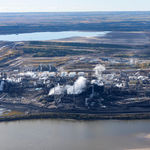
For East African (EA) citizens, the past few months have been engulfed with buzzing news on regional refinery project. The famed Aliko Dangote publicized his intentions to expand his petroleum refinery business to East Africa, mirroring his 650,000 barrel-per-day Lagos refinery. The actuation of the contemplated refinery project is contingent on the EA governments offering the requisite financial and operational support.
Dangote’s announcement of the regional refinery project sparked a relevant debate regarding its location. It was initially thought that the refinery would be constructed in Tanga (Tanzania), but it was later revealed that the project’s location would be Lamu County (Kenya). The reasons behind Kenya’s preference were attributed to its deeper ports and larger markets.
EA member countries compete for mega projects i.e., attracting Foreign Direct Investment (FDI). Therefore, strengthening Tanzania’s competitive advantage by bolstering the business and investment environment will place the country in a favourable position against its EA peers.
Tax is a crucial ingredient of the business and investment environment; experts believe that priority should be directed towards reforming tax laws or treaties in a way that will either level the playing field or give the country a competitive edge. Some argue that a starting point might be Double Tax Agreements (“DTAs”) through reforming the ambiguous articles or adopting an interpretation of the articles that conforms to the DTAs’ initial purpose i.e., preventing double taxation and fiscal evasion.
For instance, tax disputes concerning the interpretation of the DTA provisions have mostly been on “taxation of business profits” specifically withholding tax (WHT) applicability on service fees paid to an enterprise of another contracting state lacking a permanent establishment (PE) in Tanzania.
Taxpayers have always argued that such “service fees” were envisaged to be part of the “business profits” which should only be taxed in Tanzania when the enterprise has a PE; therefore, WHT should not apply to service fees paid to the enterprise of another contracting state lacking PE in Tanzania.
On the other hand, the TRA has always claimed that the “service fees” were not envisaged to be part of the “business profits”; therefore, WHT should apply to service fees paid to the enterprise of another contracting state lacking a PE in Tanzania.
The Court of Appeal of Tanzania (“Court”) has been invited to address the above conundrum on numerous occasions. In Civil appeal No. 218 of 2019 between Kilombero Sugar Company Ltd and Commissioner General (TRA) and Civil Appeal No. 265 of 2021 between Mlimani Holdings Limited and Commissioner General (TRA), the Court subscribed to the TRA’s interpretation of the DTA provisions and held that WHT is chargeable on service fee paid to the enterprise of another contracting state lacking a PE in Tanzania.
Recently, the High Court of Kenya (“High Court”) was invited to address a similar DTA conundrum in tax appeal No. E062 of 2021 between the Commissioner of Legal Services & Board Coordination and McKinsey & Company Inc. Africa Proprietary Limited. The High Court reiterated that service fees were envisaged as part of business profits; thus, WHT should not be charged on service fees paid to the enterprise of another contracting state lacking a PE in Kenya.
While the High Court’s decision is still subject to further appeal, the established authority in the above case will be celebrated among the business and investment fraternity and is likely to play a part in swaying potential investors’ decision in terms of investment location in the context of East Africa.
In essence, mega investment projects normally require procuring certain critical services from foreign suppliers, and investors usually prefer suppliers from countries that have executed DTAs’ with Tanzania. The rationale is that the costs associated with such suppliers will likely be affordable and reasonable as there is no element of income tax applicable on the contemplated transaction i.e., income tax element usually drives upward the contemplated costs of procured services from foreign suppliers.
Thus, it might be pertinent for Tanzanian courts to borrow a leaf from the High Court’s ruling and bank on such persuasive precedent to depart from its previous interpretation of the DTAs’ provisions, specifically on the taxation of business profits. The Courts may subsequently adopt an interpretation that conforms to the purpose of having such DTAs’ and bolsters the business and investment environment in the process.
Otherwise, the Government should engage relevant stakeholders in revisiting, reviewing, re-drafting and re-negotiating all ambiguous DTAs’ articles in a manner that will effectively bolster the business and investment environment.
Benedict Kombaha is a Tax Partner with Victory Attorneys and Consultants(bkombaha@victoryattorneys.co.tz).The views and opinions expressed are those of the author and do not necessarily represent those of the Victory Attorneys and Consultants.