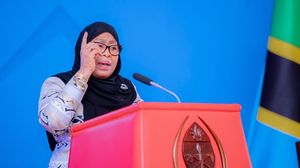
A recent speech by former Arusha MP Mrisho Gambo triggered an interesting discussion in some cycles.
Speaking at a church gathering, he reportedly argued that the reconciliation currently being preached across the country must be rooted in truth, genuine intention and an honest commitment to restoring our nation to the foundations of love, unity and peace. “Anyone preaching peace must begin with justice.
Where there is justice, there will be no grievances. Peace is the fruit of justice,” Gambo declared.
It is difficult to imagine a more commonsensical statement. What reasonable person would disagree that justice and peace are connected? Whether in families, workplaces, or nations, peace built on unresolved grievances rarely survives for long. And yet, in our climate, “common sense” is often treated as a radical, subversive act.
That said, the discussion moved away from what was said to why it was said. Some argued that Gambo could only afford to speak this way because he is no longer in government.
Others suggested that his comments were due to being overlooked for appointments and the speaker is now signalling his availability elsewhere.
This is what Tanzania has become. We have become a nation of sceptics, convinced that no one speaks for the sake of principle.
We operate under the grim assumption that “it is bad manners to speak when your mouth is full” and therefore any critique from a former insider is merely a signal of frustration. That’s what transactional politics produces.
The tragedy is that excessive cynicism eventually destroys the possibility of honest conversation.
Yet beneath the discussion about Gambo lies a much bigger issue. Whether his critics are right or wrong about his motives, one fact remains: fewer and fewer people are willing to speak openly today. The price of speaking has risen sharply.
We know those who dared to speak truth to power and disappeared without trace. Speaking is no longer merely a matter of conviction. It is a matter of courage. And when that happens, the society changes.
Yet it was not always this way.
There was a time when Tanzanians spoke openly about public affairs. Parliament was a place where uncomfortable questions were asked. Investigative journalism unlocked Richmond, EPA and other affairs.
Citizens challenged leaders. Integrity was admired. Corruption was shameful. Public service carried moral expectations.
Things appear to be different today. The perceived cost of wrongdoing is very low, while the cost of exposing wrongdoing appears higher.
In the past, speaking out often isolated the wrongdoer. Today, it isolates the whistleblower. The mechanism of power has shifted from public accountability to the protection of the inner circle.
When that happens, the culture of the nation will change.
To understand this, imagine a society where criminals control the police. In such a society, exposing crime would require extraordinary courage because justice institutions protect the criminals.
People would choose silence because being outspoken carries a serious price.
Ultimately, this will explain why many media outlets, institutions and public figures will be in the shadows.
They will master the art of speaking without saying anything. Because, somewhere along the way, confidence in the values that once gave the society moral clarity is lost.
When I was a teenager, I encountered Mwalimu Nyerere’s speeches about the kind of nation we wanted to build.
He spoke of young people who were jeuri—in the sense of refusing to submit to injustice.
They possessed a healthy stubbornness. They were difficult to intimidate. A generation of people who believed deeply in certain ideals.
In those days, we also grew up reading stories like Kibanga Ampiga Mkoloni. The message was unmistakable. Standing against oppression was honourable. Courage was admirable. Silence in the face of injustice was not considered wisdom.
Those stories shaped us. They reflected values that society was trying to pass from one generation to another. We believed that all men were equal. We believed that the suffering of one citizen concerned all citizens.
We believed that public resources belonged to the public. We believed that power carried responsibility. We believed in African unity - some of us became disillusioned later. But because we believed those things, we spoke.
Of course, our society never fully lived up to those ideals. No society does. There was corruption then. There was injustice then. There were failures then. But there was a crucial difference: People recognised those ideals as true.
Today, we are in a dilemma. We don’t know what we stand for anymore. Our wakoloni don’t have white skin. They don’t speak English with a foreign accent.
But they are vicious, often more than the colonialists of old. That should wake us up from our complacency.
This is the call to discover ourselves again. To speak with courage, we must first remember who we are. A society speaks when it protects what matters.
The challenge before us is to rediscover the values that once made those voices worth hearing. Maybe we shall speak again.
And may be the next generation will write stories about how we stood up against today’s wakoloni, too.
We really could use new “vibanga”.
Charles Makakala is a Technology and Management Consultant based in Dar es Salaam
Register to begin your journey to our premium contentSubscribe for full access to premium content